
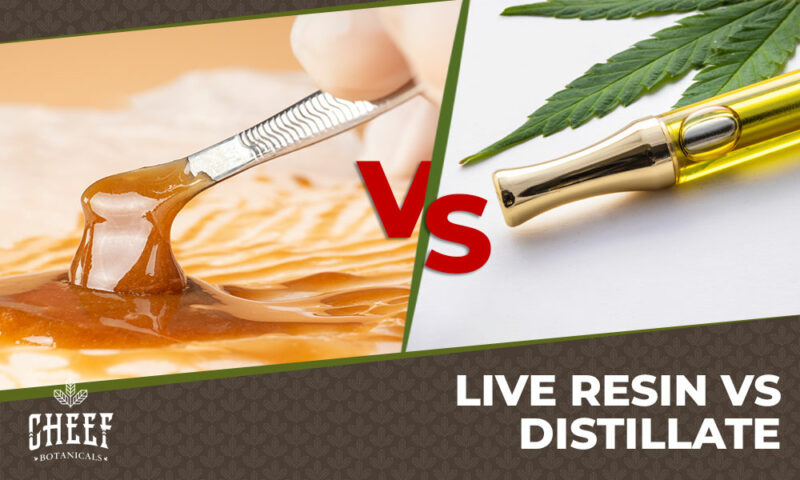
Live resin vs distillate is more than a battle of potency. Live resin preserves the plant’s bold aroma, rich flavor, and strain character. Distillate strips the experience down to concentrated cannabinoid power and impressive versatility.
So, which extract belongs in your rotation? The answer depends on what you want to taste, feel, and use. Let’s compare their extraction methods, terpene profiles, effects, and best uses to find your match.
Key Highlights
- The live resin vs distillate comparison centers on extraction, compound profile, flavor, and versatility.
- Live resin starts with fresh-frozen cannabis and preserves more of the original plant’s aromatic compounds.
- Distillate undergoes extensive refinement to concentrate a specific cannabinoid, such as CBD or THC.
- Live resin usually offers richer flavor and aroma, while distillate provides a neutral, flexible base.
- Both extracts appear in cannabis concentrates, vape cartridges, edibles, and other popular formats.
What Is Live Resin?

Live resin is a flavorful cannabis concentrate made from fresh frozen flower. Growers freeze the flower soon after harvest rather than curing it as dried cannabis. This fast step protects the delicate terpenes behind each strain’s signature scent and taste.
Because live resin retains more cannabinoids and terpenes, it often reflects its source strain more clearly than heavily refined extracts. Cheef Botanicals’ THCa Diamonds Live Resin pairs high-purity THCa crystals with a terpene-rich concentrate, giving enthusiasts a polished format.
How Is Live Resin Made?
Making live resin requires precise timing and temperature control. Each step in the extraction process protects the plant’s full-spectrum of cannabinoids and terpenes. Careful handling also preserves the concentrate’s distinctive qualities.
- Harvest: Growers collect cannabis flower at the desired cannabinoid and terpene levels.
- Immediate freezing: Teams keep the flower flash-frozen to protect its aromatic profile.
- Cold extraction: Specialists use low temperatures and butane or propane to separate desirable compounds from the plant material.
- Purging: Controlled heat and vacuum pressure remove residual solvents from the extract.
- Finishing: Makers collect the concentrate and shape its texture into sauce, sugar, or badder.
What Is Distillate?

Cannabis distillates are among the most refined cannabis extracts available. They contain concentrated cannabinoids such as CBD, Delta-8 THC, or Delta-9 THC. Their smooth texture, mild taste, and impressive potency suit many different formulas.
Distillate does not always mean pure THC. A finished product may feature CBD or another cannabinoid instead. Our CBD distillate contains 1 gram, or 1,000 milligrams, of broad-spectrum distillate with over 90% CBD and 0% THC.
How Is Distillate Made?
The distillation process separates and concentrates selected compounds through controlled steps. Techniques vary, but production generally follows this path.
- Initial extraction: Specialists pull cannabinoids, fats, waxes, terpenes, and other compounds from the plant.
- Winterization: Cold temperatures separate unwanted fats and waxes from crude cannabis oil.
- Decarboxylation: Controlled heat converts acidic cannabinoids into active forms.
- Distillation: Short-path or wiped-film equipment separates compounds by their physical properties.
- Formulation: Manufacturers prepare the concentrated extract for distillate products such as carts, gummies, or tinctures.
Maximize Your Relief With High-Potency Concentrates – Purchase Now!
Key Differences Between Live Resin and Distillate
The difference between live resin and distillate goes beyond production. Their compound profiles and strength shape the experience. Product formats and sensory qualities also play key roles.
The comparisons below examine live resin and distillate one feature at a time. They help compare both without ranking either option as universally superior.
Cannabinoids, Terpenes, and Plant Compounds
Live resin usually keeps a wider range of natural compounds from the original cannabis plant. Its profile may include minor cannabinoids and native terpenes, plus aromatic elements. Many consumers value this variety because it better reflects the source strain.
Distillation targets one cannabinoid and removes much of the original aroma. Manufacturers can add cannabis-derived or botanical terpenes afterward to restore flavor or build a specific profile. These added terpenes can enrich the formula, but they do not turn distillate into live resin.
This broader compound interaction may contribute to the proposed entourage effect. Researchers study this concept, so no extract can promise results.
Flavor, Aroma, Color, and Texture
Live resin offers bold natural flavor and noticeable aroma. Its preserved natural terpenes create fruity or earthy notes tied to the source strain. Textures range from sticky sauce to creamy badder.
Distillate has a lighter taste and thick, uniform texture. Added flavors or terpenes can give distillate carts and edibles a more distinctive profile. Its color may appear clear, golden, or amber.
Appearance cannot confirm quality. Cannabinoid content provides context.
Shelf Life and Proper Storage
Heat and light can gradually affect both cannabis extracts. Air and moisture may also weaken their quality over time. Poor storage can dull live resin’s flavor and aroma.
Keep each extract sealed in its original container. Follow the label’s storage directions every time. Clean handling protects overall quality between uses.
How Each One Hits
How live resin and distillate hit depends on cannabinoid profile, serving, and tolerance. Let’s break down how each extract shapes the experience.
How Live Resin Hits
- Layered experience: Live resin retains a wider range of cannabinoids and native terpenes. This profile may feel richer and more rounded than one built around a main cannabinoid.
- Strain-forward character: The preserved terpene profile can connect the experience more closely to the source strain. Consumers may notice uplifting or calming qualities, though strain labels cannot guarantee a response.
- Entourage potential: Cannabinoids and terpenes may interact through the entourage effect. Research continues, so this proposed influence cannot guarantee a particular result.
How Distillate Hits
- Cannabinoid-led experience: Distillate concentrates a specific cannabinoid. Some THC distillate approaches nearly pure THC, with pronounced intoxication at a higher THC percentage.
- Consistent profile: Extensive refinement gives distillate a uniform base. Terpenes shape its flavor, though it may feel less strain-forward than live resin.
- Formula-dependent effects: Not every distillate hits alike. THC distillate can intoxicate, while CBD distillate does not produce the same high. Potency and serving shape the experience.
When to Use Live Resin or Distillate
The better extract depends on the flavor, format, and overall character you want. Both options fit different routines without making one universally better than the other.
When to Use Live Resin
Shoppers often choose live resin products for pronounced aroma and plant-derived flavor. They also value its strain character and broad compound profile from the source plant. This extract suits consumers seeking a vivid, plant-focused experience overall.
- For convenient inhalation: Live resin vape carts provide a portable way to enjoy strain-forward flavor and aroma.
- For concentrate sessions: Dabbable options offer a hands-on way to consume live resin and enjoy its rich texture.
- For flavorful edibles: Live resin edibles bring its varied cannabinoid and terpene profile into an easy-to-measure format.
When to Use Distillate
Distillate suits those prioritizing mild flavor and cannabinoid content. Its neutral base fits cannabis products.
- For consistent servings: Gummies and tinctures provide clearly measured amounts of a selected cannabinoid.
- For flexible flavor: A neutral base lets added flavors and terpenes shape the finished product.
- For portable formats: Distillate commonly appears in vape carts made for convenient use.
Choose live resin when plant character matters most. Consider distillate when consistent servings or greater format flexibility better fits your routine.
Live rosin offers another option, using ice water, heat, and pressure without chemical solvents. Its production often yields less than distillate and live resin.
Related Post: Resin vs Rosin: What's the Difference?
Similarities Between Live Resin and Distillate
Despite their differences, these cannabis concentrates share key qualities. This common ground can simplify the distillate vs live resin decision.
- Both contain concentrated amounts of one or more cannabinoids.
- Both come in carts and edibles. Dabbable extracts provide another option.
- Both can be highly potent, depending on their cannabinoid profile.
- Both benefit from clear labels and careful formulation. Third-party testing also helps confirm quality.
Live Resin vs Distillate: Which Is Better for You?
Neither option suits everyone. Your ideal extract depends on your preferred cannabis experience.
You may choose live resin if you want:
- Rich aroma and more natural flavor
- A broader mix of plant compounds
- A strain-forward concentrate or vape experience
You may prefer distillate if you want:
- A concentrated amount of a selected cannabinoid
- Mild or customizable flavor
- Consistent servings across formats
- A flexible base for carts, edibles, or tinctures
Both can be a premium option with quality ingredients and careful testing.
How to Compare Quality, Labels, and COAs
Packaging can catch your eye, but labels and Certificates of Analysis (COA) reveal more. Review both before choosing a concentrate.
Check extract type, cannabinoid amount, serving size, ingredients, and batch number. Review any terpene source or profile. Neither live resin nor distillate offers an automatic wellness advantage; quality depends on formulation and testing.
A current COA should match the batch and confirm cannabinoid content and maximum potency. Cheef Botanicals offers labeled, third-party-lab tested concentrates, making formula comparisons simple and transparent.
Frequently Asked Questions
Is live resin stronger than distillate?
Not always. THC distillate often contains more THC, but live resin costs do not reflect strength. Serving size and tolerance can shape perceived potency. Product format and terpene content can also affect the experience.
Does live resin taste better than distillate?
It depends on your preference. Live resin usually offers bolder plant-derived flavor. Distillate suits people who prefer a neutral or customized taste.
Are live resin carts better than distillate carts?
Neither type is universally better. Live resin carts emphasize strain-linked aroma and flavor. Distillate carts focus on concentrated cannabinoid content and formula consistency.
Can distillate contain terpenes?
Yes. Makers can add cannabis-derived or botanical terpenes after refinement to shape the product’s aroma and taste.
Final Thoughts on Live Resin vs Distillate
The right concentrate does more than hit. It defines the entire experience. The live resin vs distillate choice comes down to the character you crave. Live resin captures fresh-plant personality and bold aroma. Distillate delivers polished cannabinoid concentration and smooth flavor, with the flexibility to fit nearly any routine.
Cheef Botanicals crafts both experiences through premium options like THCa Diamonds Live Resin and CBD Distillate. Browse the concentrate collection and review the third-party lab results. Your next favorite extract could be waiting.
Read Next: What Is CBD Isolate and How Is It Used?

 CBD Gummies - Top Seller
 CBD + THC Gummy - Excellent Choice
 Northern Lights - Highly Rated
 Full Spectrum CBD Oil - Good Value

Leave a comment
This site is protected by hCaptcha and the hCaptcha Privacy Policy and Terms of Service apply.