
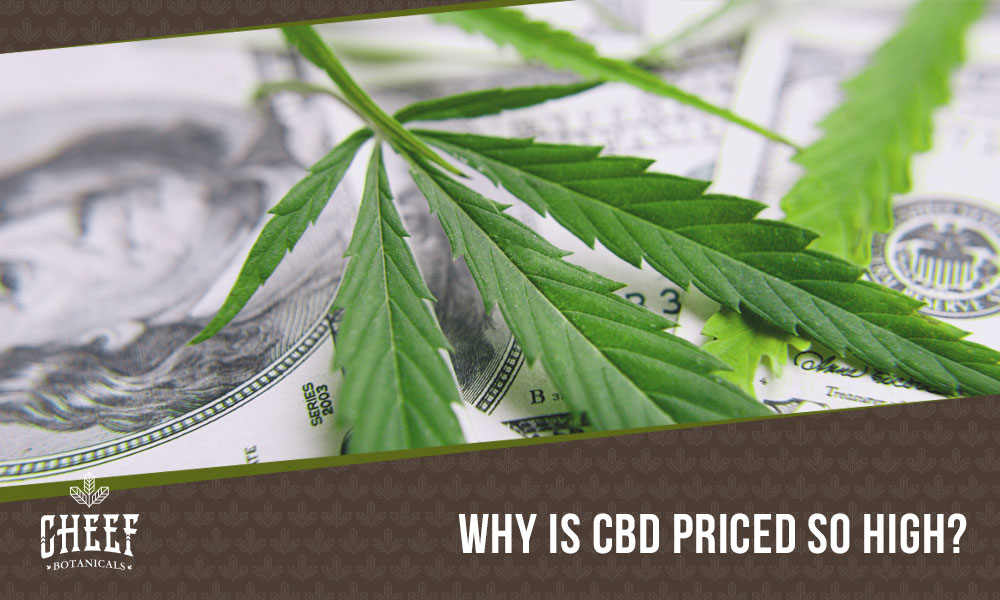
Whoever said, "the best things in life are free," probably never saw the cost of CBD. The high price of CBD often signals high quality, but many still ask: Why is CBD so expensive? We at Cheef Botanicals examined each step of the process to break down everything that happens before an item reaches consumers. Plenty of manufacturing and testing have to be done before a CBD product hits the market.
This guide will teach you what to look for when buying CBD oil and other cannabidiol products. To get started, let's take a look at where CBD comes from!
Key Highlights
- CBD is often expensive because of the costs involved in hemp cultivation, extraction, manufacturing, testing, licensing, and legal compliance.
- High-quality CBD usually starts with carefully grown hemp, often from organic or U.S.-based farms that follow strict safety standards.
- CO₂ extraction is one of the cleanest and safest ways to extract CBD, but it requires expensive equipment and expert handling.
- Third-party lab testing and Certificates of Analysis help confirm potency, THC levels, and the absence of harmful contaminants.
- Full-spectrum and broad-spectrum CBD products usually cost more than CBD isolate because they require more complex processing.
Why Is CBD So Expensive?

CBD pricing is influenced by several key factors, including those that contribute to the high price tag of CBD products. These factors contribute to the overall cost and complexity of CBD.
- Hemp cultivation and maintenance
- Extraction methods
- Manufacturing processes
- Third-party testing
- Licensing and regulatory compliance
CBD costs are shaped by each step in the supply chain, from cultivation to final product testing, making them complex for consumers to understand. High-quality CBD products often come with a high price tag due to the use of premium hemp sources and strict quality assurance measures.
When companies follow strict safety standards and avoid cutting corners, production costs increase—but so does product quality. Reputable brands invest heavily to ensure their CBD is safe, effective, and legally compliant.
Related Post: Affordable CBD Oil: Highly Effective & Cost-Efficient
Where Does CBD Come From?
CBD (cannabidiol) is extracted from the cannabis plant, specifically from industrial hemp—a subspecies of cannabis that naturally contains high CBD and low THC levels. Industrial hemp is the primary source for CBD extraction.
Unlike marijuana, hemp contains less than 0.3% THC, meaning it won’t produce a “high.” This distinction became crucial after the 2018 Farm Bill legalized hemp-derived CBD in the U.S.
Growing hemp isn’t cheap. Farmers must:
- Secure permits and licenses
- Maintain large cultivation areas
- Ensure crops meet strict federal standards
Additionally, regulatory oversight by agencies such as the FDA adds to compliance costs. Farming practices, especially organic farming, play a significant role in producing high-quality, safe CBD. Hemp is a bioaccumulator plant that absorbs toxins from the soil, so organic farming practices are necessary to avoid harmful contaminants.
How Long Does It Take for Hemp to Grow?
Hemp is relatively fast-growing, maturing in about 60–140 days. However, cultivation is far from simple.
Farmers must invest in:
- Organic nutrients and pest control
- Soil and water monitoring
- Labor for planting, maintenance, and harvesting hemp
Hemp farming is labor-intensive and requires regular inspection to maintain the legal THC threshold of 0.3%. If crops exceed THC limits or become contaminated with pesticides, mold, or heavy metals, they must be destroyed—resulting in significant financial loss.
Harvesting hemp itself can also be costly. Many hemp farmers lack specialized machinery and must rely on manual labor, increasing both time and expenses.
How Much CBD Does Each Plant Yield?
CBD yield varies depending on strain and growing conditions. On average:
- One hemp plant yields about 1 pound of usable material
- CBD concentration ranges from 5% to 15%
For example:
- 1 pound of hemp at 10% CBD = 45.4 grams of CBD
- With 3,000 plants per acre, that equals 136,200 grams (300 lbs) of CBD per acre
These calculations help determine pricing, as yield directly impacts supply and profitability.
Related Post: How To Calculate CBD Content Fast!
Creating the Ideal Growing Environment
Hemp plants are sensitive to environmental conditions. Excess heat or UV exposure can increase THC levels—risking the entire crop.
To maintain optimal growth, farmers may use:
- Greenhouses
- Irrigation systems
- UV lighting
- These tools improve yield and quality but also significantly raise production costs.
How Is CBD Extracted?

Extraction is one of the most expensive and critical steps in CBD production. The CBD extraction and cannabinoid extraction processes are complex and costly, involving advanced techniques to isolate cannabidiol and other cannabinoids from hemp. Extracting cannabinoids, including extracting CBD, from the hemp plant requires advanced equipment and methods, making the extraction process both challenging and expensive.
This meticulous process often involves specialized machinery and either ethanol or supercritical carbon dioxide (CO2), which significantly adds to the overall cost of CBD production.
Solvent Extraction
This method uses substances like butane or ethanol to extract CBD. While cost-effective, it may leave harmful residues if not done properly.
CO₂ Extraction
CO₂ extraction is the gold standard. It uses pressurized carbon dioxide to extract CBD without toxic residues safely.
Benefits include:
- Cleaner, safer product
- Preservation of cannabinoids and terpenes
- Higher overall quality
However, the equipment and expertise required make this method more expensive.
How CBD Products Are Made
After extraction, CBD is refined into different product types to create the final CBD product:
- CBD Isolate – Pure CBD only
- Full-Spectrum CBD – Contains all cannabinoids, including trace THC
- Broad-Spectrum CBD – Contains multiple cannabinoids but no THC
The quality and safety of the final product depend heavily on the extraction and refinement processes used.
Each product type involves additional processing, formulation, and ingredient sourcing—adding to overall costs.
Certificates of Analysis (COAs)
Third-party testing is essential for safety and transparency.
A Certificate of Analysis (COA) verifies:
- Cannabinoid content
- THC levels
- Absence of contaminants
Reliable brands make these reports easily accessible. While testing increases production costs, it ensures product quality and consumer trust.
Legal and Licensing Costs
Selling CBD legally requires multiple licenses, including:
- Business license
- Seller’s permit
- Manufacturing license
On top of that, companies must remain compliant with ever-evolving regulations. Taxes, renewals, and legal updates all contribute to higher operational costs.
Despite a growing market, high compliance standards limit entry, keeping prices elevated.
Market Demand and CBD Prices
As the popularity of CBD continues to soar, so does the demand for high-quality CBD products—and with it, the price of CBD. More consumers are turning to CBD oil and other spectrum CBD products for their potential health benefits, driving up demand and, ultimately, CBD prices across the market.
This surge in interest has made hemp farming more competitive and labor-intensive. Farmers must carefully manage hemp cultivation, ensuring that THC levels remain compliant and that crops are free from harmful contaminants. The process of farming hemp, harvesting, and processing is meticulous, requiring significant investment in both time and resources. These production costs are reflected in the final price of CBD products.
What Makes Some CBD Products More Expensive Than Others?

Not all CBD products are priced equally—and for good reason. Different CBD brands have varying pricing, quality, and transparency standards, which can significantly impact the cost and value of their products. A high-quality product often begins with premium sourcing and meticulous manufacturing practices, including the use of organic or sustainably sourced ingredients, which can increase its price.
Here are the main factors that affect price differences:
1. Hemp Quality
Organically grown, U.S.-sourced hemp costs more but ensures better safety and potency.
2. Extraction Method
CO₂ extraction produces cleaner, higher-quality CBD than cheaper solvent-based methods.
3. Product Type
Full-spectrum and broad-spectrum products often cost more due to complex processing.
4. Third-Party Testing
Brands that invest in lab testing add transparency—but also incur higher costs.
5. Brand Reputation
Established companies often charge more because of consistent quality and customer trust.
6. Added Ingredients
CBD edibles, topicals, and infused products contain additional ingredients, which increase production costs.
In short, cheaper CBD isn’t always better. Lower prices may indicate shortcuts in sourcing, extraction, or testing.
Frequently Asked Questions About CBD Prices
1. Why is CBD so expensive compared to other supplements?
CBD costs more than typical supplements because of the intensive process involved in producing it. From growing hemp with strict quality standards and using advanced extraction methods like CO₂ to third-party lab testing and legal compliance, every step adds to the final price. High-quality CBD reflects both safety and effectiveness.
2. Does higher-priced CBD mean better quality?
Generally, yes. Higher prices often indicate that the brand invests in premium hemp, clean extraction methods, and rigorous lab testing. Cheaper CBD may cut corners in sourcing or testing, potentially affecting potency, safety, and overall results.
3. Can imported CBD be cheaper?
Imported CBD may be less expensive, but it often comes from unregulated hemp farms where testing standards aren’t strict. U.S.-grown hemp ensures higher quality, better safety controls, and compliance with federal law—contributing to higher prices.
4. How do extraction methods affect CBD cost?
Extraction is one of the most expensive steps in production. CO₂ extraction is safer and cleaner, and it preserves cannabinoids and terpenes, but it requires costly equipment and expert operators. Solvent-based methods may be cheaper but can leave harmful residues, lowering product quality.
5. Does CBD farming take a long time?
Hemp takes roughly 60–140 days to mature. However, careful cultivation, organic nutrients, pest control, and harvesting require ongoing labor and attention. Any mistakes—like THC levels exceeding 0.3% or contamination—can destroy the crop, increasing the cost of producing CBD.
6. Why do full-spectrum and broad-spectrum products cost more?
These products include multiple cannabinoids and compounds from hemp, requiring more complex processing than CBD isolate. Full-spectrum CBD contains trace amounts of THC, while broad-spectrum removes it but retains other beneficial compounds. This complexity raises production costs.
7. Are third-party lab tests (COAs) included in the price of CBD?
Yes. Certificates of Analysis ensure product safety, potency, and regulatory compliance. Brands that provide COAs for all batches invest extra in testing, which is reflected in the final product price.
8. Will CBD prices go down in the future?
As hemp cultivation expands, technology improves, and the industry matures, production costs may decrease. However, quality-focused brands will continue to price products based on safety, efficacy, and regulatory compliance, so premium CBD may always command a higher price.
9. Does the size of the CBD product affect the price?
Yes. Larger bottles or higher-concentration products naturally cost more because they contain more CBD extract. However, higher concentration can also provide better value per milligram of CBD, so it’s important to compare potency, not just price.
10. Can the location of the hemp farm influence CBD costs?
Absolutely. Hemp grown in regions with optimal soil, climate, and regulatory oversight tends to produce higher-quality CBD. Farms in the U.S. may have higher costs due to labor, compliance, and environmental controls, which contribute to a more expensive—but safer and more effective—product.
Final Thoughts: Why Is CBD So Expensive?
When you consider the full process—from farming and extraction to testing and compliance—the cost of CBD becomes much easier to understand.
Higher prices often reflect:
- Better ingredients
- Safer extraction methods
- Transparent testing
- Legal compliance
While budget options exist, investing in high-quality CBD ensures you’re getting a safe and effective product.
Before buying, always:
- Check for COAs
- Research the brand
- Compare sourcing and extraction methods
A slightly higher price today can mean better results—and greater peace of mind—tomorrow.
Read more CBD Facts articles here

 CBD Gummies - Top Seller
 CBD + THC Gummy - Excellent Choice
 Northern Lights - Highly Rated
 Full Spectrum CBD Oil - Good Value

Leave a comment
This site is protected by hCaptcha and the hCaptcha Privacy Policy and Terms of Service apply.