

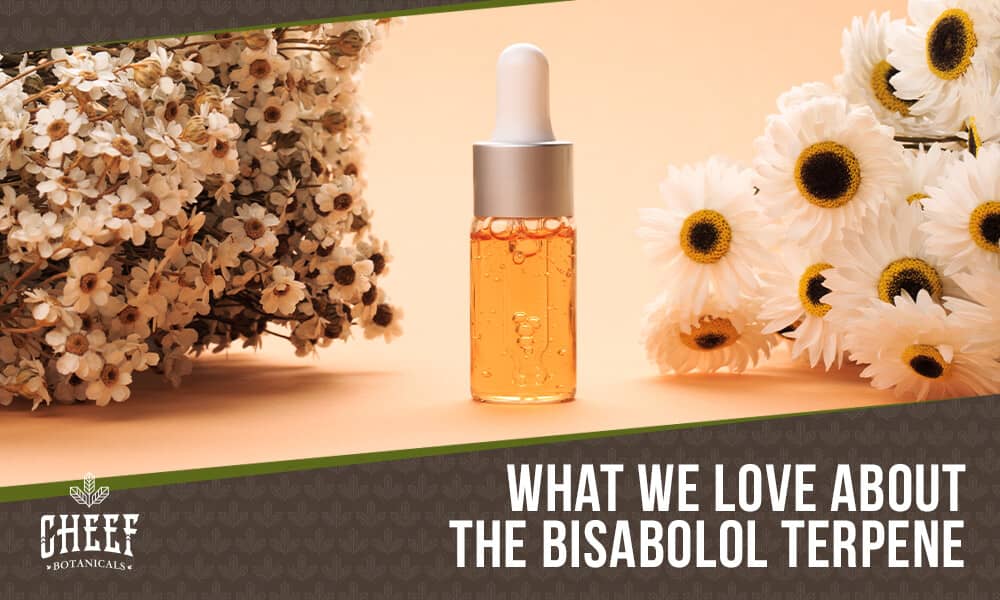
Bisabolol is found in more places than you might expect, from chamomile to skincare and even cannabis. You’ve likely used it without realizing it. This light, floral terpene calms the skin while allowing other ingredients to work more effectively.
It appears in small amounts, yet it can still influence how a product feels. It brings a subtle, sweet, floral note that can soften stronger scents. So what exactly does bisabolol do, and why do so many formulas include it?
Key Highlights
- Bisabolol is a gentle terpene found in chamomile, cannabis, skincare products, and other plant sources.
- This terpene has a soft, sweet, floral aroma that can help smooth out stronger scents in cannabis and cosmetic formulas.
- Bisabolol is often used in skincare because it may help calm visible redness, support skin comfort, and improve product absorption.
- In cannabis, bisabolol appears in smaller amounts but may still contribute to the overall aroma, flavor, and entourage effect.
What Are Terpenes?

Think of terpenes as the personality behind every plant. These natural compounds give plants their smell and taste, from citrus peels to pine needles.
In the cannabis plant, they develop within trichomes, the tiny resin glands coating the surface. That is where aroma, flavor, and part of the cannabis experience come together. Different cannabidiol strains have their own terpene profiles, which affect how each one feels.
Some terpenes are studied for their potential anti-irritant, anti-inflammatory, anti-anxiety, and antioxidant properties. Others are studied for their potential to support skin clarity and add a subtle sense of ease. A naturally occurring terpene can also contribute a distinctive aroma, making each strain more recognizable and fun to explore.
What Is Bisabolol?
Bisabolol is a fragrant compound that lends a soft, floral note to both skincare and cannabis. It is a gentle terpene known for its smooth scent and skin-friendly feel. You will often find it in cosmetic products, especially those designed for sensitive skin.
Cannabis adds a light sweetness to certain strains. Although widely used, it is a subtle terpene. It appears in smaller amounts than dominant terpenes like myrcene or limonene across many cannabis varieties today.
Where Is Bisabolol Found?

Bisabolol is present in a few well-known plant sources with a long history in personal care. It is commonly found in chamomile flowers, especially German chamomile, and in the candeia tree. You will also see it in cannabis, where it appears in certain terpene blends.
This naturally occurring terpene found in plants is often used in products for dry skin. Its light scent also makes it a favorite in essential oils, soaps, and body care formulas.
Is Bisabolol a Common or Rare Terpene?
Bisabolol falls into the “quiet contributor” category. It is a subtle terpene that shows up in smaller amounts than heavy hitters like myrcene or limonene. So while it is not rare in nature, it is less noticeable in high concentrations, especially in many cannabis cultivars.
Even at low levels, it still brings value. The bisabolol terpene adds a soft floral layer and supports a smoother cannabis experience. These potential benefits make it a small but meaningful part of many terpene profiles.
How Do People Use Bisabolol?
Bisabolol fits easily into daily routines, whether you need it for skincare or for enjoying cannabis. Its lightweight feel and compatibility with other ingredients make it a low-key edge. Many people enjoy its soothing qualities and gentle finish. Here is where it is most often used:
General uses:
- Skincare formulas use it to ease redness, refine texture, and support surface-level wound-healing.
- Beauty and hygiene products include it for its soft scent and skin-friendly feel.
- Essential oils feature it for its calming touch and easy blending with other ingredients.
- Topicals often rely on it to improve absorption, helping formulas work more efficiently.
Cannabis-specific uses:
- Found in specific cannabis strains, where it adds a light floral note and smooth aroma.
- Present in CBD topicals, where it works together with cannabinoids through the entourage effect.
- Included in vape products and flower, especially in cannabis varieties that aim for a balanced profile.
Across these uses, people value the therapeutic benefits it may offer without overwhelming the overall experience.
What Do Bisabolol Terpenes Smell & Taste Like?
If you enjoy soft, floral notes, bisabolol delivers. It carries a sweet, floral aroma that feels light and clean, reminiscent of chamomile tea. The taste is slightly sweet with a dry finish, never overpowering. As a sesquiterpene alcohol, it naturally forms as a concentrated, oily compound and is typically diluted before use.
In cannabis, bisabolol contributes a gentle layer to certain blends. Many consider α-bisabolol well-tolerated, and it has been approved for use in various products due to its low toxicity profile.
What Are the Effects & Benefits of Bisabolol?

Bisabolol is widely used for its skin-focused properties, potential health benefits, and its role in topical formulas. Its gentle profile makes it suitable for both personal care and cannabis products. Here is a closer look at the benefits of bisabolol and how it performs in real use:
- Helps ease visible redness and puffiness, thanks to its anti-inflammatory properties, making skin feel calmer and more balanced.
- Supports surface repair and recovery, which is why it appears in formulas designed for atopic dermatitis and sensitive skin care routines.
- Offers light cleansing support with antimicrobial properties, which may help protect skin from unwanted buildup and irritation.
- Provides a mild soothing effect that works well for everyday discomfort, especially after sun exposure or environmental stress.
Beyond skin care, bisabolol also improves the performance of topicals. It helps ingredients absorb more effectively, which explains why it appears in lotions, sunscreens, and CBD formulas.
Medical Studies
Research on bisabolol is still developing, but early findings offer useful insight. A 2014 study tested how it may reduce skin inflammation and irritation in models and observed measurable effects in mice. Another study in 2017 examined whether it could influence the growth of certain cells, including those associated with acute leukemia, with results that encouraged further study.
Some researchers continue to explore its therapeutic properties, especially for cancer patients, though conclusions remain limited. Current data suggest that bisabolol is safe for topical use, according to the Cosmetic Ingredient Review (CIR). Mild irritation can occur in sensitive individuals, so guidance from a professional is still recommended.
How Does Bisabolol Work in the Body?
Bisabolol interacts with the body in a supportive, behind-the-scenes way. It interacts indirectly with the endocannabinoid system, which helps maintain balance in areas such as skin health and immune response. Instead of binding strongly like THC or CBD, bisabolol appears to influence how the body responds to irritation and external stressors.
Its real value comes from teamwork. The effects of the terpene bisabolol may enhance how cannabinoids work through the entourage effect. This can improve absorption and overall efficiency. In topicals, it penetrates the skin easily, delivering a light, soothing sensation while supporting other ingredients that promote relaxation.
Popular Strains That Have Bisabolol Terpenes
Not every strain contains bisabolol in noticeable amounts, but some favorites do. You will often find it in certain cannabis strains, where it adds a soft floral edge to the aroma. Sativa options tend to feel more uplifting, while Indica varieties deliver deeper body relaxation. Here are a few well-known picks worth exploring:
- ACDC. A reliable high-CBD hybrid, ACDC offers a clear-headed feel with earthy and slightly sweet notes. Bisabolol helps round out its profile with a gentle floral touch that many cannabis users enjoy.
- Pink Kush. This Indica-leaning strain brings a rich, sweet scent with creamy undertones. Bisabolol can soften its profile, adding a smooth finish that pairs well with its relaxing character.
- Hawaiian Haze. Bright and tropical, this Sativa-dominant strain carries fruity notes like pineapple and citrus. Bisabolol adds light floral undertones that enhance its refreshing vibe and mild mood elevation.
- OG Kush. A classic choice with earthy and pine-forward notes. When present, bisabolol adds a subtle layer that balances its bold aroma without overpowering it.
- Girl Scout Cookies. Known for its dessert-like scent, GSC blends sweetness with minty undertones. Bisabolol helps create a smoother finish, making the flavor feel more rounded.
- Ice Cream Cake. This Indica-dominant option delivers creamy, vanilla-like notes. Bisabolol complements its profile with soft floral notes, creating a mellow, easygoing experience.
At Cheef Botanicals, we offer premium options crafted with care. Our CBD and THCa products contain 0.3% or less THC by dry weight and comply with Farm Bill guidelines. Whether you prefer a gentle experience or something deeper, our collections offer options built on quality and consistency.
How to Find Bisabolol in Hemp or Cannabis Products

Wondering how to spot bisabolol in a product? Start with third-party lab reports, often called Certificates of Analysis (COAs). These break down terpene content and confirm if bisabolol is present, even in small amounts. Product descriptions can also list terpene profiles, especially for flower, vapes, and concentrates.
Strain selection also plays a role. Some cannabis strains high in terpene diversity are more likely to include it. Many cannabis users rely on these details to make better choices.
For topicals, check ingredient lists closely. It may appear as alpha-bisabolol across different cannabis applications, including options often used for pain relief or daily comfort.
Bisabolol vs Other Terpenes: What Makes It Unique?
Not all terpenes play the same role, and bisabolol takes a more skin-focused path. Linalool is known for its calming, lavender-like aroma, while myrcene is linked to deeper body relaxation. Bisabolol works closer to the surface. It helps support skin comfort and improves ingredient absorption.
Its scent is lighter, too. You get a soft floral note instead of something bold. In strains high in complex terpene blends, that subtle touch can make a difference. Some studies also explore its role against fungal infections and neuropathic pain, adding another layer to its versatility.
Are There Any Side Effects of Bisabolol?
Most people tolerate bisabolol well, especially in the small amounts used in skincare and cannabis products. It has a low toxicity profile and is widely accepted for use in personal care formulas. That said, skin reactions can still occur.
Those with sensitive skin may notice mild redness or irritation, especially with concentrated products. A quick patch test helps you spot any reaction before full use. It is also a good idea to review ingredient lists if you have known sensitivities. If anything feels off or uncertain, getting guidance from a healthcare professional is always a smart step.
Final Thoughts - Bisabolol Terpene
Bisabolol brings quiet value that is easy to overlook at first glance. It works behind the scenes, adding comfort, balance, and a smoother overall feel to both skincare and cannabis products. Its versatility comes from how well it pairs with other ingredients, making formulas feel more complete without overpowering them.
What makes it worth your attention is consistency. You get a reliable, gentle experience across different product types. At Cheef Botanicals, we develop formulations that highlight those subtle details. When everything works together properly, even small components like bisabolol can leave a lasting impression.
Read Next: Pinene Terpene [Ultimate Pine-Flavored Terpene Guide]

 CBD Gummies - Top Seller
 CBD + THC Gummy - Excellent Choice
 Northern Lights - Highly Rated
 Full Spectrum CBD Oil - Good Value

Leave a comment
This site is protected by hCaptcha and the hCaptcha Privacy Policy and Terms of Service apply.