
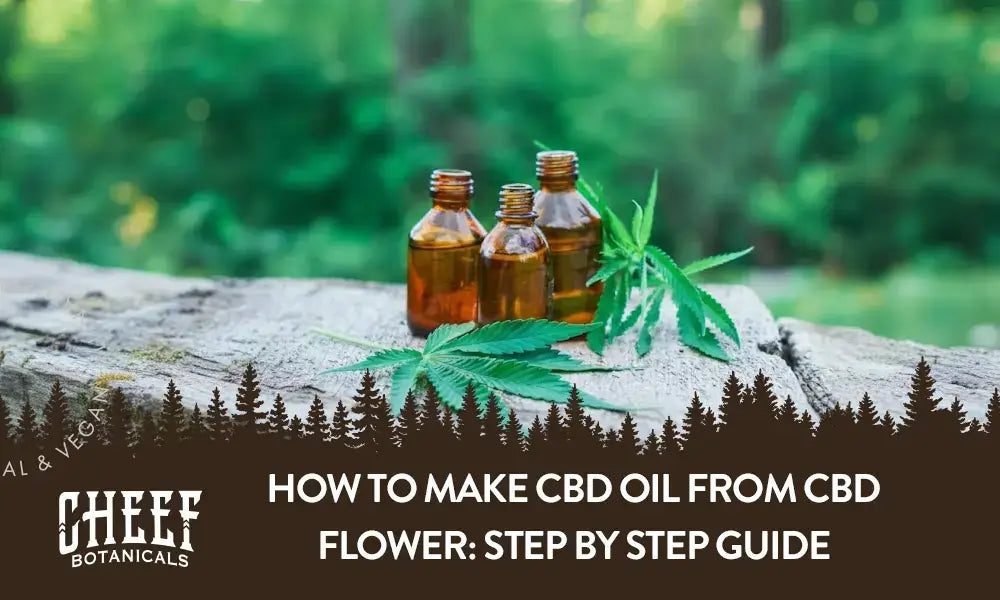
Learning how to make CBD oil from CBD flower reveals a whole new side of hemp. You combine aromatic flower with gentle heat, then let a quality carrier oil capture its cannabinoids. The result is a personal infusion you can proudly call your own CBD oil.
Our method uses 1 oz of CBD flower and 16 oz of oil. You will decarboxylate and infuse the flower before straining and storing your finished oil. We will also help you choose ingredients and estimate how much CBD your batch may contain. Ready to give your favorite flower a delicious new purpose?
Key Highlights
- This guide explains how to make CBD oil from CBD flower with simple kitchen tools.
- The recipe uses 1 oz of flower and 16 oz of carrier oil.
- Decarboxylate the flower at 220–225°F for 60 minutes.
- Keep the infusion at 130–160°F for around 45 minutes.
- Without laboratory testing, you can only estimate the strength of homemade CBD oil.
- Store the finished infusion in a sealed container. Protect it from air, moisture, light, and heat.
Why Make CBD Oil from CBD Flower?
Making CBD oil from flower may sound ambitious, but the basic idea is surprisingly approachable. There’s more to it than simply filling a jar. A few practical benefits make this hands-on project worth considering.
High-CBD Flower Offers More Control over Your Infusion
The flower’s CBD percentage gives you a useful starting point when planning your oil infusion. High CBD hemp flower may create a more concentrated batch than a lower-percentage option. Check the product label and laboratory report before you begin.
Each strain also offers a distinct mix of terpenes and other cannabinoids. These beneficial compounds influence its aroma and flavor and may contribute to CBD’s potential therapeutic benefits. Browse our CBD flower strain collection and choose a variety that already appeals to your senses.
Homemade CBD Oil Lets You Choose Every Ingredient
A DIY recipe gives you complete control over your flower and oil. You can also choose the flavor and batch size. Try olive oil for a familiar taste or MCT oil for a lighter flavor. Coconut oil works well when you want a richer texture.
This freedom makes homemade oil appealing if you enjoy hands-on projects. You know exactly what goes into the jar. You can then adjust future batches to suit your preferences.
What to Know Before You Make CBD Oil
A little planning can make the entire process smoother. Before you begin, choose your flower and oil carefully, then calculate a realistic potency estimate.
How to Choose CBD Flower for Homemade Oil
Start with fresh hemp flower from a trusted source. Look for a batch-specific Certificate of Analysis (COA) that lists CBD and CBDA. It should also show the THC content. Confirm that the report matches your package’s batch number and includes available screening results.
Under the 2018 Farm Bill, federal law created a legal framework for qualifying hemp products. State and local rules can differ, though. Check the requirements where you live before buying or using cannabis flower.
Choose a strain with an aroma you enjoy. Consider its terpene profile, too. Quality plant material from the cannabis plant gives your infusion a more pleasing foundation.
How to Choose a Carrier Oil
CBD is fat-soluble, so it blends well with oils that contain dietary fats. The right choice depends on your preferred taste, texture, and intended use. Our guide to a carrier oil offers a closer look at your options.
Popular carrier oils include:
- MCT oil: Offers a light taste and stays liquid at room temperature.
- Olive oil: Brings a familiar flavor that works well in savory recipes.
- Coconut oil: Adds richness but may turn solid in a cool room.
- Hemp seed oil: This hemp oil provides an earthy taste and naturally occurring fatty acids.
Some recipes also use avocado oil, but the three oils in our recipe remain the most practical choices. For better flavor, skip highly refined vegetable or soybean oil. Never replace edible carrier oils with essential oils.
How to Estimate the Potency of Homemade CBD Oil
You can create a rough estimate from the flower’s weight, CBD percentage, and final volume. First, convert 1 oz of flower to about 28,350 milligrams. If your flower lists 15% CBD, multiply 28,350 by 0.15 to get 4,252 milligrams of theoretical CBD before processing losses.
Dividing that amount by 16 oz of oil gives about 266 milligrams per fluid ounce. Your finished concentration will likely fall below that theoretical number because decarboxylation, straining, and the extraction process do not capture every milligram.
If the lab report lists mostly cannabidiolic acid, the calculation becomes more complex. Only laboratory testing can confirm the actual strength of your homemade CBD oil.
How to Make CBD Oil from CBD Flower

The following method breaks the project into four manageable steps. Gather your supplies first, then prepare, decarboxylate, infuse, strain, and store your flower.
Ingredients and Equipment You’ll Need
This extraction method uses common kitchen supplies. Set everything out before you begin so you can monitor time and temperature closely.
Ingredients:
- 1 oz of CBD hemp flower
- 16 oz of MCT oil, coconut oil, or olive oil
Equipment:
- Grinder or mortar and pestle
- Cookie sheet or baking sheet
- Aluminum foil
- Double boiler, saucepan, or slow cooker
- Cooking thermometer
- Cheesecloth or fine mesh sieve
- Large mixing bowl
- Spatula
- Clean glass jar
Step 1: Grind and Prepare the CBD Flower
Put on clean, food-safe gloves, then use a grinder or mortar and pestle to break the flower into small, even pieces. Avoid turning it into powder. Very fine pieces can pass through the cheesecloth and leave sediment in your oil.
Line a cookie sheet with aluminum foil and spread the flower across the surface. Keep the pieces in an even layer so they receive steady heat during the next step.
Step 2: Decarboxylate the CBD Flower
Preheat your oven to 220–225°F. Bake the ground flower for 60 minutes and watch the temperature closely. The flower should look dry and lightly toasted when the process finishes.
Raw flower contains much of its CBD in an acidic form called CBDA. Decarboxylation creates a chemical change that converts much of that CBDA into CBD. This step prepares the flower for a CBD-forward infusion.
Let the decarbed flower cool enough for safe handling. Avoid high temperatures, which can affect cannabinoids and terpenes.
Step 3: Infuse the Flower into Your Carrier Oil
Combine the cooled flower with 16 oz of carrier oil in the top of a double boiler. Place it over gently simmering water and keep the mixture between 130°F and 160°F for around 45 minutes. Use a thermometer and keep the temperature below 200°F.
You can also use a slow cooker set between 130°F and 160°F. Another option involves placing the mixture in a heat-safe mason jar and setting it in a low-temperature water bath. Monitor the water and container throughout the process.
Gentle heat helps the oil draw cannabinoids from the plant matter. Keep the mixture moving by stirring occasionally when your setup allows it.
Step 4: Strain and Store Your Homemade CBD Oil
Place cheesecloth or a fine mesh sieve over a clean mixing bowl. Carefully pour the mixture through it and allow the oil to drain. Remove the remaining plant material without pushing fine sediment into the finished infusion.
Let the oil reach room temperature, then transfer it to a clean, airtight glass jar. Add a label with the preparation date and the type of carrier oil you used.
Store the container in a cool, dark place away from moisture and direct sunlight. You can use a refrigerator when the chosen carrier oil allows it.
Related Post: Everything You Should Know About Cooking With CBD Oil
Common Mistakes to Avoid When Making CBD Oil
Small details can change the quality and consistency of your batch. Watch for these common mistakes when you make CBD oil:
- Skipping decarboxylation: Raw flower contains more CBDA and less converted CBD.
- Grinding too finely: Powder can slip through the strainer and cloud the oil.
- Using too much heat: High temperatures can affect the flower’s cannabinoids and terpenes.
- Skipping the thermometer: Your stovetop setting cannot tell you the oil’s exact temperature.
- Using damp tools: Moisture can reduce the oil’s storage life.
- Ignoring the lab report: The report supplies the information you need for a potency estimate.
- Expecting exact strength: Home CBD extraction cannot match laboratory measurements.
- Using poor storage: Heat, air, and sunlight can affect freshness over time.
- Using flammable solvents: Never use them in a home kitchen; solvent extraction requires specialized equipment and strict safety controls.
Pros and Cons of Making CBD Oil at Home
Making CBD oil at home offers creative freedom, but the method also requires patience and care. Consider both sides before reaching for your grinder.
Advantages:
- You select the flower, carrier oil, flavor, and batch size.
- You can explore different high-CBD strains and terpene profiles.
- The recipe uses simple tools that many kitchens already have.
- A larger batch may offer good value for frequent users.
Cons:
- You cannot confirm exact potency without lab testing.
- Each batch may produce slightly different results.
- Basic kitchen methods cannot create broad-spectrum oil or remove THC.
- The finished infusion usually reflects the flower’s full-spectrum profile, where cannabinoids and terpenes may work together through the entourage effect.
- The process requires careful temperature control and proper storage.
The method can suit you if you enjoy personalizing your CBD products. A ready-made option may fit better when you want labeled strength and immediate convenience.
Homemade CBD Oil vs. Ready-Made CBD Oil
Both options offer a rewarding way to explore CBD. Your ideal choice depends on how much you value customization, convenience, and concentration details.
|
Feature |
Homemade CBD Oil |
Ready-Made CBD Oil |
|---|---|---|
|
Preparation |
Requires time and kitchen tools |
Ready to use |
|
Ingredients |
You choose the flower and oil |
The label lists the formula |
|
Strength |
Requires an estimate |
Lists CBD per bottle and serving |
|
Testing |
Finished batch lacks a personal lab report |
Third-party testing confirms batch details |
|
Customization |
Offers more control |
Offers set strengths |
|
Consistency |
Can vary between batches |
Follows a controlled formula |
Choose CBD flower if you enjoy making cannabis oil and adjusting each batch. Choose ready-made oil if you prefer a simple formula with clearly listed concentration details.
Where Can You Find High-Quality CBD Oil?

Want to enjoy CBD without turning your kitchen into an infusion station? Our CBD oil gives you a polished, ready-to-use option with no grinding, heating, or straining.
We use full-spectrum, hemp-derived CBD distillate, a concentrated CBD extract, and hemp seed oil in our two-ingredient formula. The industry considers supercritical CO2 extraction a leading option for cannabinoid extraction. Unlike steam distillation, our clean CO2 extraction method captures CBD and other cannabinoids from the hemp plant. Every batch goes through third-party laboratory testing for accurate product details.
Choose from 300mg, 600mg, 1200mg, and 3000mg strengths. Whether you prefer a lighter introduction or a more concentrated addition to your routine, our collection makes finding high-quality CBD oil refreshingly simple.
Making CBD Oil from CBD Flower FAQs
These quick answers cover storage, CBD isolate, decarboxylation, and common ways to enjoy your finished infusion.
How Long Can Homemade CBD Oil Last?
Homemade CBD oil may last 6–12 months under suitable storage conditions. Its actual shelf life depends on the carrier oil, container cleanliness, and exposure to air, moisture, light, and heat.
Keep the oil in an airtight glass container in a cool, dark location. Check it before each use. A major color or texture change or a strong odor may signal a drop in quality.
Can You Use CBD Isolate to Make CBD Oil?
Yes, you can use CBD isolate to make pure CBD oil. Dissolve a measured amount into MCT, coconut, or olive oil with gentle heat. Since the isolate contains pure CBD, it makes concentration calculations more straightforward.
A CBD isolate oil does not offer the wider cannabinoid and terpene profile of a whole plant extract. It also differs from a full-spectrum CBD flower infusion.
Do You Have to Decarboxylate CBD Flower Before Making Oil?
Yes, you should decarboxylate CBD flower when you want a CBD-forward infusion. Raw flower contains much of its cannabinoid content as cannabidiolic acid, the acidic form of CBD.
Controlled heat converts much of the CBDA into CBD. Skipping this step creates a different cannabinoid profile and may leave your oil with less converted CBD. Follow the temperature and timing in the above recipe.
How Do People Use CBD Oil?
People commonly use CBD oil in two different ways: directly or in food, smoothies, and other drinks. You can also use the oil in simple recipes when its carrier and flavor suit the dish.
Measure each serving carefully, especially when using homemade CBD oil with estimated potency. Follow the product directions when using ready-made oil, and speak with a healthcare professional if you have questions about CBD or your routine.
Final Thoughts: How to Make CBD Oil from CBD Flower
A jar of homemade CBD oil begins with just a few thoughtful choices: quality flower, the right carrier oil, and gentle heat. Once you understand the process, you can personalize the flavor and explore different strains at your own pace.
Ready to create something distinctly yours? Try browsing our CBD flower collection and choose the strain that inspires your next batch. If you would rather skip the kitchen work, explore our lab-tested CBD oils in four convenient strengths.

 CBD Gummies - Top Seller
 CBD + THC Gummy - Excellent Choice
 Northern Lights - Highly Rated
 Full Spectrum CBD Oil - Good Value

Leave a comment
This site is protected by hCaptcha and the hCaptcha Privacy Policy and Terms of Service apply.