
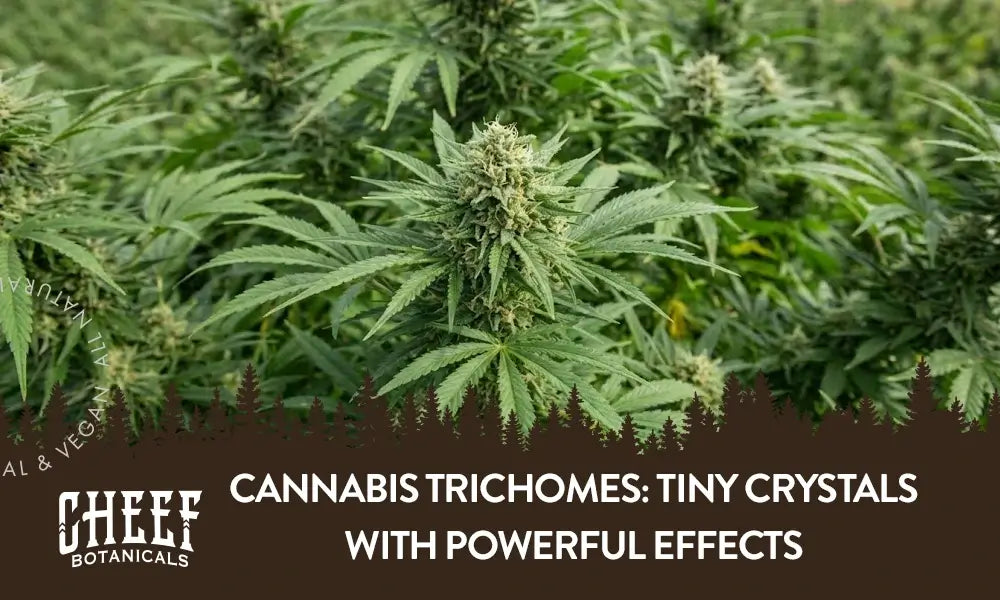
Take a close look at a cannabis bud and you’ll notice tiny, shimmering crystals coating it. Those sparkling structures are trichomes, and they’re responsible for much more than just looks. Trichomes give cannabis sativa plants their strong aroma, sticky texture, and much of what makes each strain unique.
If you're just learning the basics of cannabis, certain terms come up again and again: trichomes, cannabinoids, and terpenes. In this article, we’ll focus on cannabis trichomes. Let's unpack what they are, what they’re made of, and how they function. Find out exactly why they matter so much to the final cannabis products people enjoy.
What is a Trichome?
Trichomes are tiny outgrowths found on plants, algae, lichens, and certain microorganisms. The word comes from the Greek Tríchōma, meaning “growth of hair,” which makes sense once you see them up close. Under a microscope, trichomes appear as small, hair-like structures that grow on the plant's surface.
Trichomes found on cannabis flowers look like small, crystal-coated hairs covering the buds and nearby leaves. They often feel sticky to the touch and give off a strong aroma.
The resin produced by trichomes contains cannabinoids, terpenes, and flavonoids. These compounds define the flower’s aroma and appearance. In short, trichomes act as the plant’s chemical factory.
What Are Cannabis Trichomes?

One of the main jobs of cannabis trichomes is protection. They help shield the cannabis plant from harsh UV rays and extreme weather. They also protect against certain fungal threats that can damage plant health and disrupt the flowering cycle.
Beyond protection, trichomes also produce cannabinoids, terpenes, and flavonoids. These are responsible for the aromas, flavors, and characteristics of final cannabis products.
What Are Trichomes Made of?
Trichomes contain tiny hair-like structures that include glandular hairs, scales, and papillae. These sticky appendages appear on several plant species. Cannabis trichomes, in particular, are especially resin-rich and complex.
Trichome production begins while the plant is above ground during cannabis cultivation. As the flower forms, vacuoles and plastids move from the stalk into the gland head. Inside that gland head, secretory cells begin metabolizing chemical compounds. Those compounds eventually become cannabinoids. Environmental conditions, like light exposure, play a major role in how many trichomes develop and how active they become.
Trichomes start clear and translucent. They turn cloudy or milky as they mature, and finally shift to an amber color as they age. These changes signal peak development and help growers find the ideal harvest window. Once trichomes move past this stage, the flower begins to lose freshness and quality.
Several factors can damage or degrade trichomes, including:
- Physical Contact. Handling or brushing against the flower can break trichome heads. This can reduce resin production.
- Heat. Excessive heat can cause trichomes to dry out or degrade more quickly.
- Light. Prolonged light exposure can break down sensitive compounds within trichomes.
- Oxygen. Oxidation slowly degrades cannabinoids and terpenes over time.
- Time. Even under ideal conditions, trichomes naturally age and lose potency.
Careful handling during growth and harvest helps preserve trichome structure and overall quality.
What Do Trichomes Do?
One of their key roles is protection. In the wild, trichomes help defend the plant from insects and animals by producing a bitter taste. This defense mechanism effectively deters herbivores. Trichomes also provide a barrier against strong winds and certain types of fungal growth.
Trichomes also act as visual clues for growers. Immature trichomes appear small and clear. As the plant matures, they turn into milky or cloudy trichomes, and then shift to a pale amber tone. These changes help indicate peak maturity for harvest.
It’s important not to confuse trichomes with pistils. Pistils are the thin hairs that collect pollen. They can also change color as the plant grows, but they serve a different biological purpose.
As the flower grows, trichomes become the site where cannabinoids and terpenes develop. CBG forms first and acts as the precursor for other cannabinoids, including THC and CBD. Enzymes within the trichomes transform CBG into these compounds as the plant matures.
Lastly, trichomes are also responsible for terpene production. Early in growth, aromas tend to be sharper and more bitter. As flavonoids and terpenes develop later in the flowering stage, the scent becomes more complex. It often shifts toward sweeter, fruity, or floral notes in a fully mature plant.
How Do Trichomes Affect Cannabis?
Trichomes influence cannabis by developing cannabinoids, terpenes, and flavonoids. Each of these compounds influences how the flower looks, smells, and feels once finished. They also impact how CBD products and other cannabis goods turn out.
Cannabis plants produce more than 100 known cannabinoids. These compounds interact with endocannabinoid receptors in the body, known as CB1 and CB2. Together, these receptors make up part of the endocannabinoid system (ECS). This system helps manage functions such as mood, sleep patterns, appetite, and stress response.
Terpenes give the plant its aroma and flavor. They also interact with cannabinoids through the "entourage effect." This is where compounds work together rather than in isolation. Terpenes bind to certain receptors and influence neurotransmitter activity, including dopamine and serotonin, shaping the overall experience.
Flavonoids contribute to the plant’s color, taste, and scent. These compounds help explain why different strains can smell sweet, earthy, floral, or citrusy.
How Many Types of Trichomes Are in Cannabis?
Cannabis sativa plants contain three main types of glandular trichomes: bulbous trichomes, capitate sessile trichomes, and capitate-stalked trichomes. Each type differs in size, shape, and location on the plant, but all contribute to resin and compound production in some way.
The differences between these trichomes can help explain why some parts of the plant are more resin-rich than others. It can also clarify why certain flowers appear more frosted than the surrounding leaves.
Common Cannabis Trichomes

As stated, three trichomes linger on the cannabis plant. Each one is important because it helps produce cannabinoids, which bring about potential therapeutic benefits. Let's go over the three types: bulbous trichomes, capitate sessile trichomes, and capitate-stalked trichomes.
Bulbous trichomes
Bulbous trichomes are the smallest type and are only visible with a microscope. They typically measure about 10–15 microns. For comparison, the average human hair is around 70 microns wide. These tiny trichomes appear scattered across the plant's surface.
Capitate sessile trichomes
Capitate sessile trichomes are sometimes referred to as sessile-presenting trichomes. They are slightly larger, usually measuring 20–30 microns. They have a mushroom-like shape with a rounded head that sits directly on the plant surface without a stalk. These trichomes are more concentrated on flowers than leaves.
Capitate-stalked trichomes
Capitate-stalked trichomes, also known as stalked glandular trichomes, are the largest and most noticeable type. Measuring roughly 200–300 microns tall, they are visible to the naked eye. These trichomes consist of a stalk topped with a spherical resin gland and contain the highest concentration of cannabinoids and terpenes.
What Are the Three Stages of Cannabis Trichomes?
Trichomes in cannabis move through three clear stages as the plant matures. Each stage shows a different look and signals changes in cannabinoid and terpene development. Knowing how to spot these stages helps growers choose the right harvest window.
- Clear Trichomes. Clear trichomes appear early in flower development. They look glassy and transparent, almost like tiny droplets. At this stage, cannabinoid production has started, but levels are still low. Harvesting during this phase usually results in underdeveloped aroma and less complexity.
- Cloudy Trichomes. Cloudy, or milky, bud trichomes signal peak maturity. The resin heads turn opaque as cannabinoid levels reach their highest point. This stage is often considered ideal for harvest because aroma, flavor, and overall balance are fully developed.
- Amber Trichomes. Amber trichomes appear as the plant moves past peak freshness. The resin heads darken as compounds begin to break down. This stage points to later maturity and signals that the plant is approaching the end of its optimal harvest window.
What Are the Best Ratios of Trichome Color for Finished Flower?
The ideal trichome color ratio helps signal when the flower has reached full maturity. Finished flower typically shows a mix of cloudy and amber-colored trichomes, with very few clear heads remaining. This balance means the plant developed fully without moving too far into degradation.
Many growers aim for most trichomes, about 70–90%, to be cloudy. Cloudy heads reflect peak cannabinoid development and a complete terpene profile. At this stage, aroma and flavor feel full and well-rounded.
A smaller portion of 10–30% amber coloration adds depth and maturity. The amber tone shows that some compounds have begun to age, which can soften sharper characteristics. Too much amber, however, suggests the flower stayed on the plant too long.
Clear trichomes should be minimal at harvest. Their presence means incomplete development rather than a desired final profile. A handheld magnifying glass can make it easier to track trichome color changes during flower maturation.
Fun fact: Trichome color ratios aren’t just a grower detail. They’re one of the easiest ways to spot well-finished flower. Brands like Cheef Botanicals, for example, focus on sourcing flower harvested at peak trichome maturity. This is why our buds consistently look frosty, smell rich, and feel properly developed. Check out our different flower options here.
How Trichome Ratios Affect Energizing vs. Sedative Flower
Trichome color ratios can influence how a finished flower feels, largely based on when it’s harvested. Small timing shifts change the balance between brighter, more uplifting qualities and heavier, more calming ones.
For a more energizing profile, growers tend to harvest earlier. This usually means 85–95% cloudy trichomes with very little amber present. At this stage, the flower keeps a fresher aroma and a lighter overall character without the weight that comes from later maturation.
For more sedative effects, harvest is typically delayed. A common target is 60–70% cloudy trichomes with 30–40% amber. This later stage reflects deeper maturity and produces a slower, heavier finish as compounds begin to age.
In both cases, clear trichomes should be rare. Their presence signals incomplete development rather than a specific effect profile.
Final Thoughts - Cannabis Trichomes
Trichomes may be small, but they play an outsized role in what makes cannabis flower special. From protecting the plant to producing terpenes, cannabinoids, and flavonoids, these tiny resin glands shape aroma, appearance, and overall quality. Understanding how trichomes develop, change color, and signal maturity adds a deeper appreciation for what goes into well-crafted cannabis flower.
At Cheef Botanicals, quality starts with attention to detail. Our flower is carefully sourced, focusing on proper cultivation and harvest timing to preserve healthy, mature trichomes. That commitment shows in the look, aroma, and consistency of every product we offer. In the end, great cannabis isn’t just grown—it’s finished at the trichome level.

 CBD Gummies - Top Seller
 CBD + THC Gummy - Excellent Choice
 Northern Lights - Highly Rated
 Full Spectrum CBD Oil - Good Value



Leave a comment
This site is protected by hCaptcha and the hCaptcha Privacy Policy and Terms of Service apply.