

With the rapid rise of hemp-derived cannabinoids, it’s no surprise that newer THC variants like Delta 6 and Delta 8 are gaining attention. As consumers look for alternatives to traditional Delta 9 THC, brands continue to introduce new options that promise unique effects, smoother experiences, and more accessible legality.
In this comprehensive guide, we’ll break down everything you need to know about Delta 6 versus Delta 8, including how they’re made, how they affect the body, and which one might be the better fit for your needs. The legal landscape for these cannabinoids is rapidly changing, so consumers need to stay informed about current regulations and developments.
What Are Delta 6 and Delta 8 THC?
Delta 6 and Delta 8 are both minor cannabinoids found in the cannabis plant. Delta 6 THC is a minor cannabinoid that is naturally present in cannabis plants in very small quantities, while Delta 8 THC is more commonly found and has gained popularity. While they share structural similarities with Delta 9 THC, their effects tend to be less intense due to slight differences in molecular structure.
These are just two of several other THC isomers and THC compounds found in the cannabis plant, each with unique properties and effects. These cannabinoids interact with the endocannabinoid system (ECS)—a complex network that helps regulate mood, appetite, sleep, and more.
Overview of Delta 6 THC

Delta 6 THC (Δ6-THC) is one of the lesser-known THC isomers. It occurs naturally in extremely small amounts, which makes it difficult to study and produce. Delta 6 THC is typically synthesized in labs due to its low natural concentration in cannabis, similar to how Delta-8 THC is produced.
Consumers often describe Delta 6 as:
- Mildly relaxing
- Lightly euphoric
- Subtle in psychoactive intensity
- Offering milder psychoactive effects than Delta-8 or Delta-9 THC
- Providing gentle relaxation and a functional high
- Enhancing sensory perception, with some users reporting heightened sensory perception, such as improved taste, sound, or visual experiences
- Supporting enhanced creativity and mild anti-inflammatory benefits
It’s important to note that Delta 6 THC may cause mild anxiety, especially if consumed in higher doses. Scientific research on Delta 6 is still very limited, and most information is based on anecdotal reports rather than clinical studies.
Overview of Delta 8 THC

Delta 8 THC (Δ8-THC) is far more widely known and used. It’s chemically similar to Delta 9 THC but produces a less intense high.
Delta 8 THC has notable psychoactive properties and is celebrated for its therapeutic benefits, including anti-inflammatory properties. It has been the subject of ongoing research since the 1940s, making it one of the better-studied cannabinoids.
Many users report that Delta 8 offers:
- Relaxation without heavy sedation
- Mild euphoria
- Clear-headed effects
- Reduced anxiety compared to Delta 9
- Widely used for unwinding after a long day, aiding sleep, managing mild physical discomfort, and stimulating appetite
How Delta 6 and Delta 8 Are Made
Neither Delta 6 nor Delta 8 exists in high concentrations in cannabis plants. Because of this, both are typically produced through chemical conversion processes.
Both Delta 6 and Delta 8 are produced from abundant cannabinoids like hemp-derived CBD, making them hemp-derived products that are legally distinct from marijuana. They are generally derived from legal hemp under the 2018 Farm Bill, provided they contain less than 0.3% Delta-9 THC by weight. Other hemp-derived cannabinoids are also produced using similar methods.
Delta 6 THC Derivation
Delta-6 is usually produced through a process called isomerization, in which another cannabinoid—commonly CBD—is chemically altered.
This involves:
- Extracting CBD from hemp
- Applying solvents and acids
- Rearranging the molecular structure
The result is a compound structurally similar to naturally occurring Delta 6—but produced in a lab setting.
Delta 8 THC Derivation
Delta 8 is made using a similar process. Most commercially available Delta 8 products are derived from hemp-based CBD through controlled chemical reactions.
Delta 8 THC is available in various forms, including edibles, vapes, and tinctures, due to its standardized production from hemp-derived CBD.
Because this method is widely used, Delta 8 is:
- More available
- More standardized
- More studied compared to Delta 6
However, the process also raises concerns about residual solvents and purity, underscoring the need for third-party testing.
Delta 6 vs Delta 8: Key Differences Explained

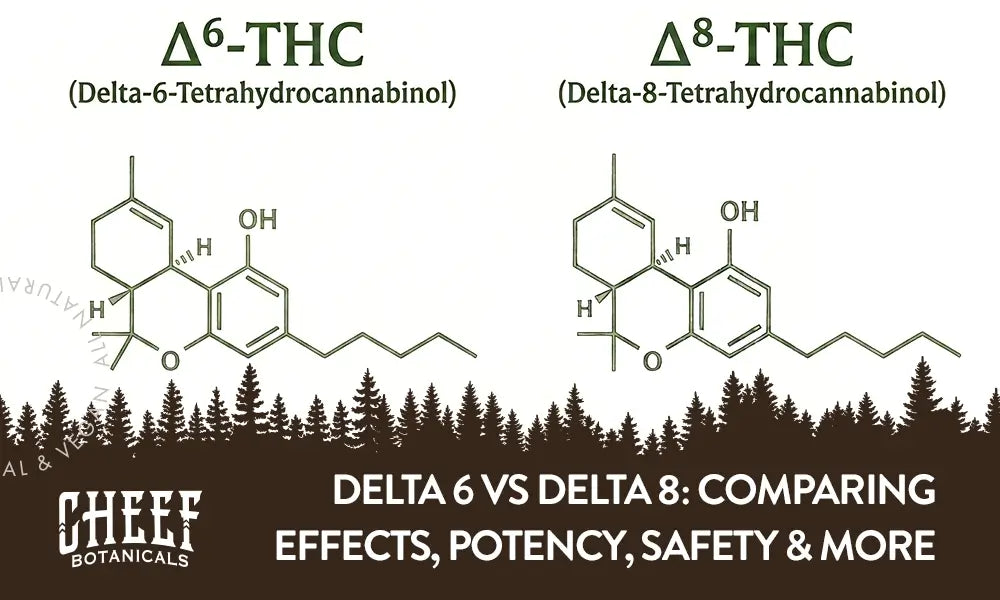
Although they share similarities, Delta 6 and Delta 8 differ in several important ways. The key difference between these delta variants lies in their molecular structures, which set them apart from each other and from other THC variants, such as Delta 9 and Delta 11.
1. Chemical Structure and Effects
The main difference lies in the position of a double bond in their molecular structure. Delta 6 and Delta 8 THC are isomers, meaning they share the same chemical formula and molecular formula, but differ in the arrangement of their atoms—specifically, the position of the double bond.
- Delta 8 → double bond on the 8th carbon chain
- Delta 6 → double bond on the 6th carbon chain
This subtle shift in the position of the double bond affects their potency and psychoactive effects. This difference in molecular structure changes how each compound interacts with cannabinoid receptors, influencing their binding affinity and resulting in unique psychoactive effects for users. Delta 9 THC, by comparison, is the primary psychoactive compound in cannabis and is responsible for the most intense 'high,' while Delta 6 and Delta 8 have milder effects.
Result:
- Delta 8 produces a more noticeable psychoactive effect
- Delta 6 delivers a lighter, more subtle experience
2. Potency Comparison
When comparing Delta 6 vs Delta 8 potency:
- Delta 8 THC: Moderate potency
- Delta 6 THC: Mild potency
Delta 8 is generally considered stronger and more reliable, while Delta 6 is often described as more experimental and less predictable.
3. Duration of Effects
- Delta 8: Typically lasts 2–4 hours
- Delta 6: May have a shorter or milder duration
Factors such as dosage, metabolism, and product type (edible vs. vape) can significantly influence how long the effects last.
4. Availability and Popularity
Delta 8 is widely available in:
- Gummies
- Vapes
- Tinctures
- Capsules
Delta 8 is considered one of the most popular THC products and cannabis products available today.
Delta 6, on the other hand, is:
- Less common
- Less standardized
- More niche
How Delta 6 and Delta 8 Affect the Body
Both Delta 6 and Delta 8 THC interact with cannabinoid receptors—specifically CB1 and CB2 receptors—within the body's endocannabinoid system (ECS), which is distributed throughout the human body. The CB1 receptors are primarily found in the brain and nervous system and are responsible for psychoactive effects. In contrast, CB2 receptors are located in the immune system and influence inflammation and stress response.
Both compounds interact with these receptors differently, resulting in unique experiences for users. Delta 8 binds more effectively to CB1 receptors, which explains its stronger psychoactive effects.
Delta 6 likely interacts more weakly, resulting in:
- Lower intensity
- Reduced cognitive impairment
- Subtle mood changes
Potential Benefits of Delta 6 vs Delta 8

While research is still ongoing, users report several potential benefits. Both Delta 6 and Delta 8 are being explored for their potential therapeutic benefits, but further research is needed to understand their effects fully.
Delta 8 THC Benefits
- Relaxation and stress relief
- Appetite stimulation
- Mild pain relief
- Anti-nausea effects
Delta 6 THC Potential Benefits
- Gentle relaxation
- Light mood enhancement
- Lower likelihood of overwhelming effects
- May offer mild anti-inflammatory properties and other therapeutic properties, especially for creative activities or social settings
Because research is limited, Delta 6 should be approached with caution and realistic expectations.
Safety Considerations and Side Effects
Are Delta 6 and Delta 8 Safe?
Safety largely depends on:
- Product quality
- Dosage
- Individual tolerance
Potential side effects for both include:
- Dry mouth
- Red eyes
- Drowsiness
- Impaired coordination
Both Delta 6 and Delta 8 THC may affect drug tests and drug screening results, so users should exercise caution if they are subject to testing.
Recreational vs Wellness Use
Recreational Use
- Delta 8 → Ideal for a mild but noticeable high
- Delta 6 → Better for subtle, low-intensity experiences
Wellness Applications
Both cannabinoids are used for:
- Relaxation
- Stress management
- Mild discomfort
Both Delta 6 and Delta 8 are also being explored for their therapeutic benefits in various wellness applications, as they may help support overall well-being by interacting with the endocannabinoid system.
Delta 8 is more commonly used due to:
- Better availability
- More consistent effects
Comparing Delta 9 vs Delta 6 vs Delta 8
Delta 9 THC, often referred to as traditional THC, is the primary psychoactive compound in cannabis. Delta 6 and Delta 8 are other THC compounds with milder effects, each offering unique properties and experiences compared to traditional THC. Understanding how these cannabinoids compare to each other and to other THC compounds can help you make a more informed choice.
|
Cannabinoid |
Potency |
Effects |
Common Use |
|---|---|---|---|
|
Delta 9 THC |
High |
Strong psychoactive high |
Recreational |
|
Delta 8 THC |
Moderate |
Relaxed, clear-headed |
Balanced use |
|
Delta 6 THC |
Mild |
Subtle, gentle |
Beginners |
What Delta 8 Options Do We Offer?

Our Delta 8 products are designed for consistency, quality, and enjoyment, offering a reliable experience every time.
Delta 8 Gummy Cubes
These gummies provide a balanced and calming effect, ideal for relaxing after a long day. Available in:
- Sour
- Tropical
- Mixed berry
With adjustable potency options, they’re suitable for both beginners and experienced users.
Delta 8 Tinctures
Our Delta 8 tinctures offer flexibility and fast absorption. You can:
- Take them directly
- Mix them into drinks
They come in various concentrations, allowing you to control your experience precisely.
How to Choose Between Delta 6 and Delta 8
If you’re deciding between the two, consider your goals:
Before you make a decision, please consider safety. Always check for clear labeling on Delta-6 and Delta-8 THC products, including potency and ingredient information. Also, could you research the legal status of Delta-6 and Delta-8 THC products in your area before purchasing?
Choose Delta 8 if you want:
- Noticeable effects
- Consistency
- Widely available products
Choose Delta 6 if you want:
- Very mild effects
- A niche or experimental option
- Lower psychoactive intensity
What to Look for When Buying Delta 6 or Delta 8
1. Third-Party Lab Testing
Always check for:
- Cannabinoid content
- Absence of contaminants
- Verified potency
2. Transparent Ingredients
Avoid products with:
- Unknown additives
- Artificial fillers
- Missing ingredient lists
3. Product Type and Dosage
- Gummies → longer-lasting effects
- Vapes → fast onset
- Tinctures → flexible dosing
Start low and increase gradually.
Legal Status of Delta 6 vs Delta 8

Under the 2018 Farm Bill, hemp-derived cannabinoids with less than 0.3% Delta 9 THC are federally legal.
The Controlled Substances Act classifies THC as a controlled substance, but legal hemp is exempt under the 2018 Farm Bill. However, the legal landscape is evolving and complex, with some states specifically banning synthetic cannabinoids—which could include Delta-6 THC—while others have not addressed it directly. The legal status of Delta-6 THC could change rapidly as lawmakers and regulatory agencies respond to developments in the cannabis market.
However:
- Some states restrict Delta 8
- Delta 6 laws are even less clear
Always check your local regulations before purchasing.
Frequently Asked Questions (FAQs)
1. What is the main difference between Delta 6 and Delta 8 THC?
The primary difference between Delta 6 and Delta 8 THC lies in their molecular structures, specifically the position of the double bond along the carbon chain. This small structural variation significantly impacts how each compound interacts with the body’s endocannabinoid system.
Delta 8 binds more efficiently to CB1 receptors in the brain, resulting in stronger psychoactive effects, while Delta 6 binds more weakly, producing a milder, subtler experience. As a result, Delta 8 is typically chosen for a balanced high, whereas Delta 6 appeals to those seeking very light effects.
2. Is Delta 6 THC stronger than Delta 8 THC?
No, Delta 6 THC is generally less potent than Delta 8 THC. Delta 8 offers moderate psychoactive effects that are noticeable but not overwhelming, making it a popular alternative to Delta 9 THC.
Delta 6, on the other hand, is considered mild in potency, often producing gentle relaxation and subtle mood enhancement. Because of this, Delta 6 may be more suitable for beginners or those sensitive to THC.
3. What does Delta 8 feel like compared to Delta 6?
Delta 8 typically produces a calm, clear-headed high with mild euphoria, relaxation, and reduced anxiety compared to Delta 9 THC. Many users describe it as functional and manageable, making it suitable for evening use or stress relief.
Delta 6 delivers a much lighter experience, often described as:
- Slightly relaxing
- Mildly uplifting
- Less mentally impairing
It may enhance creativity or sensory perception without producing a strong “high.”
4. Are Delta 6 and Delta 8 safe to use?
Both Delta 6 and Delta 8 THC can be safe when used responsibly and sourced from reputable brands, but safety depends on several factors, including dosage, product quality, and individual tolerance.
Because both cannabinoids are typically lab-derived from CBD, there is a risk of contaminants if products are not properly tested. Always look for:
- Third-party lab results (COAs)
- Clear ingredient labeling
- Verified potency
Delta 8 has more research behind it, while Delta 6 lacks extensive scientific studies, so it should be approached with extra caution.
Final Thoughts: Delta 6 vs Delta 8
When comparing Delta 6 vs Delta 8, the biggest difference lies in intensity and reliability.
- Delta 8 is the more established option with consistent effects and broader availability
- Delta 6 is milder, less researched, and more niche
For most users, Delta 8 offers the best balance of effectiveness, accessibility, and predictability. However, Delta 6 may appeal to those looking for a very light, low-impact experience.
No matter which you choose, it's important to consider the safety profile of these cannabinoids, as Delta 8 has a more well-studied safety profile while Delta 6 lacks comprehensive data. Ongoing research into Delta 8 and further research on Delta 6 are needed to understand their effects, benefits, and potential risks fully. Always prioritize quality, lab testing, and responsible use to ensure a safe and enjoyable experience.

 Tropical Delta 8 THC Gummies - Top Seller
 Delta 8 Gummy Cubes - Excellent Choice
 Sour Delta 8 THC Gummies - Highly Rated
 Mixed Berry Delta 8 THC Gummies - Good Value



Leave a comment
This site is protected by hCaptcha and the hCaptcha Privacy Policy and Terms of Service apply.