

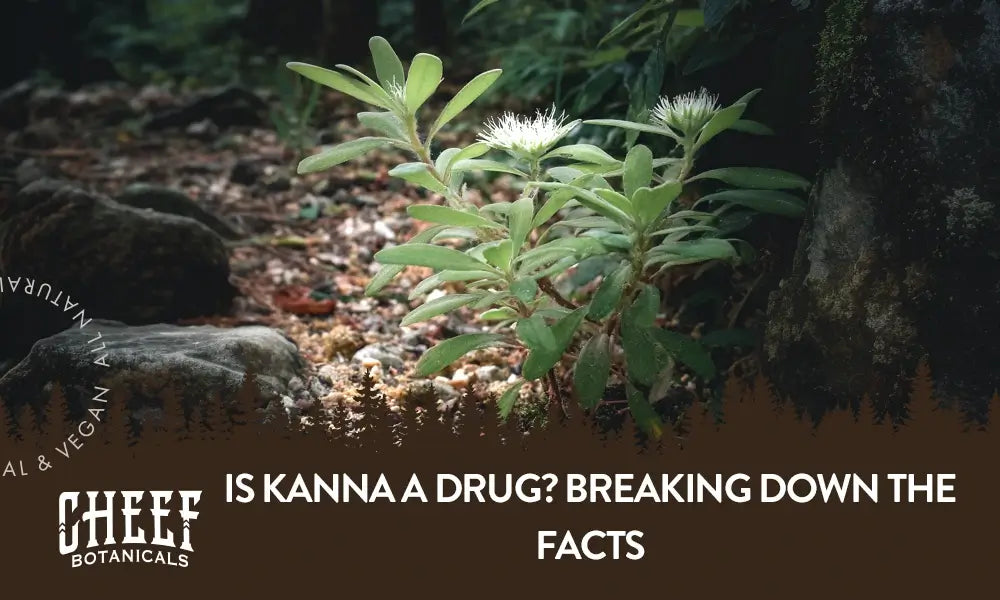
You might hear people ask, “Is kanna a drug,” but the answer is straightforward. Kanna comes from a succulent plant native to South Africa, not a lab-made substance, and it is not classified as a drug.
Its effects come from natural mesembrine alkaloids found in the plant material, which is why some wonder if the plant is considered a drug. Even so, kanna extract is commonly discussed alongside dietary supplements rather than controlled substances.
Keep reading to learn where kanna comes from, how it works, and why it continues to draw interest today.
What Is Kanna (Sceletium tortuosum)?

Kanna comes from the succulent plant Sceletium tortuosum, native to South Africa. People chewed, brewed, and smoked the dried plant material as part of traditional South African medicinal practices. These early uses helped shape how the plant became known over time.
Today, the kanna plant appears in wellness products as a herbal remedy. Gummies, tinctures, and teas made with its extract connect traditional use with modern routines, giving people a natural way to support mood and cognitive function.
Kanna’s Traditional Use in South Africa
In South Africa, kanna was part of everyday life long before modern wellness products existed. Indigenous communities carefully prepared dried plant material and used it during travel, social gatherings, and demanding situations. These practices helped support focus, composure, and social connection.
Kanna also held a place in traditional South African medicinal customs passed down through generations. This long-standing use explains why Sceletium tortuosum remains closely tied to South African culture today.
Why Do Some People Think Kanna Is a Drug?
Some people ask if kanna is a drug because it is sometimes called “nature’s MDMA.” That comparison comes from shared psychoactive constituents discussed in sources like food and chemical toxicology, which note mood-related effects. The difference is clear. MDMA is a synthetic psychoactive drug, while kanna comes from a succulent plant native to South Africa.
The kanna plant's effects come from its principal alkaloids found in the plant material. These active compounds interact with the brain in a milder way, which helps explain the calmer experience compared to mind-altering drugs.
Mood-Altering Effects
Kanna extract, including sceletium tortuosum extract based products, can cause noticeable shifts in mood without matching the acute effects of psychoactive drugs. Many consumers describe a calm lift, lighter thoughts, and more ease in social settings. The experience tends to feel steady and controlled rather than intense.
The main compounds act as selective serotonin reuptake inhibitors and interact with areas like the human amygdala. This interaction is often discussed in relation to psychological stress, which helps explain why kanna supplements are associated with balance rather than overstimulation and why some people say it may help relieve anxiety without dramatic effects.
Similarities to Substances With Psychoactive Properties
Kanna is sometimes compared to psychoactive drugs because Sceletium tortuosum alkaloids influence serotonin pathways. This overlap with the biological and pharmaceutical properties of other substances can lead to confusion. Discussions around this comparison often appear in toxicological safety assessment literature.
The difference comes down to strength and intent. Drugs with strong psychoactive effects may cause neurological adverse effects, while Sceletium tortuosum supplementation is generally described as mild and manageable.
Is Kanna Considered a Drug Legally?
Legally, kanna does not fall into the same class as controlled substances in the United States. It's sold as a herbal or wellness supplement, often appearing in edibles, tinctures, or teas. Consumers can buy it without a prescription.
Kanna extract comes from plant material and carries a record of traditional use, so lawmakers treat it differently. That keeps it in the category of legal natural remedies rather than banned drugs.
U.S. Legal Status
In the U.S., kanna supplements are legal to buy, sell, and consume. The plant is not listed as a controlled substance. Most products appear in the market as dietary supplements or natural remedies.
You'll see proprietary extract Sceletium tortuosum in gummies, capsules, teas, and chocolates. Since regulators view kanna as a wellness product, consumers can access it freely. Of course, that's provided companies follow supplement guidelines.
International Regulations
The rules for kanna can shift from country to country. In South Africa, where the genus Sceletium is native, it's seen as a traditional medicine. Other regions may sell it as a wellness supplement, while a few places may apply tighter rules.
Travelers should always check local rules before carrying kanna products. Even though it's not considered a psychoactive or party drug, laws can still differ across borders.
Is Kanna Classified as a Drug Medically?
Medically, kanna is not classified as a drug in the U.S. Doctors don't prescribe it. Instead, kanna gets grouped with herbal and dietary supplements that support mood and focus.
Researchers study kanna's compounds for potential pharmacological actions, yes. But the plant itself stays outside the medical definition of a drug. This difference keeps kanna aligned more with natural wellness than pharmaceutical products.
Pharmaceutical Definition of a Drug
In pharmaceutical terms, a drug is usually a compound designed in labs to treat or manage medical conditions. These substances often need approval from agencies, like the Food and Drug Administration (FDA), before reaching consumers. They come with clear dosing instructions, controlled distribution, and documented risks.
Kanna doesn't match that profile. The plant material is used as a natural remedy, not as a regulated pharmaceutical product.
Where Kanna Fits in Herbal Medicine
Kanna holds a special spot in traditional South African medicine. Communities used the dried plant material to help ease tension and support social bonding. That history gives kanna the reputation of a trusted herbal aid rather than a synthetic drug.
In modern wellness circles, kanna extract shows up in gummies, teas, and capsules. Consumers treat it as a natural way to support focus, calm energy, and relaxation. Think of it much like ginkgo biloba or other well-known herbs.
Related Post: Is Kanna a Stimulant? Understanding Its Natural Energy & Calm
Premium Kanna Edibles [Organic Kanna Extract]

Cheef Botanicals now offers Premium Kanna Edibles by Youphoria! Designed for people who want a clean and plant-based option, these products feature organic kanna blended with natural ingredients. No artificial additives or preservatives here. Each recipe is vegan, gluten-free, and includes guarana for light energy support. The subtle touch of caffeine keeps the effects balanced and smooth.
Choose from gummies or chocolate gems, both made with quality Sceletium tortuosum extract. The focus is on consistent dosing, no herbal aftertaste, and enjoyable flavors.
Does Kanna Show Up on Drug Tests?
Standard employment drug tests do not check for kanna. These screenings usually focus on substances like cannabis, opioids, amphetamines, and the like. Specialized lab screenings could detect mesembrine alkaloids. Though these are not part of typical workplace or law enforcement testing.
Effects of Kanna in the Body [Mood and Cognitive Function]
When taken as a supplement, the Sceletium tortuosum extract interacts with the brain's serotonin system. This may explain why many people describe calm focus, lighter thoughts, and uplifting social vibes. Kanna's effects are usually mild and supportive rather than overwhelming.
Research highlights potential benefits for mood balance, cognitive function, and general well-being. Current studies show it can ameliorate experimentally induced anxiety. Reports say it may also help delay chronic disease progression. This makes kanna even more attractive to people interested in natural options.
Focus and Social Connection
Many healthy adults use kanna supplements for sharper focus and smoother social energy. The plant's active compounds may support concentration without the jittery edge. This makes it appealing for creative work, studying, or staying present during conversations.
Kanna also carries a reputation for boosting social comfort. People often report feeling a better social connection with fewer negative thoughts weighing them down.
Mood Support and Relaxation
Kanna has proven links to mood balance and light relaxation. People describe it as helping ease tension and supporting a calm, steady outlook. Instead of overwhelming effects, it delivers a gentle lift that feels natural. For many, kanna fits into daily routines as a way to unwind or settle psychological stress without the risks tied to stronger drugs.
Safety Considerations and Responsible Use
Kanna is generally well-tolerated, but responsible consumption still matters. Like other herbal options, dosage, timing, and product quality all affect the experience. Consumers often start small to see how their body responds.
Reports suggest that harsh effects are rare when people take kanna in moderate amounts. Products made with standardized extract can help people enjoy the beneficial effects without worry.
Dosage Awareness
Starting with a small serving is the best way to experience kanna safely. Many kanna supplements come in gummies, capsules, or chocolates. The consistent dosing makes it easier to measure intake. People often begin with a single piece or capsule before deciding if they need more.
Be careful because too much kanna can cause mild stomach upset or drowsiness. Following serving guidelines and choosing standardized products helps avoid these issues. For more details, check our dosage guide here: Kanna Dosage.
Possible Interactions
Kanna may interact with other substances that also affect serotonin. Mixing the two could lead to unwanted effects, so be mindful. Also, be careful when mixing kanna with alcohol, since both can influence mood and relaxation.
Choosing high-quality products and using kanna on its own helps reduce risks. Anyone taking prescriptions or other herbal products should check with a healthcare professional first.
FAQs – Is Kanna Considered a Drug?
Below are some quick answers to the most asked questions about kanna. These cover effects, legality, safety, and the way the plant fits into daily routines. Each one clears up the idea of whether kanna is a drug or simply a natural remedy.
Will kanna make you feel "high" like cannabis or other drugs?
Kanna does not create the same "high" linked to cannabis or other drugs. Instead, most people describe a mellow lift, light relaxation, and smoother social energy. Rather than altering perception, kanna offers a steady calm that keeps consumers clear-headed. People often take it without worrying about disorientation or loss of control.
Is kanna legal to buy in the U.S.?
Kanna supplements are legal to buy in the United States. The plant is not scheduled as a controlled substance. Companies sell kanna as a herbal supplement or natural remedy, not as a pharmaceutical drug. This legal status makes it accessible for people seeking plant-based options to support mood and focus.
Can kanna interact with alcohol or medications?
Kanna may interact with certain prescriptions that influence serotonin. Combining the two could create stronger-than-expected effects. Mixing kanna with alcohol may also increase drowsiness or discomfort. Taking kanna on its own is the safest approach. People already taking prescriptions or other remedies should check with their doctor first.
Is kanna addictive like other substances?
Kanna is not physically addictive. It does not cause chemical dependence, cravings, or withdrawal. Most consumers can stop taking it without any difficulty, even after regular intake. This makes it very different from mood-altering drugs that create dependency.
Kanna can feel enjoyable because it supports mood, calm energy, and social ease. Some people may develop a psychological habit, similar to coffee or herbal teas. But overall, it's a wellness product rather than an addictive substance.
Final Thoughts: Is Kanna a Drug?
Kanna is better understood as a plant-based herbal remedy rather than a drug. It comes from the succulent plant Sceletium tortuosum and has a long history in traditional South African medicine. Today, it continues to appear in modern wellness routines without being classified as a psychoactive drug.
At Cheef Botanicals, kanna is offered through the Youphoria line in formats like gummies and chocolate gems made with organic ingredients. These options reflect a plant-forward approach for people interested in supporting mood, focus, and relaxation, while staying rooted in tradition and transparency.
Keep in mind that kanna is best approached with awareness and moderation. Taking time to understand the plant and how it fits into your routine helps set clear expectations and a better overall experience.



Leave a comment
This site is protected by hCaptcha and the hCaptcha Privacy Policy and Terms of Service apply.