

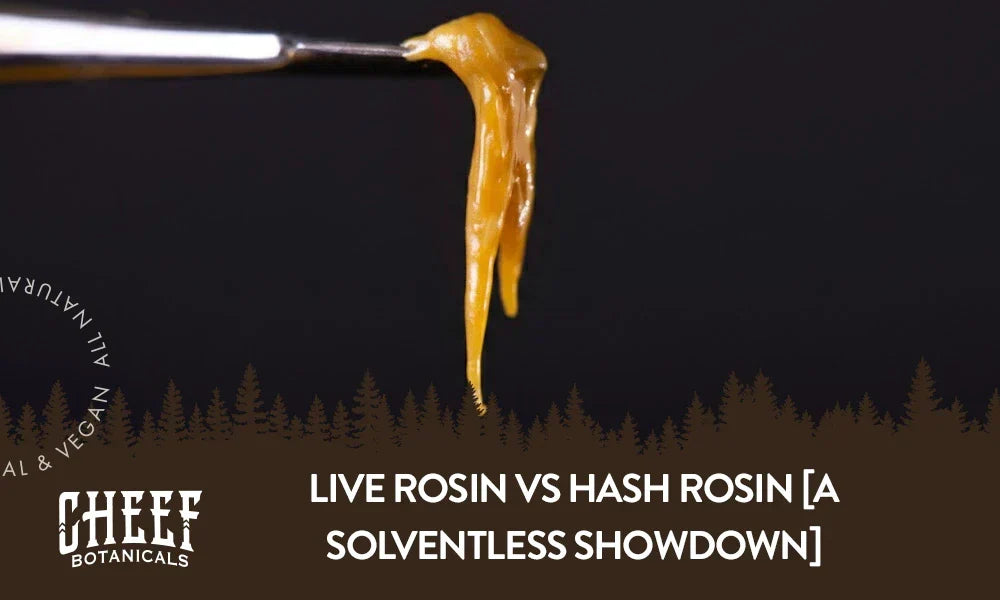
Live rosin vs hash rosin may sound like a head-to-head matchup, but these concentrate terms overlap more than you may think. Live rosin typically belongs to the hash rosin family, while the starting material draws the line between them.
Fresh-frozen cannabis and cured flower can each bring something different to the jar, influencing aroma, flavor, texture, and price. Neither name signals better potency or quality. We’ll break down the details so you can figure out which type might fit your style best.
Key Highlights
- Live rosin overlaps with hash rosin. Live rosin commonly qualifies as hash rosin rather than a separate concentrate.
- Starting material creates the distinction. Live versions use fresh-frozen cannabis, while cured hash rosin starts with dried and cured material.
- Both use solventless production. We collect trichomes into hash, then apply heat and pressure.
- Labels do not guarantee potency. Genetics, processing, and batch composition shape strength and quality.
- Compare products individually. Review flavor, texture, storage needs, price, and batch-specific COAs before choosing.
Rosin Terminology: Understanding This Solventless Cannabis Extract
Rosin is a cannabis concentrate made by pressing cannabis flower, kief, or hash with heat and pressure. Unlike solvent extraction, this process uses no chemical solvent. For hash rosin, producers isolate trichomes from plant material, then press the dried hash through filter bags.
Both live rosin and cured hash rosin use this method, which people prefer over solvent-based extracts. Starting quality influences the concentrated form. Temperature and handling affect yield, and the plant’s natural terpenes guide aroma and rich flavor.
What Is Live Rosin?

Live rosin is a premium cannabis concentrate from fresh frozen flower. Freezing buds bypasses the drying and curing process, limiting terpene loss. Ice water separates trichomes to create bubble hash.
At Cheef Botanicals, our THCa Live Rosin is made using solventless extraction. Heat and pressure turn the dried hash into the final product without chemical solvents. Flavor and texture reflect cultivar handling. You can check the batch lab results for potency information.
What Is Hash Rosin?
Hash rosin is another type of cannabis concentrate pressed from hash. It can use fresh material or dried and cured flower. For cured hash rosin, the curing process reduces moisture before ice water extraction collects trichomes from plant material.
Bubble hash is dried before entering a rosin press. Because it comes from cured buds, it may offer a smooth, classic profile with fewer terpenes than live rosin. Micron grade affects texture.
What Makes Rosin “Live”?
“Live” describes cannabis at harvest, not the concentrate’s age. The real difference is starting material, not extraction method. We freeze fresh cannabis before drying and curing, then separate trichomes with ice water.
We dry that hash before heat and pressure form live hash rosin. Fresh freezing limits terpene loss. Cold handling also protects delicate volatile aromatic compounds. Cultivar maturity shapes the final flavor, while careful processing guides texture and overall quality.
Is Live Rosin the Same as Hash Rosin?
Yes, live rosin commonly falls within the broader hash rosin category, though each term identifies a different detail. Hash rosin means rosin pressed from hash, whether cannabis was fresh frozen or cured.
Fresh frozen material becomes live hash rosin. Dried and cured material becomes cured hash rosin. One label describes the material’s condition. The other describes what was pressed. As with other concentrates, full names give you the clearest picture.
How Live and Cured Hash Rosin Are Made
Both live hash rosin and cured hash rosin are solventless concentrates without chemical solvents. Each separates trichomes from cannabis plant material before pressing. They aim to retain aromatic compounds and cannabinoids, but neither captures all the cannabinoids. The starting material sets the sequence.
How Live Hash Rosin Is Made
Fresh frozen flower is stored immediately after harvest. We wash fresh frozen cannabis in near-freezing water to create ice water hash. Freeze-drying removes moisture.
Micron bags hold hash in a rosin press. Heat and pressure produce rosin with a rich flavor profile. The process ensures chemical solvents never enter, while cold-curing finishing can create a softer consistency.
How Cured Hash Rosin Is Made
Cured hash rosin begins with dried and cured cannabis. Ice water extraction separates trichomes, while mesh bags collect bubble hash. This process uses water, not carbon dioxide or hydrocarbons.
Once dry, hash enters a rosin press. Heat and pressure produce rosin with bold flavor and smooth texture. Cultivar quality and press settings directly influence the solvent-free final product’s overall consistency.
Key Differences Between Live Rosin and Hash Rosin
In the hash rosin vs live rosin comparison, both live rosin and hash rosin are solventless cannabis concentrates. Key differences begin with starting material and process, influencing aroma and texture. Here’s how they differ.
Starting Material
The split begins at harvest. Live hash rosin uses fresh-frozen cannabis, which skips drying and curing. Cured hash rosin uses flower that completes both steps before washing.
Both are hash rosin because producers press extracted hash into the final concentrate. This choice influences compounds available before extraction. Neither route automatically creates a full-spectrum extract. Testing shows which compounds reached the jar.
Terpenes, Flavor, and Aroma
Live hash rosin may offer a bright, fresh flavor profile because fresh frozen flower can retain more terpenes and volatile aromatic compounds. However, preserved terpenes do not guarantee better flavor or specific citrus, fruit, or floral notes. The flavor difference between live rosin and hash rosin depends on the cultivar and plant material.
Cured hash rosin can develop a classic flavor profile through drying and curing, often with earthy, woody, or spicy notes. Its character also reflects the curing process and processing method. Both are solventless cannabis concentrates that express the cannabis plant and the producer’s technique.
Potency and Cannabinoid Profile
Neither live rosin nor hash rosin guarantees potency. In the live rosin vs hash rosin matchup, the main difference is starting material, not strength. Fresh frozen cannabis may retain more terpenes, but terpene content does not determine THC content or THCa concentration. Genetics and processing influence each batch.
Effects vary with amount and tolerance. Product profile and individual response influence whether it feels smooth or balanced. Compare batch COAs rather than labels across other cannabis concentrates. Cheef Botanicals uses heat and pressure in its solventless extraction process for THCa Live Rosin. Lab results show potency and residual solvents. Preserved terpenes cannot prove potency.
Texture, Color, and Consistency
Live rosin and hash rosin lack one universal look. Both can appear as badder, sap, or jam, among other consistencies. Color alone cannot prove live rosin stands apart visually.
Starting material and pressing temperature shape their texture. Terpene content, moisture content, and curing method add variation. Cured hash rosin may hold consistency longer at room temperature, but stability varies by batch.
Price, Yield, and Overall Value
Fresh-frozen starting material needs cold storage, making live rosin production a labor-intensive process. When live hash rosin yields drop, cost per gram rises. Even then, cured hash rosin is not always cheaper.
Price also reflects material quality, cultivar yield, micron grade, and batch size. Testing, packaging, and reputation add expense. Price cannot promise smoother vapor, so compare each rosin product by batch.
Which Is Better: Live Rosin or Hash Rosin?
Neither is universally better. The right choice follows your priorities. Live hash rosin may suit you if you value fresh aroma from fresh frozen flower. Cured hash rosin, made from dried and cured cannabis, may appeal if you prefer flavors developed during curing.
Neither live rosin nor hash rosin guarantees potency or quality. Compare batches by producer, COA, storage condition, and price. Consider package size and freshness, then weigh flavor against quality and budget. Labels tell part of the story.
Related Post: Live Badder vs Live Rosin: Comparing Two Powerful Concentrates
How to Use Live Rosin and Hash Rosin

Live rosin and hash rosin suit several concentrate-friendly methods. These are the most popular options:
- Dabbing. Use a small amount in a dab rig. Lower temperatures can preserve more terpene character.
- Vaping. Choose a vaporizer made for cannabis concentrates. Follow its instructions.
- Mixing with Flower. Add a little to cannabis flower in a joint or bowl.
Start small, wait before using more, and never drive afterward. Keep cannabis away from children and pets.
How to Store Rosin Properly
Poor storage can dull the flavor of live rosin and hash rosin. It may also alter texture and moisture content. Seal the final product in its original package or in an airtight container.
For storage, choose a cool, dark place and avoid heat. After refrigeration, let the sealed jar reach room temperature before opening to limit condensation. Handle rosin with clean tools, and use parchment paper only when needed.
Is THCa Rosin Legal?
No. The 2018 Farm Bill defines hemp by Delta-9 THC content on a dry-weight basis. FDA oversight can still apply to cannabis-derived products. Heating converts THCa to Delta-9 THC, which may affect its legal classification.
State rules differ, so live rosin and hash rosin legality varies by composition, testing, type, and destination. Check current local laws before buying or consuming cannabis concentrates. This general information does not constitute legal advice.
Why Choose Cheef Botanicals THCa Live Rosin

Ready to make your next dab count? Try Cheef Botanicals THCa Live Rosin, crafted from fresh frozen flowers through a solventless extraction process for bold flavor and a smooth, premium finish. Here is what makes our rosin products stash-worthy:
- Solventless extraction for a clean, natural finish
- High THCa content with strong, smooth potency
- Third-party lab-tested for purity and THC content
- Eco-friendly and cruelty-free cannabis products
Shop THCa Live Rosin at Cheef Botanicals for a trusted, premium product made with care.
Frequently Asked Questions
Does live rosin get you higher than hash rosin?
Not necessarily. “Live” identifies starting material, not guaranteed potency. Cannabinoid content varies by batch, so either rosin may test higher. Amount used, tolerance, and individual response guide the experience. Check current lab results instead of assuming live rosin hits harder every time.
Does live rosin need to be refrigerated?
Not always. For short-term storage, a sealed jar in a cool, dark place may be enough. Refrigeration better protects flavor and consistency during longer storage. Before opening, let the sealed container reach room temperature. That simple pause helps prevent condensation.
What is the difference between live rosin and live resin?
Both commonly start with fresh-frozen cannabis, but their extraction methods differ. Live rosin uses ice water, heat, and pressure without chemical solvents. Live resin is generally extracted using solvents such as butane or propane, which manufacturers remove during processing.
Final Thoughts — Which One Is Right for You?
The takeaway is simple: live rosin vs hash rosin is not an either-or choice. Live hash rosin uses fresh-frozen material, while cured hash rosin uses dried and cured cannabis. Both are hash rosin, so neither label promises better flavor, potency, or quality.
Let the batch do the talking. Review starting material and production method. Check the storage condition, price, and batch-specific COA. If a fresh-frozen, solventless option sounds like your lane, Cheef Botanicals THCa Live Rosin belongs in your next dab.
Discover more about THC concentrates here.



Leave a comment
This site is protected by hCaptcha and the hCaptcha Privacy Policy and Terms of Service apply.