
Are you looking for an easy decarboxylation in oven guide? You’re in the right place. Decarboxylation, often shortened to “decarbing,” is a crucial step that activates the THC in cannabis flower. Without it, even the highest-quality buds won’t deliver the full effects most people expect.
In this guide, we’ll walk through exactly how to decarboxylate cannabis in the oven, why it matters, and how to do it correctly for maximum potency. Step by step, let's make cannabis decarboxylation straightforward and stress-free.
What's Decarboxylation?

Decarboxylation is the process that activates cannabis. Raw cannabis plant material is full of tetrahydrocannabinolic acid(THCA), the non-psychoactive precursor to tetrahydrocannabinol (THC). On its own, THCA doesn't produce any mind-altering effects. To unlock the kind of euphoria you're after, you need to turn that THCA into THC.
That conversion happens through heat. Under controlled temperatures, a carboxyl group gets removed from the THCA molecule, transforming it into active THC. This chemical change brings on the uplifting effects cannabis enthusiasts crave.
Decarboxylation happens automatically when you smoke or vape, but it's a different story when you’re cooking with cannabis. Understanding effective decarboxylation can make sure you don't waste good flower and that every batch delivers consistent, reliable effects.
How Does Decarboxylation Work?
Decarboxylation works by using heat to activate the psychoactive compounds inside raw cannabis. While the chemistry sounds complex, the process itself is simple and predictable when done correctly. It all comes down to heat, time, and control.
Heat Application
When you apply heat to raw or cured cannabis flower, cannabinoid acids like THCA and CBDA begin to change. These inactive acidic forms then convert into their active forms, THC and CBD. These are the ones responsible for euphoric effects and potential therapeutic benefits.
Temperature and Time
Decarboxylation requires even heat—usually between 200°F and 290°F (104°C to 118°C)—for a set amount of time. Lower temperatures take longer but help preserve the aromatic compounds and flavor. Higher temperatures do work faster, but increase the risk of degrading cannabinoids.
CO2 Release
As heat breaks the bond on cannabinoid acids, carbon dioxide (CO₂) gets released. This chemical reaction is the defining moment of decarboxylation. It signals that THCA has converted into THC, making your cannabis ready for edibles, tinctures, or infusions.
Why Decarboxylation is Necessary for Edibles
Decarboxylation makes your edibles work. Unlike smoking or vaping, where heat instantly activates THC, edibles rely on pre-activated cannabis to produce effects. If you skip the decarbing step, your flower or concentrate will remain mostly inactive. Your edibles will feel weak or do nothing at all.
With properly decarboxylated cannabis, THCA converts into psychoactive THC before it’s infused into butter, oil, or another fat. This step makes sure your body can absorb THC effectively through digestion. Without decarboxylation, the liver won’t have actual THC to process.
Why Decarb THCa?
Effective decarboxylation helps you get full strength, consistency, and efficiency from your cannabis products. As mentioned, THCa is naturally present in raw cannabis, but it doesn't give the uplifting effects one might expect. To transform it into THC, you need to apply heat. This step is especially important if you’re working with high-THCa flower or concentrates. Without it, you’re leaving potency on the table.
At What Temperature Does Decarboxylation Occur?
Decarboxylation occurs when you heat cannabis within a specific temperature range: hot enough to activate cannabinoids, but not so hot that it destroys them. The sweet spot falls between an oven temperature of 200°F and 245°F, with around 220°F being ideal for consistent results.
Ensure ideal decarboxylation temperature and hold it steady for 30 to 40 minutes. Doing so allows THCa to fully convert into THC while preserving valuable terpenes that influence flavor and aroma.
Temperatures above 300°F can quickly damage beneficial compounds, reducing potency and flavor. Low and slow heat during oven decarboxylation delivers the best balance of strength, taste, and effectiveness.
Decarboxylation Temperature for Different Cannabinoids
Not all cannabinoids activate at the same temperature or speed. While THC is usually the main focus, other cannabinoids like CBD also require specific heat and timing to fully activate. Knowing these differences helps you decarb cannabis more precisely, especially if you’re aiming for specific effects.
-
THCA to THC
-
230°F (110°C) for 30 minutes
-
265°F (130°C) for 9 minutes
-
This is the most common conversion people aim for when making edibles or infusions. Lower temperatures preserve flavor, while higher temperatures work faster but require close monitoring.
-
CBDA to CBD
-
230°F (110°C) for 45 minutes
-
265°F (130°C) for 20 minutes
-
CBD takes longer to activate than THC. This is why CBD-rich flower benefits from extended decarbing times at lower heat.
How Long Should Decarbing in the Oven Take?

At 220°F, cannabis typically needs 30 to 40 minutes to decarboxylate properly. This is the most forgiving method and works well for beginners. If you increase the temperature slightly to 240°F, you can shorten the time to about 25 to 30 minutes, but you’ll need to watch it more closely.
Basically, how long you decarb weed in the oven varies depending on the temperature you choose. Most at-home methods focus on a slow, steady approach to fully activate cannabinoids without sacrificing potency or flavor.
The key is balance. Decarbing too quickly at high heat can degrade THC and terpenes, while too little time leaves cannabinoids inactive. Using an oven thermometer can help keep temperatures accurate.
What Can Happen if You Decarboxylate Too Long?
Decarboxylating cannabis for too long can ruin its effectiveness. Extended heat exposure starts to degrade THC into CBN, a cannabinoid with more sedating, less psychoactive effects. At the same time, valuable terpenes can evaporate, dulling flavor and aroma.
The result is cannabis that feels weaker, flatter, or sleepier than intended. In some cases, it may even taste burnt. To avoid over-decarboxylation, stick closely to the recommended temperatures and time ranges. Resist that urge to “add a few extra minutes just in case.”
What Can Happen if You Don't Decarb for Long Enough?
If cannabis isn’t heated long enough, decarboxylation remains incomplete. That means much of the THCa never converts into THC. Undercarbed cannabis often leads to weak or inconsistent results. One batch might feel mildly effective, while another does almost nothing at all.
To avoid under-decarbing, make sure the oven reaches and maintains the target temperature. Also, make sure you allow enough time for the reaction to fully complete. A steady 30–40 minutes at the proper range ensures THC is activated evenly and reliably.
Should Weed Be Ground Before or After Decarbing?
Grinding cannabis before decarboxylation is generally the better choice. Breaking the buds into small, even pieces increases surface area. This allows heat to reach the cannabinoids more evenly. What you get is more consistent THC activation across the entire batch.
That said, you don’t want to grind too finely. A coarse grind or hand-broken pieces work best. Finely ground cannabis can overheat, dry out too fast, or burn at the edges.
Grinding after decarbing can still work, but it increases the risk of uneven activation. For best results, lightly grind first, decarb evenly, then grind again if needed for infusions or recipes.
How to Decarb Cannabis Flower in the Oven
Decarbing cannabis flower in the oven is one of the easiest and most reliable methods. When you prepare cannabis this way, you make it more potent and enjoyable. The key is steady heat, proper airflow, and a little patience. Done right, you’ll activate THC without sacrificing flavor or potency.
Materials
- Baking Sheet
- Parchment Paper or Aluminum Foil
- Oven
- Cannabis Buds
- Cannabis Grinder (optional)
- Oven Thermometer (recommended)
Step-by-Step Directions
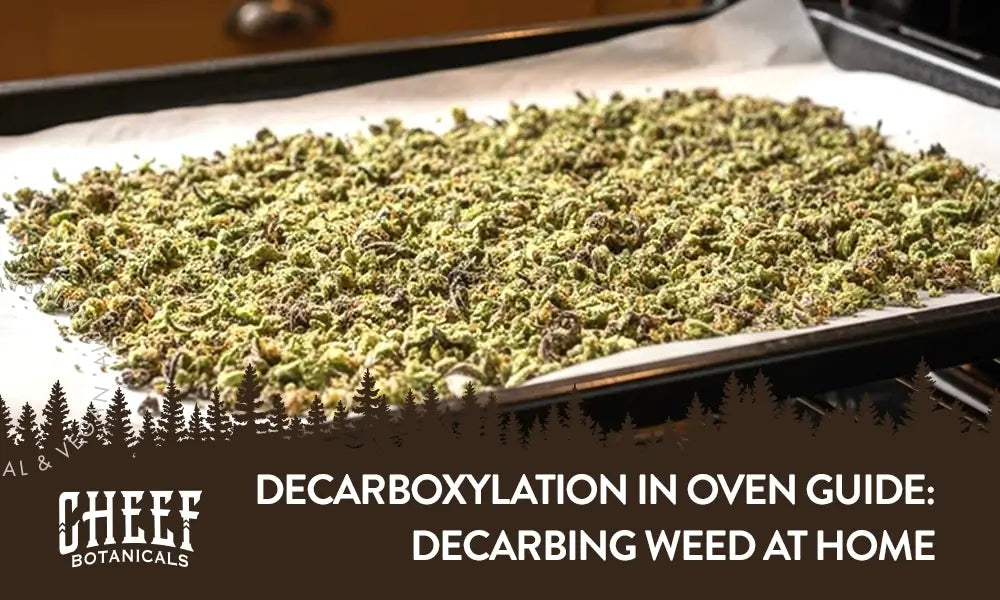
- Preheat your oven to 220°F. Place the oven rack in the center. Oven dials aren’t always accurate, so an oven thermometer can help maintain consistent heat.
- Prepare the cannabis. Lightly break the buds into small, evenly sized pieces. Aim for a coarse grind, just enough to expose surface area without turning it into fine powder.
- Line the sheet. Line your baking sheet with parchment paper or aluminum foil to prevent sticking and protect cannabinoids from direct heat.
- Spread evenly. Arrange the cannabis in a thin, even layer. Avoid piling, which can cause uneven decarboxylation.
- Bake for 30–40 minutes. Gently stir once or twice during baking to maintain even heat exposure. The cannabis should become lightly toasted and golden-brown. It should be dry but not brittle.
- Cool completely. Remove from the oven and let it rest at room temperature for about 30 minutes. Cooling allows the cannabinoids to stabilize.
- Infuse or store. Once cooled, your decarboxylated cannabis is ready to infuse into butter, oil, or tinctures. Or you can store it in an airtight container for later use.
Pro tip: Cheef Botanicals offers top-shelf THCA and CBD Flower products to make your decarbing experience even smoother. We guarantee safe and meticulous production, third-party lab testing, federal compliance, and consistent quality across our different offerings. Check out our online shop and take your pick!
Can a Microwave be Used to Decarb Weed?
Using a microwave to decarb weed might sound convenient, but it’s not a reliable or recommended method. Microwaves provide uneven heating. This means some parts of the cannabis can burn while others can remain under-decarboxylated, producing inconsistent potency and wasted material.
Another issue is that there's no precise temperature control. Proper decarboxylation depends on holding cannabis within a narrow heat range. Microwaves deliver short, high-energy bursts that can quickly destroy cannabinoids and terpenes before proper activation happens.
If your goal is effective, evenly decarboxylated cannabis, the oven remains the better option. It provides consistent heat, predictable results, and far greater control.
FAQs About Decarboxylation
Decarboxylation can feel simple on the surface, but a few small details can make a big difference in your results. From flavor preservation to storage and common mistakes, there are a handful of questions that come up again and again. Below, we’ll break down the most frequently asked questions to help you decarb with confidence and get the best possible results every time.
What are the benefits of decarboxylating cannabis?
Without decarboxylation, most of the cannabinoids remain in their acidic forms, which do not produce the desired effects. This process helps you get consistent potency and predictable results from your cannabis. It also allows you to fully experience both the psychoactive and non-psychoactive benefits, depending on the cannabinoid. Overall, decarbing helps you get the most value and effectiveness from your flower or concentrates.
Does decarboxylation affect flavor and terpenes?
Yes, decarboxylation can affect flavor and terpene content if not done carefully. Terpenes are sensitive to heat, and high temperatures can cause them to evaporate or degrade. Using lower temperatures over a longer period can help preserve more aroma and flavor while still activating cannabinoids. Covering your baking tray loosely with foil can also help reduce terpene loss.
What are the most common decarboxylation mistakes to avoid?
One of the biggest mistakes is using too high of a temperature, which can burn cannabinoids and terpenes. Another common issue is not decarbing long enough, leaving much of the THCA unconverted to THC. Skipping a thermometer can also lead to uneven or inaccurate heating. Grinding cannabis too finely before decarbing may cause it to overcook. Paying attention to time, temperature, and preparation helps avoid these problems.
How do I store my decarboxylated cannabis properly?
Store your decarboxylated cannabis in an airtight storage container to protect it from air, moisture, and light. A mason jar with a tight seal works best for preserving potency and flavor. Keep it in a cool, dark place to slow cannabinoid and terpene degradation. Avoid heat and humidity, as both can reduce effectiveness over time. When stored correctly, decarbed cannabis can stay potent for several months.
Final Thoughts on Decarboxylation in the Oven
Decarboxylation is the step that turns ordinary cannabis into something truly effective. By taking the time to decarb properly, you unlock the full potential of THC and other cannabinoids. If you’re making edibles or infusions, or want more predictable results, oven decarbing gives you confidence in every batch.
Starting with high-quality flower can spell success. Cheef Botanicals’ premium THCa flower and CBD flower products are carefully cultivated, lab-tested, and ideal for decarboxylation. When you pair proper technique with top-tier flower, you’re elevating your entire cannabis experience. Do it right, start with quality, and let your cannabis work exactly the way it’s meant to.

 Watermelon OG - Top Seller
 Runtz THCa Flower - Excellent Choice
 Han Solo THCa Flower - Highly Rated
 Space Junkie THCa Flower - Good Value


Leave a comment
This site is protected by hCaptcha and the hCaptcha Privacy Policy and Terms of Service apply.