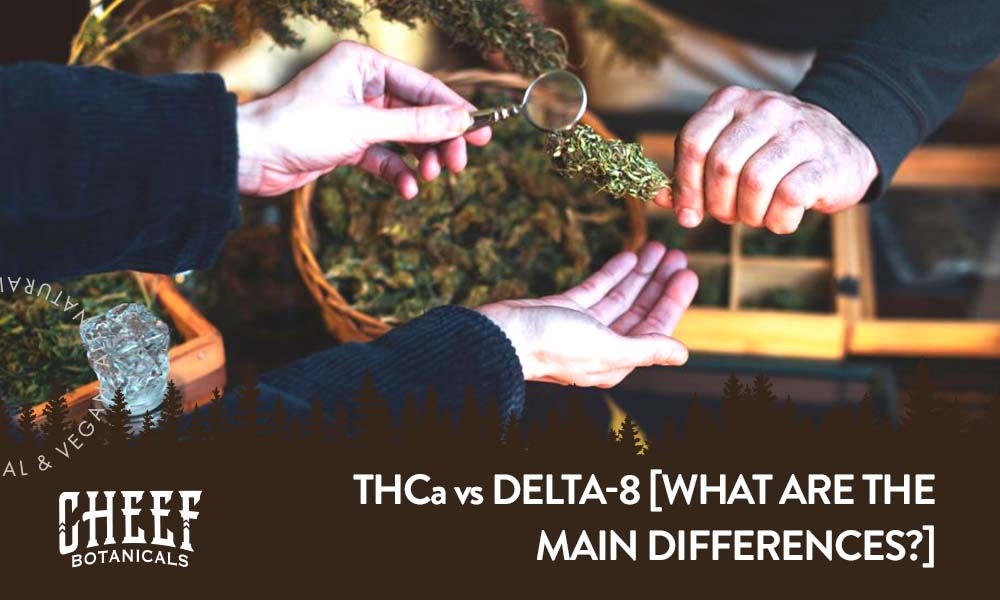
THCa vs Delta-8 compares two cannabinoids with different chemistry, effects, and product formats. Raw THCa does not cause intoxication, but heat converts it into Delta-9 THC. Delta-8 already causes a high, though many consumers describe it as milder than Delta-9 THC.
This guide examines each compound's strength and onset. It also covers current legal status, product quality, and drug-testing concerns. You'll learn how format affects the experience, which option may match your preferences, and what to check before buying.
Key Highlights
- THCa is the acidic, non-intoxicating precursor to Delta-9 THC.
- Smoking, vaping, or baking THCa activates its intoxicating effects.
- Delta-8 typically feels milder than Delta-9 THC, although individual experiences vary.
- Heated high-THCa products may feel considerably stronger than many Delta-8 products.
- Both cannabinoids can lead to positive drug tests.
- Laws vary and continue to evolve, so always check current local regulations.
What Is THCa?

THCa, short for tetrahydrocannabinolic acid, is a naturally occurring cannabinoid stored in the resinous trichomes of fresh cannabis plants. It serves as the chemical precursor to Delta-9 THC, the primary compound behind the traditional cannabis high.
In its raw form, THCa binds weakly to CB1 receptors in the brain. That’s why unheated raw cannabis does not produce intoxicating effects. Add heat, and the chemistry takes a lively turn. Through a process called decarboxylation, THCa converts as it loses a carboxyl group. Simply put, it transforms into THC. Smoking or vaping THCa flower is the most effective way of triggering this transformation.
What Is Delta-8 THC?
Delta-8 is a form of THC that occurs naturally in Cannabis Sativa at trace amounts. Since direct extraction yields very little, manufacturers commonly convert hemp-derived cannabidiol into commercial Delta-8 through a controlled chemical process. The resulting compound can produce intoxicating effects without heat activation.
Many consumers report mild psychoactive effects compared with traditional THC, but “mild” has limits. Delta-8 can still affect perception and coordination. Potency and serving size guide the intensity. Tolerance also counts. Your reaction time and judgment may decline, so approach each product with care.
THCa vs Delta-8: The Most Important Differences
The Delta-8 vs THCa matchup goes beyond strength. Their natural abundance and production methods differ. So does activation. Potency and timing affect each experience, while safety considerations shouldn't be ignored. Let’s look into the key differences below.
Natural Origin and How Each Cannabinoid Is Produced
THCa forms abundantly in fresh cannabis trichomes as a naturally occurring compound. Delta-8 THC follows a different path. Although plants create it naturally, they hold only trace amounts, making direct commercial extraction impractical.
Manufacturers produce most commercial Delta-8 from hemp-derived CBD through a controlled chemical process called isomerization. This approach gives the cannabis industry workable quantities, but production quality needs careful review. Purification removes unwanted byproducts, while testing verifies potency and label accuracy.
Chemical Structure
Think of chemical structure as a cannabinoid’s blueprint. THCa carries a carboxyl group, making it a non-psychoactive precursor to Delta-9 THC. Heat removes that group and creates THC, which binds more readily to CB1 receptors.
Delta-8 and Delta-9 THC are positional isomers with the same molecular formula. Their double bond sits at different carbon positions. That placement affects stability and receptor activity, so each interacts differently with the human body.
Will THCa or Delta-8 Get You High?
Delta-8 gets you high, while raw THCa does not. In its natural state, THCa remains non-intoxicating because it does not interact well with CB1 receptors. Unlike THCa, Delta-8 can produce psychoactive effects without heat.
Smoking or vaping brings out THCa hidden strength. Heating THCa triggers decarboxylation and converts it into Delta-9 THC, the primary psychoactive compound behind the traditional cannabis high. Personal tolerance determines whether the result feels stronger than Delta-8.
Which Is Stronger: THCa or Delta-8?
Heated THCa can be stronger than Delta-8, while raw THCa creates no conventional high. That makes the THCa vs D8 comparison less like a showdown and more like a format check. THCa converts mainly into Delta-9 THC when heated.
High-potency THCa flower can deliver more potent effects than many Delta-8 products. Still, labels tell only part of the story. Serving choices produce effects that depend on tolerance and conversion efficiency.
Onset and How Long the Effects May Last
Timing follows product format more closely than the D8 vs THCa label. Inhaled flower and vapes can create noticeable effects within minutes. These effects usually fade sooner because cannabinoids enter the bloodstream through the lungs.
Edibles move at digestive speed, taking 30 minutes to 2 hours to begin. Once their psychoactive properties become apparent, effects may last much longer, especially with higher doses. Wait before redosing to avoid unexpected overtime.
How They Interact with the Endocannabinoid System
The body's endocannabinoid system helps regulate mood and appetite. It also plays roles in memory, sleep, and overall balance. Cannabinoids interact with the endocannabinoid system by acting on cannabinoid receptors or other molecular targets.
Delta-8 partly activates CB1, the receptor closely linked to THC intoxication. Raw THCa, a non-psychoactive cannabinoid, shows much weaker CB1 activity. Researchers are studying other receptors and enzymes, so “inactive” oversimplifies THCa far too much in its raw state.
Potential Uses and What Research Actually Shows
Many consumers choose THCa or Delta-8 for relaxation, restful evenings, appetite, or physical comfort. Their experiences offer useful context, though they do not prove treatment effects. Medical cannabis research adds perspective but does not directly represent consumer products.
Early cannabinoid research has examined nausea reduction and neuroprotective properties, offering useful leads for future study. Human evidence for potential benefits is still limited. FDA has not approved any Delta-8 product for pain relief or treating neurodegenerative diseases or therapeutic purposes in humans.
Side Effects and Risks
Even natural cannabinoids can cause unwanted reactions, especially at high amounts. Heated THCa turns into Delta-9 THC, while Delta-8 products add manufacturing and label-accuracy concerns. Watch for these effects:
- Dry mouth, red eyes, or dizziness
- Drowsiness or poor coordination
- Agitation, panic, or confusion
- Fast heart rate, upset stomach, or vomiting
- Stronger intoxication than expected
Seek emergency care immediately for chest discomfort, breathing trouble, seizures, loss of consciousness, or severe confusion.
Why Lab Testing and Manufacturing Quality Matter
A Certificate of Analysis (COA) lets you check a product before it reaches your stash. Cheef Botanicals tests every product through a certified third-party lab and publishes the results online. Review the report for:
- Cannabinoid potency and the THC found
- Pesticides and heavy metals
- Residual solvents
- Microbial growth
Testing helps confirm that the cannabinoid levels match the label and screens for unwanted contaminants. Consistent manufacturing and third-party testing help address FDA concerns about Delta-8 product quality.
Cheef Botanicals keeps its COAs easy to access, so you can review purity and potency before choosing a product. Clear reports make informed shopping reassuringly simple.
Responsible Use and Who Should Avoid These Products
A comfortable experience begins with a small serving and patience. Give edibles enough time before taking more, since their full effects can take hours. Responsible use also means checking whether THCa remains legal where you live.
Never drive or operate machinery after using intoxicating cannabinoids. Avoid mixing them with alcohol, and keep every package away from children and pets. Pregnant or nursing consumers should avoid THC products.
Ask a healthcare professional before use if you take medications or manage a health condition. Extra caution also makes sense if THC often causes agitation. Serving needs vary with product strength and tolerance.
Are THCa and Delta-8 Legal?
These compounds’ legal status depends on the product and your location. The 2018 Farm Bill defined hemp using a limit of 0.3% Delta-9 THC by dry weight. That framework has supported sales of qualifying THCa products and Delta-8 THC, though it never overrode stricter state rules.
State regulators may use total THC, which counts the Delta-9 potential of THCa after heating. Others restrict Delta-8 or classify certain hemp-derived cannabinoids as a controlled substance. Check local rules before ordering or traveling, even when the THC found on a COA meets federal hemp limits.
Public Law 119-37 was enacted on November 12, 2025. Effective November 12, 2026, it revises the federal definition of hemp to account for total tetrahydrocannabinols, expressly including THCa.
It also excludes cannabinoids manufactured outside the plant and limits finished hemp products to 0.4 milligrams of combined total THC per container. Current federal rules apply until then, alongside restrictions on other hemp-derived cannabinoids. That means qualifying hemp-derived Delta-8 may also remain federally lawful until November 12, 2026.
Do THCa and Delta-8 Show Up on Drug Tests?
Yes, both THCa and Delta-8 can lead to positive drug tests. Raw THCa is a non-psychoactive cannabinoid, but heating converts it into Delta-9 THC. Your body then creates metabolites targeted by standard THC screenings.
Delta-8 produces metabolites that can cross-react with urine immunoassays. Routine tests may not identify which THC form caused the result. Product labels and trace cannabinoids add uncertainty. If work, athletics, probation, or another obligation requires testing, avoid both products. No cannabinoid loophole beats a laboratory.
THCa and Delta-8 Product Types

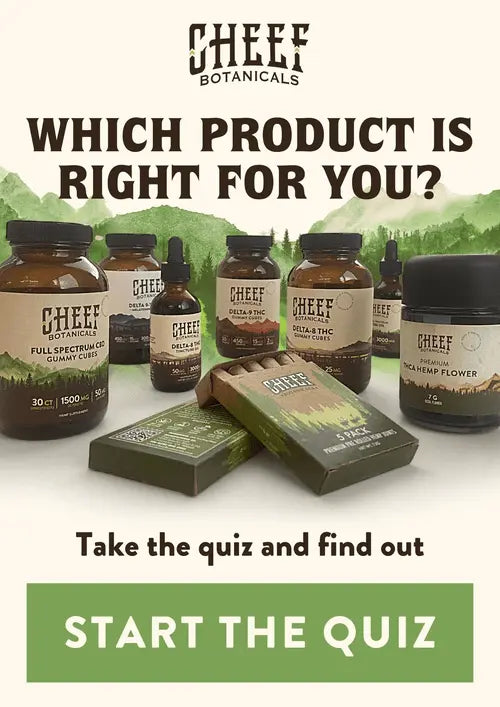
Cheef Botanicals offers THCa products as flower, pre-rolls, concentrates, edibles, vape carts, and disposable vapes. Delta-8 choices include gummies and tinctures. Each format sets its own pace.
Flower and vapes can take effect within minutes, while gummies may need about half an hour or longer. Tinctures provide liquid extracts with flexible serving control. Compare onset and duration before choosing. Convenience matters, too. Whatever catches your eye, read the label and check the batch-specific COA before adding it to your stash.
THCa or Delta-8: Which One Should You Choose?
The right choice depends on your preferred intensity and timing. Product format shapes how quickly effects begin and how long they may last. Use these points to compare your options:
- Raw THCa: Pick an unheated product when you want to avoid the conventional THC high.
- Heated THCa flower or vapes: Expect stronger effects closer to conventional Delta-9 THC.
- Delta-8: Consider it when you prefer an intoxicating experience often described as milder than Delta-9.
- Inhaled formats: Choose these for faster onset and a shorter session.
- Edibles: Allow extra time for slower onset and longer-lasting effects.
Avoid both when drug testing applies or local law prohibits possession. Before buying, compare potency and ingredients. Read the product label and batch-specific lab report, too.
Explore Cheef Botanicals THCa and Delta-8 Products

Cheef Botanicals keeps the THCa vs Delta-8 choice clear and approachable. Shop THCa flower, pre-rolls, concentrates, edibles, and vapes. Prefer Delta-8? Gummies and tinctures offer convenient serving control.
Compare potency and product details before choosing. Every product receives third-party lab testing, with COAs available online. Choose a flavor or strain, check its report, and add a favorite to your routine.
Delta-8 THC Products
Cheef Botanicals’ Delta-8 THC products bring a lighter lane to your cannabis lineup. Many consumers describe the intoxicating experience as gentler than Delta-9 THC. Current choices include fruit-flavored gummies and a flexible tincture.
Gummies come in premeasured 25 mg or 50 mg strengths, making each serving easy to track. The liquid format lets you adjust the amount with greater control. Check ingredients and lab results, then choose your preferred format.
THCa Flower
Want THCa flower with bold aroma and a classic cannabis ritual? Cheef Botanicals offers indoor-grown buds from a vast range of popular and rare strains. Each strain has a distinct flavor, aroma, and terpene profile. Once smoked or vaped, THCa converts mainly into intoxicating Delta-9 THC.
Choose by cannabinoid potency, then read strain details for expected character. Third-party laboratory reports confirm purity and potency beyond the name on the jar. Browse Cheef’s THCa flower collection and pick a fresh batch matched to your preferences and THC tolerance.
THCa Vape Carts and Disposables
Our vape carts and disposables keep prep pleasantly minimal. Carts pair with compatible batteries, while draw-activated disposables arrive ready to use. Both formats provide rapid onset without grinding or rolling.
We blend THCa distillate with Delta-8 THC distillate and botanical terpenes. Since vaping applies heat, the formula creates intoxicating Delta-9 THC effects rather than a raw THCa experience. Compare potency and flavor, then check product details and COA.
Final Thoughts on THCa vs Delta-8
The THCa vs Delta-8 decision begins with one clear, defining contrast. Raw THCa brings no intoxicating high, while Delta-8 does. Apply heat, and THCa converts mainly into Delta-9 THC, creating a stronger and more traditional cannabis experience. Let your preferred intensity and format lead the way, but keep THC tolerance, local laws, and drug testing in view.
Cheef Botanicals proudly offers indoor THCa flower, pre-rolls, concentrates, edibles, vape carts, disposables, Delta-8 gummies, and tinctures. Compare potency and ingredients, then read the product details and COA. Pick your favorite, set the vibe, and make your next cannabis session feel unmistakably yours.

 Watermelon OG - Top Seller
 Runtz THCa Flower - Excellent Choice
 Han Solo THCa Flower - Highly Rated
 Space Junkie THCa Flower - Good Value

Leave a comment
This site is protected by hCaptcha and the hCaptcha Privacy Policy and Terms of Service apply.