

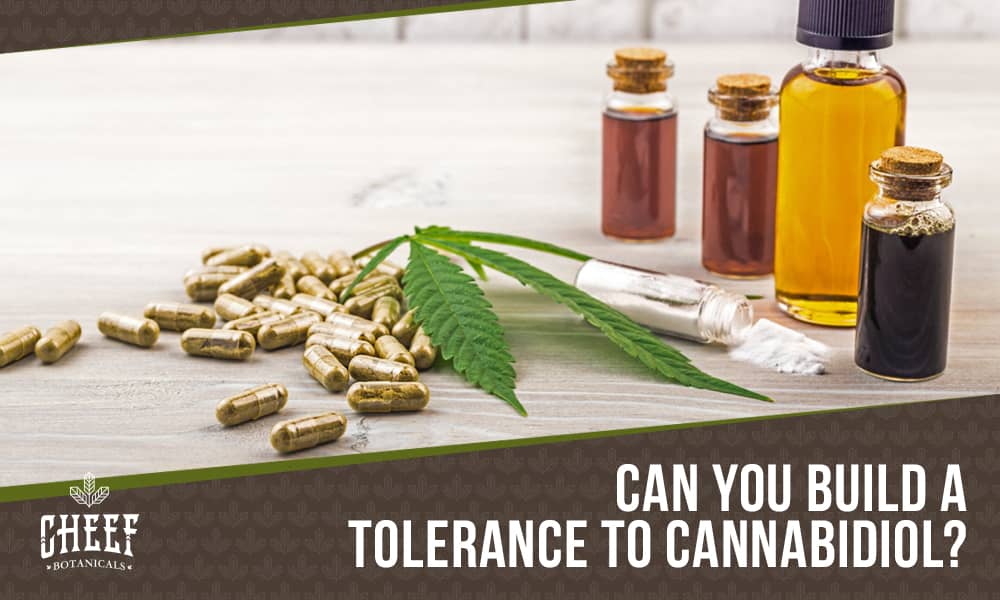
CBD and its potential benefits have attracted a growing number of users seeking better sleep, reduced anxiety, and relief from inflammation or discomfort. As more people incorporate CBD into their routines, a common question arises: can you build a tolerance to CBD?
The answer isn’t entirely straightforward. Everyone’s body responds to CBD differently, but current research suggests that CBD may behave differently from many other substances—possibly even producing the opposite of tolerance over time.
Key Highlights
- CBD does not typically create tolerance the same way THC does because it does not bind directly to CB1 or CB2 receptors.
- Some users may experience “reverse tolerance,” where they need less CBD over time as the body responds more efficiently.
- CBD may feel less noticeable after long-term use because symptoms improve, the body adapts, or the effects become more subtle.
- A CBD tolerance break is usually not necessary, but a short pause may help users reassess dosage, product quality, or overall effectiveness.
Building a Cannabis Tolerance
Like many substances, cannabis—especially products containing THC—can lead to tolerance over time. This means users may build up a tolerance, requiring a higher dose of the substance to achieve the same effects. Tolerance to THC develops because THC directly interacts with cannabinoid receptors in the brain, and this is how tolerance works with many drugs—repeated exposure causes the body to adapt, so larger amounts are needed for the same result.
How Do Tolerances Occur in the Body?
Tolerance typically develops when the body adapts to repeated exposure to a substance. This process often involves receptor activity in the brain and nervous system.
When a compound repeatedly binds to receptors—such as THC binding directly to CB1 receptors in the brain—the body may:
- Reduce the number of available receptors
- Decrease receptor sensitivity
- Adjust internal signaling processes
CBD, however, behaves differently. CBD doesn't bind directly to cannabinoid receptors, but instead modulates the endocannabinoid system in other ways. Instead of directly binding to cannabinoid receptors, it influences the endocannabinoid system (ECS) more indirectly. This difference plays a key role in why CBD may not lead to traditional tolerance.
Can You Build a Tolerance to CBD?
Research suggests that CBD is unlikely to produce tolerance in the same way THC does. Most people do not build up a tolerance to CBD. In fact, some studies and user reports indicate the possibility of reverse tolerance.
Reverse tolerance refers to a phenomenon where:
- Less of a substance is needed over time
- The body becomes more efficient at responding
CBD Tolerance: What the Research Indicates
CBD is one of over 100 phytocannabinoids found in the cannabis plant. It interacts with the body’s endocannabinoid system (ECS)—a system responsible for maintaining balance (homeostasis).
Unlike THC, CBD:
- Does not bind directly to CB1 or CB2 receptors
- May help increase natural endocannabinoid levels
- Supports regulatory processes like mood, sleep, and inflammation
Because of this indirect interaction, CBD is less likely to desensitize receptors.
Does CBD Work Less Over Time?
Some users feel that CBD becomes less noticeable after extended use. This perceived reduced effect may be due to a diminished therapeutic response over time, but it doesn’t necessarily mean tolerance is developing.
Instead, it may indicate that:
- The body has reached a more balanced state
- Symptoms have improved, making the effects less obvious
- The user has become accustomed to the feeling
If CBD feels less effective, it is often due to changes in personal, metabolic, or environmental factors rather than true tolerance.
Why Might CBD Feel Less Noticeable Over Time?
There are several reasons why CBD may seem less effective:
- Improved baseline health: As symptoms decrease, the contrast between “before” and “after” becomes less dramatic
- Adaptation: Your body becomes familiar with CBD’s effects
- Dosage mismatch: Your needs may have changed over time
- Product variation: Differences in quality, potency, or delivery method. Many tolerance issues are actually due to batch-to-batch variation in cannabinoid content or degradation from improper storage.
What Is a CBD Tolerance Break?
Tolerance breaks—or “T-breaks”—are commonly used with THC to reset sensitivity. With CBD, the situation is different.
Because CBD is unlikely to cause tolerance:
- A break is not usually necessary
- Some users still choose to pause use to reassess their needs
If you feel CBD isn’t working as expected, a short break can help you:
- Reset your awareness of its effects
- Evaluate whether your dosage or product needs adjusting
How Much CBD Oil Should You Take?

Since tolerance is unlikely, finding the right dosage is more about personal optimization than escalation.
A good approach is to:
- Start with a low dose
- Track your results
- Adjust gradually
Factors that influence your ideal dosage include:
- Weight
- Body chemistry
- Desired effects (sleep, anxiety, pain relief)
- Product strength and type
CBD comes in many forms, including:
- Oils and tinctures
- Capsules
- Edibles
- Vapes
- Topicals
Keeping a dosage log can help you identify what works best over time.
How Often Should You Take CBD to Avoid Tolerance?
Since CBD doesn’t typically cause tolerance, there’s no strict frequency required to “avoid” it.
That said, consistency is often key to the best results:
- Daily use may help maintain steady levels in the body
- Some users prefer as-needed use for specific symptoms
The best approach depends on your goals and how your body responds. Please pay attention to your body's signals to figure out the best frequency for taking CBD. Additionally, some anecdotal evidence suggests that mixing CBD with other supplements may help prevent the perception of tolerance build-up.
Can Taking Higher Doses Increase Tolerance Faster?
Unlike THC or many medications, higher doses of CBD are not strongly linked to tolerance buildup.
However, taking unnecessarily high doses may:
- Waste product
- Make it harder to identify your optimal dose
- Increase the likelihood of mild side effects (like fatigue)
Sticking to the lowest effective dose is generally recommended.
Will CBD Feel Different After Long-Term Use?
Yes, CBD may feel different over time—but not necessarily less effective.
Long-term users often report:
- More subtle, steady effects
- Improved baseline well-being
- Less need for higher doses
Can You Overdose on CBD?
CBD is widely considered safe, and there is no evidence of a lethal overdose.
According to the World Health Organization:
“CBD is generally well tolerated with a good safety profile.”
However, responsible use is still important. Taking excessive amounts may lead to mild side effects such as:
- Drowsiness
- Dry mouth
- Digestive discomfort
Always follow product guidelines and adjust gradually.
Related Post: What Are The Side Effects of CBD Oil?
Addiction Concerns with CBD
When it comes to CBD tolerance and addiction, most people can breathe easy—research suggests that CBD is not habit-forming and does not cause dependence in the same way as THC or other substances. According to the World Health Organization, CBD is generally well-tolerated, with no evidence of abuse, dependence, or withdrawal symptoms.
This is largely due to the way CBD interacts with the endocannabinoid system. Instead of binding directly to cannabinoid receptors in the brain, CBD helps prevent the breakdown of natural endocannabinoids, supporting the body’s ability to maintain balance.
Frequently Asked Questions (FAQs)
Can you develop a tolerance to CBD over time?
Current research suggests that CBD does not create tolerance in the same way THC does. Most users do not need to increase their dose over time, and some even report needing less as their body becomes more balanced.
What is reverse tolerance with CBD?
Reverse tolerance is when your body becomes more sensitive to a substance over time. With CBD, this may mean you achieve the same effects with a lower dose after consistent use, likely due to improved endocannabinoid system function.
Why does CBD feel less effective after a while?
CBD may feel less noticeable because your body has adapted, your symptoms have improved, or the effects have become more subtle. This doesn’t necessarily mean it’s less effective—it may simply be working in the background.
Should I take a break from CBD?
CBD typically doesn’t require tolerance breaks. However, taking a short break can help you reassess your dosage, reset your perception of its effects, and determine whether adjustments are needed.
Can taking higher doses of CBD lead to tolerance faster?
Unlike THC, higher doses of CBD are not strongly linked to tolerance buildup. Still, using more than necessary may reduce efficiency, increase cost, and make it harder to find your optimal dose.
Final Thoughts
The growth in popularity of the cannabis industry should help the public understand all of CBD’s benefits more definitively. Like a few other factors related to CBD use, tolerance is something that still needs to be studied. So far, research has come back, suggesting it is highly unlikely for anyone to build a tolerance to CBD when ingesting it.
Everyone is different and should pay close attention to what their body needs. With this in mind, you might find that your CBD dosage will fluctuate over time. You may need more or less of it, depending on your initial and current goals. The best way to test if you grow a tolerance to CBD is to use it regularly and log the dosage amount and how you feel each time.
Read more CBD Facts articles here

 CBD Gummies - Top Seller
 CBD + THC Gummy - Excellent Choice
 Northern Lights - Highly Rated
 Full Spectrum CBD Oil - Good Value

Leave a comment
This site is protected by hCaptcha and the hCaptcha Privacy Policy and Terms of Service apply.