

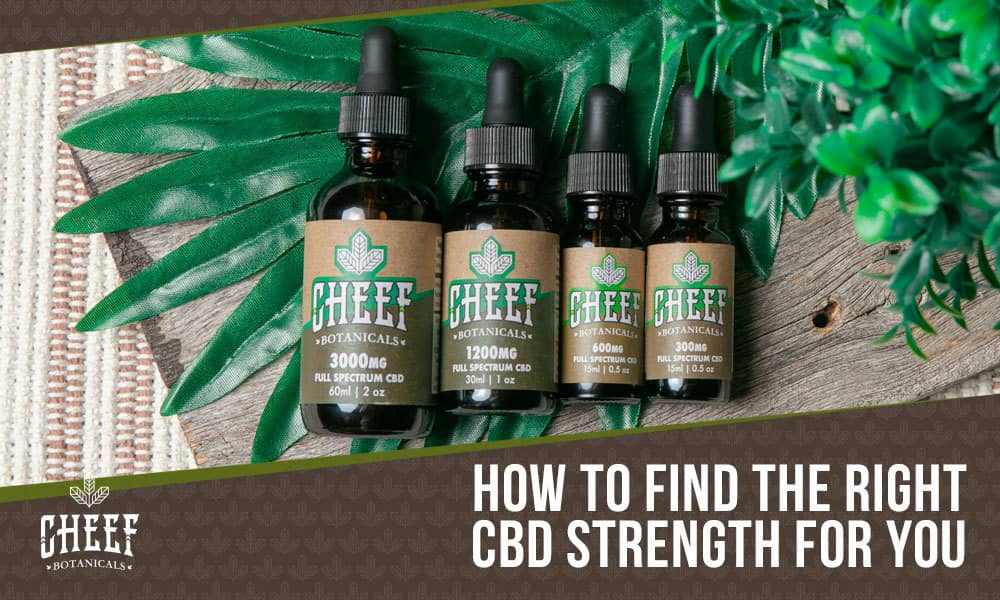
Shopping for CBD can feel confusing fast. One bottle says “extra strength,” another says “high potency,” and a third highlights total milligrams without clearly telling you how much CBD you actually get per serving. Add in different product formats, mixed dosing advice, and inconsistent labeling across brands, and it is easy to see why many shoppers are unsure where to start.
This guide breaks down what CBD strength really means, how to read labels correctly, and how to choose a potency that makes sense for your goals. CBD oils are often mixed with carrier oils like coconut, olive, or hempseed oil to make them easier to consume and to dose accurately.
Key Highlights
- CBD strength refers to how concentrated a product is, while CBD dosage refers to how much CBD you personally take per serving or per day.
- The best way to compare CBD products is to check the total CBD, serving size, CBD per serving, and number of servings per container.
- Bottle size does not always determine strength because a small bottle can be highly concentrated, while a larger bottle may contain a lower-strength formula.
- CBD oils and tinctures offer flexible dosing, while gummies and capsules provide fixed amounts of CBD per serving.
What Is CBD Strength?

CBD strength refers to how concentrated a product is. In other words, it tells you how much CBD is packed into the bottle, gummy, capsule, or topical you are using.
Understanding CBD also involves knowing the different types—full spectrum, broad spectrum, and isolate—and how they may affect your dose. The type you choose can affect both efficacy and experience, so it's important to consider which is best for your needs.
What’s the Difference Between Strength and Dosage?
CBD strength and CBD dosage are closely related, but they are not the same thing.
- Strength is how much CBD the product contains.
- Dosage is how much CBD you personally take at one time or over the course of a day. Your dose of CBD is the total amount you take per day, and dosage is often expressed in mg per serving or mg per day.
Does Container Size Determine Strength?
Do not let packaging fool you. The size of a bottle does not automatically tell you how strong a CBD product is.
A larger bottle can still contain a low-strength formula, while a smaller bottle may contain a much more concentrated product. What matters most is the amount of CBD per serving and the total CBD in the container.
How Do You Read CBD Strength on Labels?
Reading a CBD label gets easier once you know what to scan for first.
Start by looking for:
- Total CBD content in the whole package
- Serving size
- CBD per serving
- Number of servings per container
- Whether the product is full-spectrum, broad-spectrum, or CBD isolate
Here is a simple example:
- Bottle size: 30 mL
- Total CBD: 900 mg
- Serving size: 1 mL
- CBD per serving: 30 mg
For gummies or capsules, the label may say something like:
- 30 gummies per bag
- 25 mg CBD per gummy
- 750 mg CBD total
- Or, for capsules: 10mg of CBD per capsule
How Do You Calculate the Strength of CBD Products?
The total CBD content and the amount of CBD per serving usually determine the strength of the CBD. To find the CBD per unit, divide the total amount of CBD by the total number of servings (mg per serving).
For example, if a bottle contains 30 capsules, each containing 25mg of CBD, that's 25mg per capsule. Another example: a 10ml bottle containing 600mg of CBD provides 60mg per ml, making it a potent, high-strength option. This is often labeled as 600mg of CBD per 10ml.
Formula:
Total CBD in product ÷ total number of servings = CBD per serving
Here is a tincture example:
- A bottle contains 300 mg of CBD in 15 mL of oil.
- 300 mg ÷ 15 mL = 20 mg of CBD per 1 mL
- That means one full 1 mL serving contains 20 mg of CBD.
- Here is a capsule example:
- A bottle contains 750 mg of CBD and 30 capsules.
- 750 mg ÷ 30 capsules = 25 mg of CBD per capsule
Once you know this formula, it becomes much easier to compare products fairly. Compare our 300 mg, 750 mg, 1500 mg, or 3000 mg CBD capsules today to find your preferred strength.
CBD Product Strength Examples
CBD products come in a range of strengths because people do not all want the same serving size, experience, or format. While brands may define categories slightly differently, a general low, medium, and high framework can still be useful when shopping.
Low Strength

Low-strength CBD products usually contain a smaller amount of CBD per serving and a lower total amount per bottle (usually 500mg or lower). These products are often a practical starting point for people who are brand new to CBD, prefer smaller servings, or want more control over gradual adjustments.
Related Product: 300mg CBD Oil
Medium Strength

Medium-strength products, around 600- 1500mg per bottle, offer a middle-ground option. They typically provide a higher amount of CBD per serving than entry-level products, while still being manageable for routine use.
Related Products: 600mg CBD Oil, 1200mg CBD Oil
High Strength
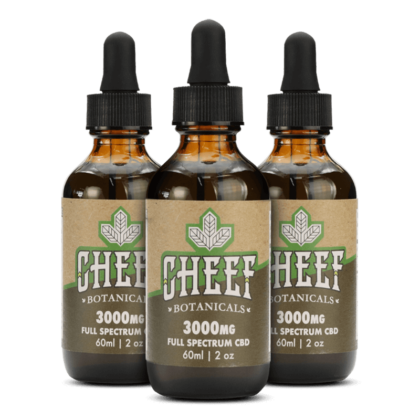
High-strength CBD products deliver a larger amount of CBD per serving or a much higher total amount per bottle (usually between 1500-3000mg+ per bottle). These are often chosen by people who already know the serving range they prefer and want a more concentrated option.
Related Product: 3000mg CBD Oil
Is Higher CBD Strength Always Better?
Not necessarily. One of the biggest misconceptions in the CBD space is that stronger always means more effective.
In reality, the best CBD strength is the one that fits your needs, your product type, and your preferred serving size. The appropriate dosage depends on the strength and potency of the CBD oil—both are important factors to consider when determining how much to take.
Do Different CBD Products Have Different Strength Levels?
Yes, and the product type can change how strength feels in practice. There are different types of CBD—full-spectrum, broad-spectrum, and isolate—and the differences between them can affect how strength is experienced. The oil available on the market varies in strength and formulation, so people with specific medical conditions or symptoms may require different strengths or types of CBD.
CBD Oils and Tinctures
CBD oils are popular because they are easy to customize. The most common method of taking CBD oil is to place drops under the tongue, hold them there for a minute or two, and then swallow for rapid absorption. You can take a small portion of a dropper or a full serving, depending on the concentration. This makes tinctures one of the easiest formats for gradually adjusting the dose.
CBD Gummies and Capsules
Gummies and capsules are convenient because they come with a fixed amount of CBD per piece, such as 10mg of CBD per capsule, which is a typical dose. Taking CBD gummies or capsules per day is a common routine for many users, as it allows for consistent dosing. This makes them simple to use but less flexible than oils for very small adjustments.
CBD Topicals
Topicals are a different category because they are applied to the skin rather than swallowed. That means the product strength is often described by the total CBD in the jar or bottle, but the real amount used per application depends on how much you apply to a specific area. CBD better evaluates them by use and the area covered, not just the number on the front label.
CBD Isolate Products
CBD isolate products are made using pure CBD that has been carefully extracted from the hemp plant and separated from all other compounds, including THC, terpenes, and additional cannabinoids. This form of CBD is ideal for those who want the benefits of CBD without any trace of THC or other naturally occurring compounds found in full-spectrum or broad-spectrum formulas.
Because CBD isolate contains only pure CBD, it is a popular choice for people who may be sensitive to other cannabinoids or who need to avoid THC entirely—whether for personal preference, workplace testing, or peace of mind.
What CBD Strength Is Right for You?
Choosing the right CBD strength comes down to a few practical factors: your body size, your personal goals, your experience level, and the product format you prefer. People dealing with chronic pain or severe symptoms may require higher strength CBD oils—typically over 100 mg/mL—for effective pain relief, and careful dosing is important.
Consider Your Serving Needs
If you prefer very small servings, a lower-strength product may be easier to work with. If you already know you tend to use moderate or larger servings, a more concentrated product may be more convenient. Serving size is often expressed as mg per serving or as mg of CBD oil per ml, helping you determine the precise amount of CBD you are consuming.
Consider Your Product Type
Oils offer the most flexibility for adjusting serving size. Gummies and capsules are more straightforward but less customizable. Topicals are their own category and are best judged by how much you apply per use.
The types of CBD—such as full-spectrum, broad-spectrum, and CBD isolate—and the difference between CBD products, including their composition and effects, can influence which product type is best for you.
Consider Overall Value
Higher-potency products can sometimes offer a better cost per milligram, but only if the product quality is there and the serving size still makes sense for you. A stronger bottle is not a better buy if you do not actually need that concentration.
Consider Safety and Medication Interactions
CBD is not risk-free. The FDA and NCCIH both note that CBD may cause side effects and may interact with certain medications. If you take prescription drugs or have a medical condition, it is smart to talk with a qualified clinician before using them regularly. People with medical conditions should always consult a clinician before starting CBD to ensure safety and avoid potential drug interactions.
How Strong Should CBD Be for Beginners?
Beginners are usually better off starting with a lower-strength product or a product that makes it easy to take a small serving.
A beginner-friendly routine for taking CBD usually looks like this:
- choose a product with clear labeling
- start with a low dose per day
- stay consistent for a few days
- Gradually increase the dose only if needed
Final Thoughts
Finding the right CBD strength is less about chasing the highest potency and more about understanding what is actually in the product you are buying.
When you know how to read the label, calculate CBD per serving, and compare product types correctly, it becomes much easier to choose a product that fits your routine and budget for some people, which will be a lower-strength option with more gradual serving control. For others, a higher-potency product may be the more practical choice.
Read more CBD Fatcs articles here

 CBD Gummies - Top Seller
 CBD + THC Gummy - Excellent Choice
 Northern Lights - Highly Rated
 Full Spectrum CBD Oil - Good Value

Leave a comment
This site is protected by hCaptcha and the hCaptcha Privacy Policy and Terms of Service apply.