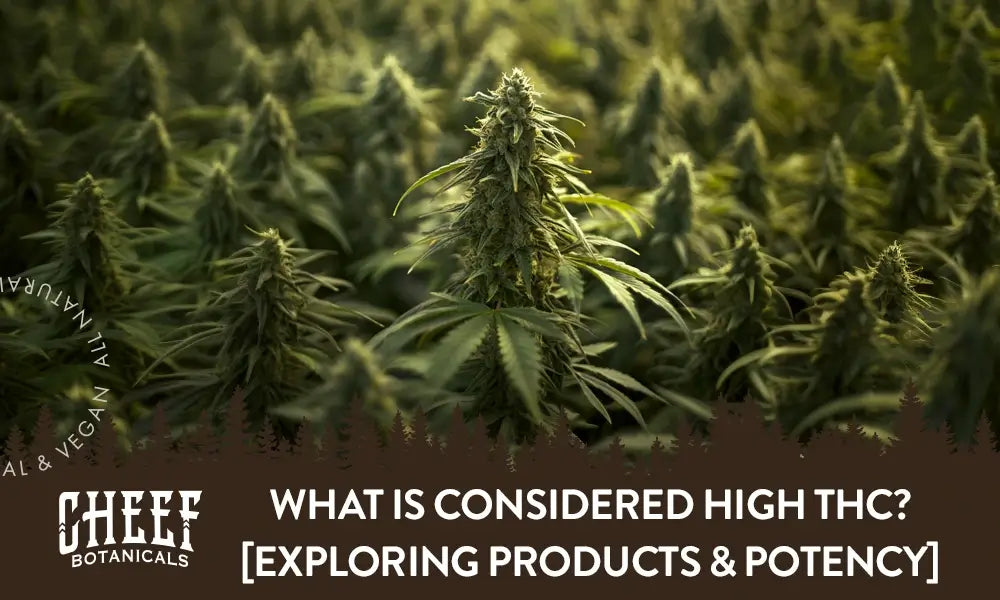
What is considered high THC, and does the answer change between flower, gummies, dabs, and vapes? You may see elevated THC on a label and wonder how strong the experience could feel. The numbers help, but product type and serving size tell more of the story. We’ll break it down in simple terms, so you can read labels with ease and choose from Cheef Botanicals with a little more know-how.
Key Highlights
- Flower with about 20% total THC or more is commonly considered high potency.
- A 10mg edible can feel strong, especially for newer or occasional consumers.
- Vapes and concentrates often have a higher THC percentage than flower, but serving size still controls the dose.
- Product type, tolerance, body chemistry, and how you take THC can change the experience.
- The label and batch-specific COA provide the clearest potency details.
What Is THC?

THC, short for tetrahydrocannabinol, is the main cannabinoid behind cannabis’s psychoactive effects. It activates CB1 receptors in your brain, which belong to the endocannabinoid system (ECS). This activity can affect mood and memory. It can also affect coordination and sensory awareness.
In simple terms, potency describes concentration, while dose means amount consumed. They relate, but neither determines the other. A tiny dab may deliver less THC than a larger serving of weaker material.
How to Read THC Labels
Labels use different units by product type. Flower, vapes, and concentrates often show THC as a percentage. Gummies, drinks, capsules, and oils usually list milligrams per serving and package.
Check serving size and cannabinoid amounts. Then match the batch number to its certificate of analysis, or COA. These details confirm potency.
THC Percentage vs Milligrams
A percentage shows THC by product weight. For example, one gram of flower at 20% contains about 200mg of potential THC. The heating and inhalation process reduces how much reaches your body.
Milligrams show the amount per piece or serving. Four gummies with 10mg each contain 40mg total. Still, each gummy is one 10mg serving. Check both numbers before eating.
What Do Delta-9 THC, THCa, and Total THC Mean?
Delta-9 THC is active THC, while THCa is its raw plant precursor. Flower and some concentrates often contain more THCa than Delta-9 THC. Heat from smoking, vaping, or dabbing converts much of that THCa into Delta-9 THC.
Labels may list each value separately, along with total THC. Total THC estimates the amount available after heating through this formula: Delta-9 THC + (THCa × 0.877).
Labs can measure cannabinoids with high-performance liquid chromatography. If the label gives total THC, skip the math and compare that figure carefully with the batch-specific COA.
What Is High THC in Flower?
High THC cannabis flower generally contains about 20% total THC or more. No official cutoff separates mild flower from strong flower, so use these practical ranges:
- Lower potency: Under 10% total THC
- Moderate potency: About 10–20%
- High potency: About 20% or more
- Very high potency: Roughly 25–30% or more
THC levels in cannabis flower often fall between 20% and 30% for high THC cannabis products, though results can fall outside that range. These numbers guide comparison, not official potency classes. Your amount and inhalation depth affect the experience. Freshness also counts.
A particular strain at 20% may feel stronger than one at 25% because its cannabinoid and terpene profile differs. Your individual response explains why high-THC strains feel different.
Related Post: Best Strains for Heavy Smokers: Top Picks for High Tolerance
What Is High THC in Edibles?
THC potency in edibles is measured in milligrams per serving, and 10mg can feel high for many people. Your experience may vary widely, so use these general ranges:
- 1–2.5mg: A low serving
- 2.5–5mg: Noticeable for many consumers
- 5–10mg: Potentially strong for newer consumers
- 10mg or more: High for many people
- 20mg or more: Very strong; generally for experienced consumers
After you eat THC, digestion carries it to your liver before it enters circulation. Effects may begin within 30 minutes to 2 hours. However, the full experience can take up to 4 hours to develop. Patience is central to starting low, especially with very small amounts. Wait longer before taking more.
What Is High THC in Vapes?
Vape oils contain more THC than flower, but no official threshold applies to every high-THC vape. These ranges compare products but do not rate quality or predict intensity:
- Lower THC Vape Range: 60–70%. This range may include CBD or added terpenes. It is still highly concentrated, so do not treat it as mild or beginner-friendly.
- Moderate THC Vape Range: 70–85%. Distillate, live resin, and other extract cartridges often fall here. Formula and device output affect intensity. Puff length also counts.
- High THC Vape Range: 85% or More. Some distillates and liquid diamond formulas reach this level. These products have very high THC concentrations, but a higher percentage does not prove better quality.
These categories guide comparison. Research has not established them as safety limits, though. Puff size and inhalation count control the dose. Take a small inhalation, then pause before another.
What Is High THC in Dabs and Concentrates?
Concentrates pack far more THC or THCa into each gram than flower. Many cannabis concentrates contain THC levels from 60% to 90%, though some fall outside that range. No formal standard defines these practical groups:
- Lower: 40–60%. Potent beside flower but below many concentrates.
- Moderate: 60–79%. Common for wax, shatter, live resin, and related extracts.
- High: 80% or More. Highly concentrated, but higher THC does not prove better quality.
Potency also varies by type:
- THC Diamonds or Crystals: Can reach 95–99% THCa.
- Distillate Oil: Usually tests above 85–90% THC.
- Shatter: Often contains 80–90% THC.
- Wax or Budder: Typically ranges from 60–90% THC.
- Live Resin: Keeps more natural aroma compounds but is not always stronger.
Exact potency varies by product and batch. A tiny amount may lead to a large dose, so check the current COA before use.
Related Post: Solventless Rosin Guide: How It's Made, Quality, Types, & More
High THC Levels at a Glance
If you googled “What is high THC level?” this chart gives a quick comparison. Check the label and COA for exact numbers. Keep in mind, though, that these ranges are guides, not official safety limits.
|
Product type |
Common label unit |
General high-potency range |
What to remember |
|---|---|---|---|
|
Flower |
Total THC percentage |
About 20%+ |
The amount inhaled counts |
|
Edibles |
Milligrams per serving |
10mg can be high for many |
Effects take longer to build |
|
Vapes |
THC percentage |
Above 80% is highly concentrated |
Puff size can vary |
|
Concentrates |
THC or THCa percentage |
Around 80%+ is highly concentrated |
A tiny dab can be powerful |
Why THC Feels Different for Everyone
When people talk about strong weed, THC often gets all the credit. However, the label tells only part of the story. Several personal and product factors affect how it feels.
Your Tolerance and Serving Size
Frequent cannabis use can build tolerance. Regular users may need more THC to feel the same intensity. Newer consumers may respond to smaller amounts. Daily use, especially with high-THC products, carries a higher risk of dependence or addiction.
Serving size also affects the experience. Your metabolism and body chemistry add context. Food intake and past experience do, too. A good result with one product cannot predict another. Approach each new formula or format with care and a small first serving.
How You Take THC
Inhaled THC usually takes effect within minutes and fades sooner than edibles. Edibles begin later but can last several hours. Tinctures held under your tongue may act faster than swallowed tinctures, though timing differs by person.
Delayed effects raise the chance of taking too much, so waiting can improve your ability to judge an edible serving. A tiny dab can also contain a substantial dose, so begin carefully with concentrates.
Most standard topicals do not create the same full-body high as inhaled or swallowed products. Since each format works differently, do not compare a vape percentage directly with edible milligrams.
How Terpenes and Cannabinoids Shape the Experience
Some cannabis strains naturally have more THC, but potency does not define the full experience. Terpenes create familiar scents and flavors. Myrcene smells earthy, while limonene brings citrus notes. Pinene adds a fresh pine aroma. These compounds support each strain’s character without changing its measured THC level.
THC interacts with other cannabinoids and terpenes, potentially affecting experience. THC and CBD also engage cannabinoid receptors in the endocannabinoid system. Their combined activity with the terpene profile is often called the entourage effect. This idea offers context, but it cannot promise a certain mood or result. The formula gives clues, not promises.
What Does High THC Feel Like?
High THC can feel deeply euphoric or relaxing. Colors and sounds may seem stronger, while time can feel slower. It may also reduce focus. Reaction time can slow, and short-term memory or coordination may suffer.
A higher percentage does not predict intensity. One large serving of lower-potency flower may deliver more THC than a light vape puff. Your tolerance and mood affect the result, while product format and setting count too. Stronger does not automatically mean more beneficial.
Do not drive or handle risky tasks while impaired. Even brilliant ideas can wait until your keys are out of reach.
What Happens If You Take Too Much THC?
Too much THC can cause unpleasant symptoms, especially when a serving exceeds your tolerance. High-THC cannabis may increase anxiety and cause these effects:
- Dry mouth
- Dizziness or lightheadedness
- Increased heart rate
- Trouble focusing
- Coordination problems
- Upset stomach
- Anxiety or paranoia
Stop consuming THC. Move somewhere quiet, sip water, and remind yourself that the effects should pass. Seek urgent help for chest discomfort, trouble breathing, loss of consciousness, severe confusion, or symptoms that do not improve.
Frequent high-potency cannabis use is linked to a greater risk of psychosis. Young people and anyone with a family history of psychosis, schizophrenia, substance dependence, or another psychotic disorder should avoid cannabis or seek professional guidance. A healthcare professional can help clarify personal mental health risks.
How to Choose the Right THC Strength
Choose a potency you can manage. Before buying high THC products, check:
- Read cannabinoid amount per serving and package.
- Confirm that flower potency reflects total THC.
- Begin with one small serving or inhalation.
- Wait long enough before consuming more.
- Do not mix THC with alcohol or other intoxicants.
- Never drive while impaired.
- Review batch-specific COA for potency and contaminants.
- Store products away from children and pets.
People with health conditions, pregnancy, sleep issues, or chronic pain problems should speak with a qualified health professional. The same guidance applies to serious mental health symptoms or medicine concerns. Control beats chasing the highest number.
High THC Options by Cheef Botanicals

Cheef Botanicals offers hemp-derived gummies for experienced consumers who want serious potency with clearer serving control. These options pair measured servings with clear labels, helping you compare strong formulas more easily. Every option uses USA-grown hemp and third-party lab testing, with batch COAs available for review.
- 100mg THC Gummy. Each gummy contains 100mg THC and has 10 scored sections. That design lets you divide it into 10mg servings. Cheef recommends one scored piece and warns against eating the whole gummy at once.
- THC + THCp + HHC Gummies. This three-cannabinoid blend offers a layered formula with 1mg THCp, 15mg Delta-9 THC, and 25mg HHC per cube. Start conservatively due to its potency.
- THC + THCp Gummy Cubes. Each cube pairs 1mg THCp with 15mg Delta-9 THC. This simpler pairing offers strong intensity without adding HHC.
Check each label and COA before choosing, since these formulas call for careful first servings.
FAQs About High THC
Does Higher THC Mean Better Cannabis?
No. In recreational cannabis, more tetrahydrocannabinol means a greater THC concentration, not better quality. Freshness and careful growing also count. Testing and the terpene profile add useful context. Some consumers prefer bold high THC marijuana. Others choose balanced flower or CBD products. Let taste, tolerance, and plans guide your choice.
Can High THC Products Make You Fail a Drug Test?
Yes. Using high-THC strains or heated THCa may produce a positive drug test result. Potency affects exposure, but individual response cannot predict detection time. Frequency and serving size also affect detection. Test type, timing, and metabolism add more variables. Still, no amount or waiting period guarantees a negative test result.
Final Thoughts on High THC Cannabis Products
THC products have grown more varied in recent years, but the basic lesson is simple. The answer to “What is high THC?” helps you compare labels across flower, edibles, vapes, and concentrates. Still, THC potency alone cannot tell you which option will feel comfortable.
Your serving and tolerance complete the picture. Higher THC means greater strength, not greater quality. Read the label and current COA before choosing.
Cheef Botanicals offers hemp-derived gummies with measured servings and third-party testing. Pick the strength you can manage, then let flavor make the final call.
Find more THC information here.


Leave a comment
This site is protected by hCaptcha and the hCaptcha Privacy Policy and Terms of Service apply.