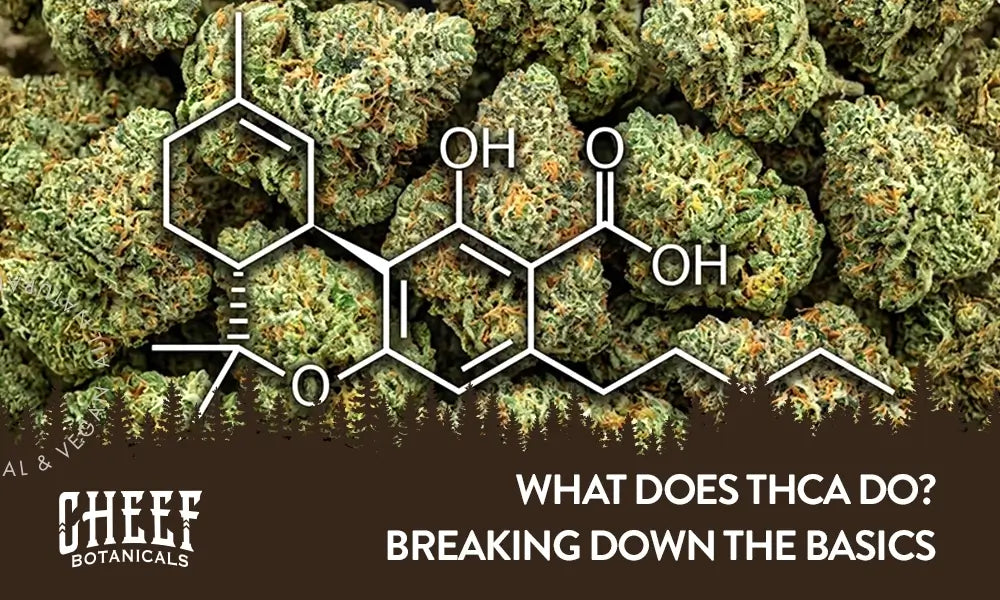
Did you know THC doesn’t start as THC in the cannabis plant? Instead, it starts as THCa, a non-psychoactive cannabinoid. THCa is the acidic form of THC and acts as the precursor produced as cannabis plants mature. So, what does that mean, and what does THCa do?
THCa stays in its raw form until heat or light converts it into THC. This process changes THCa into THC, the compound responsible for cannabis’s familiar “high” effects.
Let’s review the differences between THCA and THC, how they work, and the potential benefits of THCA. We’ll also go over different THCA products, how they interact with the body’s endocannabinoid system, and the different ways to consume THCA.
Key Highlights
- THCA is the raw, non-psychoactive form of THC found naturally in cannabis before heat is applied.
- THCA does not get you high on its own because it does not bind strongly to CB1 receptors in the brain.
- When exposed to heat through smoking, vaping, cooking, or dabbing, THCA converts into psychoactive THC through decarboxylation.
- Raw THCA may offer potential wellness support, including anti-inflammatory, calming, nausea-related, and neuroprotective benefits.
- THCA can be used raw in smoothies, juices, tinctures, or capsules, or activated through flower, vapes, concentrates, and edibles.
- THCA legality depends on federal hemp rules and state laws, especially because heating THCA can increase active THC levels.
What Is THCa?

In its natural state, THCa (tetrahydrocannabinolic acid) is the acidic form of THC and a non-psychoactive cannabinoid. It’s the raw, acidic precursor of THC, present in freshly harvested Cannabis sativa before the plant is dried or heated. Unlike THC, THCa doesn’t produce a “buzz” or “high” unless it’s exposed to heat or light in a process called decarboxylation. This chemical change allows THCa to convert into THC, activating its familiar effects.
Chemically, THCa and THC are similar, but their small difference keeps THCa from getting you faded. However, THCa still provides therapeutic properties, and it’s continually gaining attention for its potential health benefits, versatility, and unique role in cannabis products.
Is THCa Psychoactive on Its Own?
No, THCa is not psychoactive by itself. Its structure prevents it from binding to the brain’s CB1 receptors, which means it can’t create the elevated effects that THC is known for. When THCa is consumed raw, like in edibles, it remains non-psychoactive.
However, once enough heat or light is applied, THCa converts into THC, unlocking its psychoactive properties. For those looking to avoid these effects, edible THCa products are a great alternative.
THCa and THC: What’s the Difference?
THCa and THC are similar but not the same. The biggest difference is their structure. THCa has a carboxylic acid group, making it larger and unable to interact with the brain’s cannabinoid receptors. This explains why THCa doesn’t produce psychoactive effects in its natural form. THC, on the other hand, binds easily to receptors and delivers its well-known psychoactive properties. When people refer to "regular THC," they mean the psychoactive form of THC that is produced after decarboxylation.
Decarboxylation is what transforms THCa into THC, creating those elevated effects. While THCa products are great for raw consumption or potential therapeutic benefits, THC is preferred by those seeking a head change along with the other benefits. Understanding these differences helps you decide which one works best for your needs.
How Does THCa Work in the Body?

THCa interacts with the body in unique ways that don’t cause psychoactive effects. It works with the endocannabinoid system (ECS), a network that helps regulate balance in areas like sleep, mood, pain, immune response, and digestion. Unlike THC, which binds directly to receptors, THCa influences the ECS indirectly.
Interaction with the Endocannabinoid System
As mentioned, the endocannabinoid system (ECS) helps maintain balance in the body. While THC binds directly to CB1 receptors in the brain to cause psychoactive effects, THCa doesn’t attach to these receptors. Instead, it may provide indirect support, helping the ECS work more efficiently.
THCa’s Potential Role in Supporting Wellness
THCa is becoming popular for its potential to support overall wellness. Research suggests it helps ease physical discomfort, support brain health, and ease queasiness. THCa may help alleviate nausea and vomiting, making it useful for individuals undergoing chemotherapy or experiencing nausea associated with other medical conditions.
Additionally, THCa may provide pain relief without psychoactive effects. Unlike THC, THCa is non-psychoactive so that it can offer benefits without any mind-altering effects. Many people are exploring THCa consumption as a natural way to add balance to their routines.
Potential Non-Psychoactive Benefits of Raw THCa
THCa is gaining attention for its wellness benefits and for not causing mind-altering effects. It’s a natural option for those who want to feel supported and balanced. In addition to these benefits, THCa is being studied for its anti-inflammatory and antioxidant properties, which may benefit conditions characterized by inflammation and oxidative stress. From physical relief to brain health, THCa consumption offers a range of potential wellness benefits.
May Ease Physical Discomfort
THCa might help with physical discomfort. Research shows its potential for soothing inflammation due to its anti-inflammatory properties, which may benefit conditions characterized by inflammation, such as arthritis or inflammatory bowel disease. Since THCa doesn’t produce psychoactive effects, it’s easier to use without worrying about feeling sedated. Many people explore THCa products for natural relief and wellness support.
Calming and Relaxation Support
If you’re looking for a natural way to relax, THCa products might be worth exploring. THCa can promote calm without changing your mental state. Some people find that THCa consumption helps them wind down and feel more centered. This makes THCa a popular option for natural relaxation.
Potential Neuroprotective Properties
Studies suggest that THCa may support brain health by protecting nerve cells from damage. In fact, THCa has demonstrated neuroprotective properties in animal studies, suggesting potential applications in the treatment of neurodegenerative diseases such as Parkinson's disease and Alzheimer's disease. These neuroprotective effects are still being researched, but early findings are promising for conditions like Alzheimer's disease, where nerve cell damage and cognitive decline are major concerns.
This potential makes THCa consumption an exciting alternative for those interested in long-term wellness. Because THCa is non-psychoactive, it’s easy to explore its benefits without the effects of THC. More research into THCa products is helping us understand how they may support brain function.
What Does Decarboxylated THCa Do?

When THCa is exposed to heat, cooking, or vaping, it undergoes a transformation called decarboxylation, which creates THC. This is the same THC responsible for the psychoactive effects or “high” associated with cannabis use. This process can also result in side effects similar to those experienced when consuming marijuana. Understanding how this conversion works helps explain the effects of decarboxylated THCa on the mind and body.
The Decarboxylation Process Explained
Decarboxylation happens when THCa is exposed to heat through methods like smoking, vaping, dabbing, or cooking. This process is often referred to as 'create THC' because it converts non-psychoactive THCA into the psychoactive compound THC. It also happens naturally through light exposure, but this conversion is much slower than through heat.
Crystalline THCA, also known as diamonds, is a concentrated form of THCA that can be dabbed to create THC through decarboxylation.
Effects of Decarboxylated THCa on the Mind and Body
Once THCa converts to THC, it binds to CB1 receptors in the brain, creating psychoactive effects like euphoria or altered perception. These effects vary based on factors like dosage and individual tolerance. Decarboxylated THCa also interacts with the body to promote a range of sensations, from relaxation to discomfort relief. This makes it a central part of the experience many associate with cannabis consumption.
How to Use THCa

Cannabis flower naturally contains THCa, and its THCa content is important for different consumption methods. THCa hemp flower is popular for both raw and heated use, but consumers should be aware of the variability and potential risks associated with unregulated products. There are simple ways to enjoy THCa, whether you prefer its raw form or want to activate it into THC. For example, you can vape THCa using vape pens or cartridges—vaping converts THCa into THC, resulting in psychoactive effects.
Raw THCa can be consumed through juicing, tinctures, or adding it to a raw salad, allowing you to benefit from its medicinal properties without intoxication. It can also be consumed in edible forms like gummies, cookies, or brownies, as long as the THCa has not been heated before being added.
Consuming Raw THCa for Everyday Use
Consuming raw cannabis is a great way to experience its benefits without psychoactive effects. You can try raw cannabis juice or add fresh cannabis plant material to smoothies for a simple, healthy option. These methods keep THCa in its natural state, offering potential wellness benefits without altering your mental state. For anyone looking for a gentle, plant-based boost, raw cannabis is an easy and effective choice.
Methods to Decarboxylate THCa
If you want to convert THCa into THC, you’ll need to use heat through a process called decarboxylation. Here are some common ways to do it:
- Smoking or Vaping. The easiest and fastest way to decarboxylate THCa. The heat from a flame or vape immediately converts it into THC as you inhale.
- Baking in the Oven. For edibles, heating raw cannabis at around 240°F for 30-40 minutes is a simple way to decarboxylate THCa.
- Using a Decarboxylation Device. Specialized tools make it easy to heat cannabis evenly for precise THCa to THC conversion.
- Cooking with Cannabis. When preparing dishes like infused oils or butter, the cooking process naturally decarboxylates THCa as it is incorporated into your recipes.
How THCa Works When Inhaling Flower, Vapes, and Concentrates
Inhaling THCa flower, vaping THCa, or consuming concentrates is a fast way to enjoy cannabis products. Vape THCa is a popular method, often used in vape pens and cartridges, where heating converts THCa into THC and produces psychoactive effects. Crystalline THCA, also known as diamonds, is a concentrated form that can be dabbed to convert it into THC instantly. When heat is applied, THCa converts into THC, activating its psychoactive properties.
Once converted, THC interacts with your cannabinoid receptors, creating effects that range from relaxation to an elevated mood. THCa flowers, vape products, and concentrates are easy to use, offering flexibility and control over your experience. Many people prefer this method for its convenience and the ability to feel the effects right away, whether at home or on the go.
Drug Testing and THCa
If you’re concerned about drug tests and use THCa-rich products like THCa flower or THCa tinctures, it’s important to understand how THCa can show up in testing. While THCa itself is non-psychoactive in its raw form, many standard drug tests are designed to detect THC or its metabolites. Because THCa can convert to THC in the body—especially if it’s heated or metabolized—using THCa-rich products may result in a positive drug test for THC.
It’s worth noting that drug tests specifically targeting THCa are less common, and their sensitivity can vary. However, if you consume raw THCa or products high in THCa, there’s still a risk of triggering a positive result, particularly if the test is looking for total THC content.
Safety and Precautions When Using THCa
While THCa is celebrated for its non-psychoactive properties and potential health benefits, it’s still important to use THCa products responsibly. Always choose THCa products from reputable manufacturers that provide lab-tested results for purity and potency. This helps ensure you’re not exposed to harmful substances or contaminants.
Keep in mind that heating THCa—whether by smoking, vaping, or cooking—will convert it into THC, which can produce psychoactive effects. If you’re sensitive to these effects or wish to avoid them, stick to raw THCa products and avoid applying heat.
Cheef Botanicals’ Premium THCa Options

At Cheef Botanicals, we offer THCa products for every need. Whether you want to enjoy the natural benefits of raw cannabis or experience the effects of THC, we’ve got you covered. Here’s a look at our top THCa options and what makes them stand out.
- THCa Flower. Perfect for both raw and heated use, our THCa flower can be added to smoothies or salads for non-psychoactive cannabinoid benefits. For an elevated experience, try smoking or vaping strains like Gelato (Hybrid) or Sex Panther (Sativa). Each strain offers distinct flavors and effects for customizable cannabis consumption.
- THCa Diamonds. With over 80% THCa, these concentrates are incredibly potent and pure. The Spritzer strain delivers bold flavors and effects through our whole-plant extraction process. It’s a top pick for those seeking high-potency applications.
- THCa Live Rosin. For a smoother experience, our Lemon Cherry Gelato Live Rosin offers sweet, citrusy flavors. This solventless concentrate ensures a clean and pure cannabis experience, perfect for enthusiasts who value taste and quality.
- THCa Disposables. Ready-to-use and convenient, our THCa Disposables come in popular strains like Blue Dream and Berry Gelato. They’re perfect for on-the-go cannabis lovers who want quick, reliable effects.
- THCa Vape Carts. These 510-threaded vape carts provide premium quality and flexibility. Available in strains like Durban Poison and Lemon Cherry Gelato, they deliver delicious flavors and fast-acting effects, ideal for everyday use.
THCa vs. Other Cannabinoids
THCa stands out among cannabinoids found in cannabis plants because of its unique properties. While CBD, CBG, and Delta 9 THC are also well-known, each one interacts with the body differently. Here’s how THCa compares to these other cannabinoids.
- THCa vs. CBD. Both THCa and CBD are non-psychoactive cannabinoids, but they have different uses. THCa flower is often associated with potential therapeutic properties, such as easing discomfort and supporting digestion. CBD, on the other hand, is widely used for relaxation and overall balance without the need for heating or conversion.
- THCa vs. CBG. CBG is called the “mother cannabinoid” because it helps create other cannabinoids, while THCa is the precursor to THC. THCa consumption is associated with benefits such as soothing physical discomfort, while CBG is often used to support sleep and relaxation. Both are non-psychoactive compounds in their raw forms.
- THCa vs. Delta 9 THC. The main difference is their psychoactive properties. THCa is non-psychoactive until it’s heated, while Delta 9 THC is the psychoactive compound responsible for the elevated effects of cannabis. After decarboxylation, THCa produces the same THC that causes psychoactive effects, meaning it results in the same THC experience as Delta 9 THC. THCa products let you enjoy cannabis in a natural state or convert it to THC for a different experience.
Is THCa Legal?
The legality of THCa depends on both federal and state laws, which can sometimes feel confusing. Federally, THCa is considered federally legal under the 2018 Farm Bill if it comes from hemp plants with less than 0.3% Delta-9 THC on a dry weight basis. This creates a legal loophole, as THCa products can be sold as hemp even though they can be converted into THC through heating. The federal government regulates marijuana as a controlled substance, but hemp is not.
This means THCa products, like raw cannabis or THCa flower, are allowed as long as they meet these requirements. THCa can be legally purchased in many states due to its classification as hemp, but local and state laws may vary. Some US outlets have begun selling THCa products over the counter without a medical card, depending on state laws.
Related Post: [Potential THCa Side Effects [Concerns & Risks]
Unregulated THCa Industry
The rapid growth of the THCa market has outpaced regulation, creating a legal gray area for both consumers and producers. Because the THCa industry is largely unregulated, there can be significant inconsistencies in product quality, potency, and labeling. This lack of oversight also increases the risk of contamination with harmful substances, such as pesticides, heavy metals, or residual solvents.
The legal status of THCa is often unclear, as it exists somewhere between legal hemp and controlled marijuana, depending on how it’s processed and the THC levels present after decarboxylation. As a result, some THCa products may contain enough THC to produce psychoactive effects, even if they’re marketed as non-psychoactive.
Final Thoughts - What Does THCa Do?
THCa is a versatile cannabinoid found in live cannabis plants. In its raw form, it’s a non-psychoactive compound that doesn’t create the same effects as THC. Instead, it’s known for its potential therapeutic properties, like soothing physical discomfort and possibly supporting brain health.
By consuming raw cannabis or using THCa flower, you can explore its natural benefits without experiencing psychoactive effects. When heated, THCa becomes psychoactive. This flexibility makes THCa products suitable for both wellness-focused consumers and those seeking a more elevated experience.

 Watermelon OG - Top Seller
 Runtz THCa Flower - Excellent Choice
 Han Solo THCa Flower - Highly Rated
 Space Junkie THCa Flower - Good Value


Leave a comment
This site is protected by hCaptcha and the hCaptcha Privacy Policy and Terms of Service apply.