

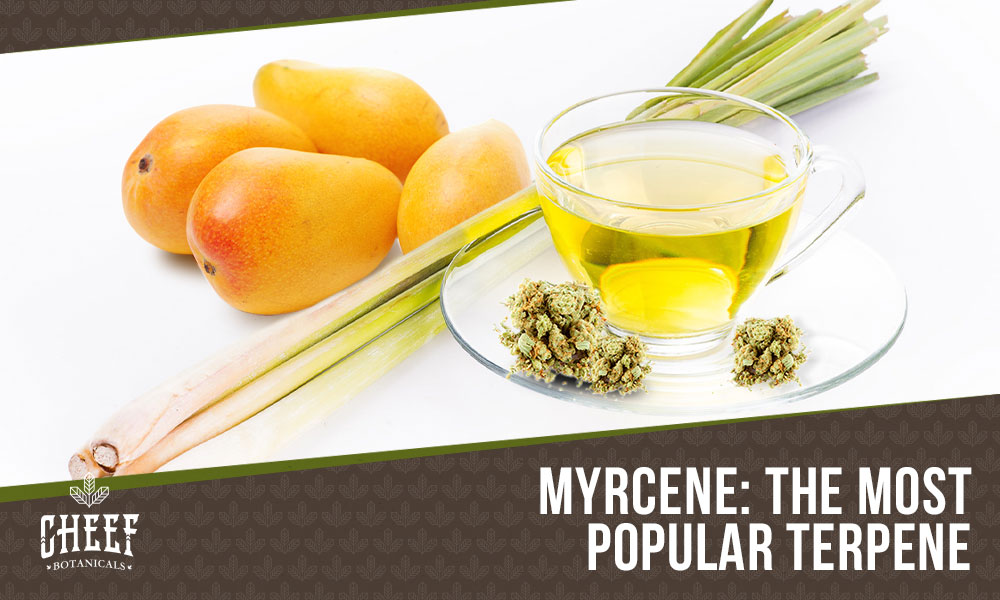
Myrcene, often called the “mother of all terpenes,” plays a major role in shaping the cannabis experience. If one terpene were to rule them all, myrcene would be a top contender.
It’s the most abundant terpene found in modern hemp strains, and it does far more than contribute to flavor—myrcene is responsible for the unique fragrance and characteristic 'weed smell' of certain cannabis strains. Let’s take a deeper look at what makes myrcene so important.
Key Highlights
- Myrcene is one of the most abundant cannabis terpenes, known for its earthy aroma and calming properties.
- It may promote relaxation, support better sleep, and help ease everyday physical discomfort when paired with cannabinoids.
- Myrcene is naturally found in cannabis as well as plants like mangoes, hops, lemongrass, basil, and thyme.
- Understanding terpene profiles, including myrcene content, can help you choose products that better match your desired experience.
What Are Terpenes?

Terpenes are naturally occurring aromatic compounds found in plants. Their primary role is to protect plants by repelling predators and attracting pollinators. These compounds are responsible for the distinctive scents and flavors of plants like pine, lavender, citrus, and herbs.
More than 20,000 terpenes have been identified across the plant kingdom, with hundreds present in cannabis alone. The terpene profile of a plant is influenced by factors such as climate, soil, genetics, and cultivation techniques.
What’s Inside Terpenes?
Terpenes are classified as hydrocarbons, meaning they consist entirely of hydrogen and carbon atoms. Terpenes like myrcene are identified by their molecular weight and chemical structure, which determine their properties and effects. Structurally, they are built from isoprene units, which link together to form different terpene types.
What is Myrcene?
Myrcene is the most prevalent terpene found in cannabis and is classified as a monoterpene, meaning it contains two isoprene units. It is found in high concentrations in cannabis, hops, mangoes, and lemongrass. Myrcene serves as a building block for other terpenes, making it a key player in terpene biosynthesis.
Because of its abundance, myrcene significantly contributes to the effects many people associate with cannabis—particularly relaxation and calmness. High myrcene content is associated with sedative and relaxing effects, and myrcene-rich lemongrass has been traditionally used for its analgesic and sedative properties.
Where is Myrcene Found?
While cannabis is one of the richest sources of myrcene, it’s far from the only one. This terpene is naturally present in a wide variety of plants and foods, including:
- Mangoes
- Hops (used in beer)
- Lemongrass
- Basil
- Thyme
- Bay (laurel) leaves
Myrcene is the most abundant terpene in modern commercial cannabis flower, often representing over 20% of the terpene profile and being dominant in nearly 50% of strains.
What Does Myrcene Smell and Taste Like?
Myrcene has a distinct aroma that is often described as:
- Earthy and musky
- Slightly sweet and fruity
- Herbal with spicy and clove-like undertones
- Can become quite pungent at high levels
Myrcene's aroma is characterized by earthy, musky, and herbal notes, often compared to ripe fruit or aged vinegar, and high levels of myrcene can intensify the scent.
What Are the Effects of Myrcene?

Myrcene is most commonly associated with calming and relaxing effects. Unlike the heavy sedation linked to high-THC products, myrcene tends to promote a gentle sense of ease and physical comfort. Myrcene's potential benefits include pain relief, anti-inflammatory effects, and a possible sedative effect.
Research suggests that myrcene may help reduce inflammation and anxiety, and it has demonstrated analgesic effects by interacting with the body's pain receptors, making it a potential natural pain management option.
Myrcene may also protect cells against oxidative damage through its antioxidant properties. Its sedating effects are often associated with high levels of myrcene in certain cannabis strains, which are sometimes linked to the "couch lock" sensation.
Curbs Swelling
Myrcene-rich plants have traditionally been used to address irritation and discomfort, particularly in the digestive and respiratory systems, and myrcene is believed to have anti-inflammatory properties.
Reduces Soreness
Studies dating back to the 1990s explored myrcene’s potential to reduce physical discomfort, with subsequent research demonstrating its analgesic effects.
May Promote Better Sleep
Myrcene is widely recognized for its ability to encourage relaxation. It is associated with sedative effects, especially at higher concentrations, which may help support a more restful night’s sleep. Myrcene-rich lemongrass tea has been used in folk medicine as a natural sleep aid due to its sedative properties.
The Entourage Effect
Terpenes like myrcene don’t work alone. They interact with cannabinoids such as CBD and THC, as well as other compounds, to produce what’s known as the entourage effect.
The entourage effect was first described in 1998 by Dr. Raphael Mechoulam, a renowned cannabis researcher, and has since been widely embraced by the cannabis community. Myrcene's high bioavailability and ease of bonding with other compounds, including THC and CBD, enhance the entourage effect and the overall therapeutic potential of cannabis.
How Does Myrcene Work in the Body?
Myrcene interacts with the body through the endocannabinoid system (ECS)—a network of receptors that helps regulate mood, sleep, inflammation, and overall balance.
Current research in cannabis science is actively exploring how myrcene and other terpenes interact with the endocannabinoid system, with ongoing studies investigating their therapeutic potential. The National Institutes of Health has recently issued a call for research proposals to study the therapeutic effects of terpenes such as myrcene, further advancing scientific understanding in this area.
While research is still evolving, myrcene is believed to:
- Influence how cannabinoids bind to receptors
- Enhance the absorption of certain compounds
- Support relaxation by interacting with neurotransmitters
Popular Strains That Contain Myrcene
Myrcene is like the social butterfly that can get along with anyone — you’ll find it in countless THCa and CBD strains, many of which we offer here on Cheef Botanicals. Certain cannabis strains are characterized by high myrcene content, making myrcene the dominant terpene in many popular strains.
Indica Dominant
- GMO Cookies. GMO is a powerhouse resulting from the marriage of Chemdawg and GSC. It’s not for the faint of heart, often pushing the 24–30% THC ceiling and delivering a heavy-duty physical stone that can leave even seasoned enthusiasts glued to the furniture.
- Granddaddy Purple. Clad in deep violets and frosted with white crystals, GDP is a cross of Purple Urkle and Big Bud that smells exactly like a bowl of crushed grapes and forest berries. It’s a classic 17–24% THC Indica that focuses its energy on the body, making it a legendary choice for anyone looking to melt away physical tension at the end of the day.
- Northern Lights. Few names carry more weight than this pure Indica, a descendant of rugged Afghani and Thai landraces. Its profile is deeply organic—think damp earth and spicy herbs. Testing in the 16–21% THC range, it doesn’t try to overwhelm you with potency.
- Grape Ape. By combining Mendocino Purps, Skunk, and Afghani, breeders created a strain that mimics the flavor of artificial grape candy. This 15–25% THC Indica is physically heavy, moving through the limbs like a slow wave of relaxation.
- Bubba Kush. This strain is like a warm, weighted blanket. Emerging from OG Kush and Northern Lights, Bubba Kush features a rich, dark aroma of roasted coffee and cocoa. With THC levels between 15–22%, its primary mission is total relaxation, making it a gold standard for those who struggle to find their “off” switch at night.
Sativa Dominant
- Durban Poison. A pure Sativa landrace straight from South Africa, this strain is an anomaly in the cannabis world. Durban Poison is loaded with myrcene but smells like sweet licorice and pine. Averaging 15–25% THC, it delivers an incredibly clean, uplifting experience that feels more like a cup of strong espresso than a typical “stoner” high.
- Green Crack. A cross between Skunk #1 and an unknown Afghani, it smells like a basket of overripe tropical mangoes. This 15–20% THC Sativa provides a sharp, focused energy, making it perfect for morning productivity and creative flow.
- Sour Diesel. This 20–25% THC Sativa-dominant hybrid, born from Chemdawg and Super Skunk, is the go-to for a “dreamy” head high. It’s fast-acting and intense, providing a mood boost that keeps the mind moving while the body stays comfortable.
Balanced Hybrids
- Blue Dream. Myrcene is often the dominant terpene in Blue Dream and many other balanced hybrid strains, shaping their unique effects and aroma. Usually hovering between 17–24% THC, it remains the “goldilocks” strain for people who want to stay functional yet relaxed.
- White Widow. Born in the 90s from a Brazilian Sativa and a South Indian Indica, White Widow is famous for its “snowy” resin production and a pungently spicy, earthy scent. Sitting at 18–25% THC, it offers a “creeper” high—starting with a social, talkative energy before slowly transitioning into a heavy, myrcene-driven calm, as myrcene is the dominant terpene influencing its chemical profile.
- OG Kush. This is the undisputed backbone of modern cannabis genetics, bringing together a mysterious mix of Chemdawg and Hindu Kush. Its scent is a sharp, unmistakable punch of lemon-pine cleaner and skunk. With THC levels often hitting 19–26%, it provides a high that is both euphoric and deeply grounding, essentially setting the standard for what a hybrid should feel like.
Effects of Indica, Sativa, and Hybrid Strains Explained
Cannabis strains are typically grouped into three categories: Indica, Sativa, and Hybrid. While these labels are widely used, their effects are more closely tied to cannabinoid and terpene profiles than plant type alone.
- Indica strains are often associated with body relaxation and calming effects
- Sativa strains tend to feel more uplifting and energizing
- Hybrid strains offer a mix of both, depending on their genetic balance
Important Considerations for Myrcene
Myrcene and “Couch-Lock”
When myrcene levels exceed roughly 0.5%, products are often associated with deeper relaxation. This has led to the term “couch-lock,” although the experience varies from person to person.
Typical Potency Levels
Many myrcene-rich strains fall within moderate to high cannabinoid ranges, allowing both terpene and cannabinoid effects to shine.
Natural Variation
Myrcene levels can vary depending on cultivation practices, environment, and harvest timing. This means even the same strain can have slightly different terpene profiles from batch to batch.
Final Thoughts
Myrcene is one of the most influential terpenes in cannabis, shaping not only flavor and aroma but also the overall experience. From its earthy scent to its calming properties, it plays a vital role in how hemp products feel and function.
If you’re exploring CBD or cannabis products, paying attention to terpene content—especially myrcene—can help you better understand and tailor your experience.
Discover more CBD flower guides here

 CBD Gummies - Top Seller
 CBD + THC Gummy - Excellent Choice
 Northern Lights - Highly Rated
 Full Spectrum CBD Oil - Good Value



Leave a comment
This site is protected by hCaptcha and the hCaptcha Privacy Policy and Terms of Service apply.