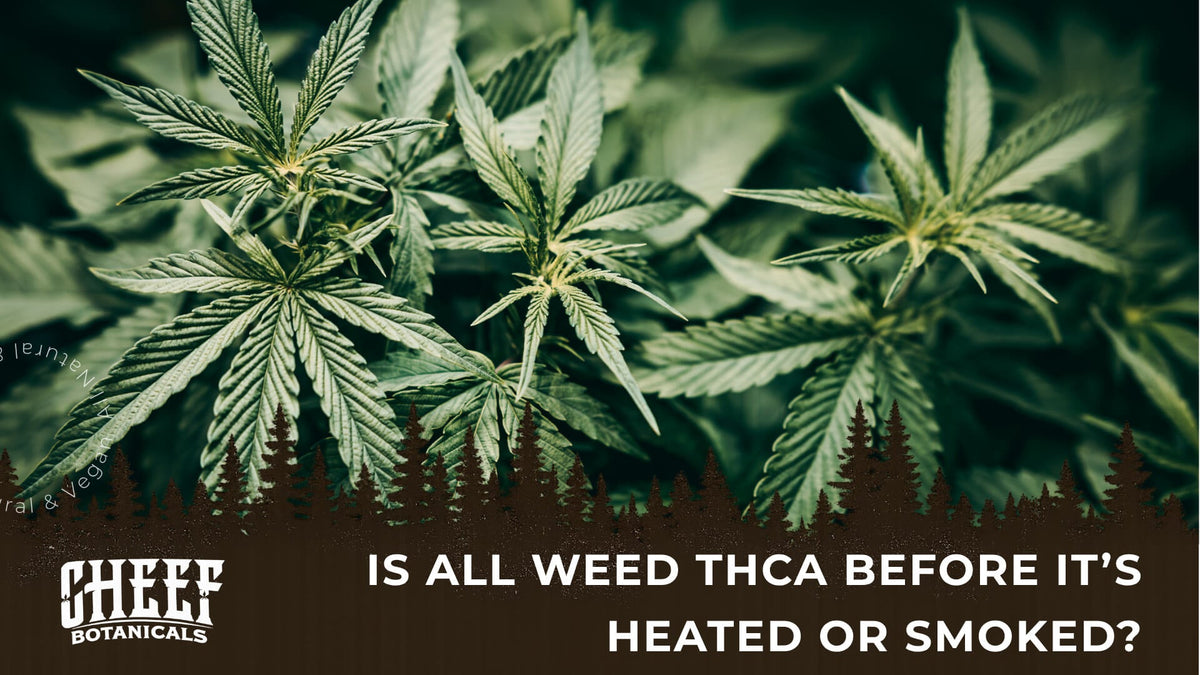
Most THC-rich cannabis begins its life as THCa, which leads many consumers to ask: Is all weed THCa before it's heated or smoked?
The answer is more interesting than a simple yes or no. Cannabis plants naturally produce acidic cannabinoids first, including THCa and CBDa, before heat transforms them into more familiar compounds. Genetics also play a role, since not every variety is THCa-dominant.
Understanding that process can make lab reports, cannabinoid percentages, and even the effects of cannabis much easier to understand.
What Is THCa in Cannabis?
THCa stands for tetrahydrocannabinolic acid. It is the primary natural cannabinoid in raw cannabis flower. Unlike THC, it does not produce psychoactive effects. Its molecular structure contains an extra acid chain that prevents it from binding effectively to the brain receptors associated with those effects.
Researchers believe the cannabis plant produces THCa as part of its natural defense system. The compound may help protect the plant from insects, disease, and other environmental threats.
Remove that acid chain, and THCa converts into Delta-9 THC. This small structural difference separates a non-intoxicating cannabinoid from one that can get you high.
What Is THC and How Is It Different?
THCa converts into THC when you apply heat through smoking, vaping, or baking. Heat triggers a process called decarboxylation, which removes the molecule's extra acid chain and releases carbon dioxide. The result is activated THC, a compound with a structure small enough to fit brain receptors more effectively. That explains why THCa flower cannot produce psychoactive effects in its raw form.
THC is the compound responsible for the intoxicating effects commonly associated with cannabis. Understanding how THCa becomes THC can help you better understand THC content and how it may factor into product selection and personal preferences.
Does All Weed Mainly Contain THCa Before It’s Heated or Smoked?
Yes. Nearly all raw cannabis contains THCa before heating. THC does not appear in large amounts naturally because THCa is its precursor. That means most cannabis flower begins with THCa, not THC. The same pattern appears in traditional cannabis, regular marijuana, and many forms of THCa cannabis.

Whether you are looking at cured or raw flower, THCa usually accounts for most of its cannabinoid content. Small amounts of THC may appear naturally, but THCa remains the dominant compound.
Why Raw Cannabis Naturally Contains THCa Instead of THC
Cannabis flower naturally contains THCa because cannabis plants produce cannabinoids in their acidic forms first. THC is not the starting compound. Instead, the plant creates raw THCa, which serves as the precursor to THC.
This pattern appears throughout cannabis biology and helps explain basic cannabis chemistry. The plant does not need THC to grow. THCa exists in its natural form while the flower develops.
Heat is needed to convert THCa into THC. This occurs when you're smoking, vaping, or cooking THCa flower. Whether it's THCa flower, THCa concentrates, or other THCa products, the cannabinoid usually begins as THCa.
The Science of Decarboxylation Explained
THCa becomes THC when it loses its extra acid group. Heat speeds up that reaction. Smoking, vaping, and baking can convert large amounts of THCa into THC within minutes. That's why THCa hemp flower can produce the same effects as THCa weed once heated.
Heat isn’t the only element that triggers this conversion. Oxygen, light, and ambient warmth can do it as well. That’s why THCa content gradually decreases, and total THC rises as the flower ages.
Fresh high-THCa flower contains more THCa because less conversion has occurred. In that sense, all cannabis slowly moves toward THC.
Thermal vs. Ambient Decarboxylation
Decarboxylation describes the conversion of THCa into THC. This reaction can occur under different conditions, but the underlying chemistry stays the same.
- Thermal Decarboxylation: High heat removes THCa's acid group within seconds or minutes. Smoking, vaping, and baking accelerate the reaction and rapidly convert cannabinoids. This process commonly occurs with regular weed, dispensary flower, and many heated cannabis products.
- Ambient Decarboxylation: Oxygen, light, and ambient warmth drive a much slower conversion. This reaction develops gradually during storage and aging. It can influence how much THC forms naturally and affect reported THCa-to-THC values.
What Happens When You Smoke or Vape Cannabis
Smoking or vaping exposes cannabis to temperatures high enough to trigger rapid decarboxylation. Within seconds, THCa loses its acid group and converts into THC. That's why high THCa flower can behave much like real weed once heated.
The cannabinoids may begin in different forms, but the conversion happens quickly during use. This process occurs regardless of whether the flower is a dispensary weed or a hemp variant sold at smoke shops. The only difference is the starting cannabinoid form.
Many products come from the same cannabis plant and often share the same genetics before heating changes the chemistry. Understanding this basic cannabis science can help you buy THCa flower online with more confidence.
At What Temperature Does THCa Turn into THC?
THCa begins converting into THC at roughly 220°F (104°C). The reaction becomes more efficient as temperatures rise. Many edible recipes use temperatures between 220°F and 240°F to encourage steady conversion without excessive cannabinoid loss.
Smoking and vaping operate at much higher temperatures. That’s why conversion happens almost instantly during inhalation. Temperature can also affect how much THC forms from a given amount of THCa.
This relationship appears in hemp products, dispensary cannabis, and other products evaluated using dry-weight standards.
The Chemical Formula Behind THC Activation
Lab reports often estimate potential THC using this standard formula:
Total THC = (THCa × 0.877) + THC
The 0.877 factor accounts for molecular weight lost during conversion. When THCa loses its acid group, part of the molecule disappears as carbon dioxide.
This calculation helps regulators, laboratories, and consumers evaluate cannabinoid potency. It also appears in some hemp regulations and federal law discussions.
The formula plays a role in determining the THCa flower's legal status or whether it qualifies as legal hemp under hemp definitions. Some debates surrounding the THCa loophole also stem from this calculation.
Why THCa Loses Weight When Heated
THCa loses weight during conversion because part of the molecule leaves as CO2 gas. Roughly 12.3% of its mass disappears during this reaction. That's why one gram of THCa cannot produce one gram of THC after heating.
This molecular weight difference explains potency calculations used throughout the industry. It also influences discussions about whether the cannabis law considers THCa flower legal or leaves it in a gray area.
Regulators, laboratories, and producers account for this loss when evaluating products. The calculation has become a key detail in debates surrounding the legal loophole and related state laws.
Does Raw THCa Get You High without Heat?
No. Raw THCa does not produce intoxicating effects without heat. Its molecular structure prevents effective interaction with the brain receptors associated with THC. Without activation, the cannabinoid remains in a different chemical state.
This distinction helps clarify the THCa flower vs. traditional THC product debate. Although they may come from the same plant species and contain the same cannabinoid in different forms, their effects differ before heating. This is why THCa products with less than 0.3% Delta-9 THC by dry weight remain federally legal.
What Happens If You Eat Raw Cannabis Flower?
Eating raw cannabis flower is unlikely to produce intoxicating effects. Most of the cannabinoids still exist in forms that have not been activated by heat. Some people juice fresh flower or blend it into smoothies for this reason. Without decarboxylation, very little THC becomes available.
Raw flower can still contain cannabinoids, terpenes, and other plant compounds. The source does not change that outcome. Flower from a state-licensed dispensary or other sources behaves the same way before heating. This is why many beginners prefer methods that do not involve heat when trying cannabis for the first time.
Dispensary Flower vs Smoke Shop Flower: Is There a Difference?
Is THCa flower the same as weed? In many cases, the flowers themselves are more similar than the labels suggest. Products sold through licensed dispensaries and some smoke shops often contain THCa-rich flower. The cannabinoid profile may look different on packaging, but the underlying chemistry can be surprisingly similar.

The THC percentage listed on flower and pre-rolls often reflects potential THC, not the amount currently present. Laboratories estimate how much THCa can convert into THC after heating.
That’s why product labels may display THC numbers even when much of the cannabinoid content still exists as THCa. Quality, however, depends on cultivation, handling, and testing, not labels alone.
Why THC Percentages on Labels Can Be Misleading
THC percentages do not always represent the amount of THC currently present in the THC flower. In many cases, the number reflects total potential THC. That calculation includes THC already present plus the THC that could form from THCa after heating.
A label showing 25% THC does not necessarily mean the flower contains 25% Delta-9 THC before use. Much of that value may come from THCa.
Lab reports use conversion formulas to estimate the final amount after activation. Understanding this distinction can make product labels easier to interpret. It can also help when comparing products with similar potency claims and the same quality standards.
Are All Cannabis Products Made from THCa?
No. Many cannabis products begin with THCa-rich flower, but not every final product keeps THCa as its main cannabinoid. Processing can alter the profile before the product reaches consumers. Heat-based extraction and distillation often convert THCa into THC before infusion.
Flower sold through legal dispensaries usually contains substantial THCa before use. Edibles, tinctures, and vapes may contain cannabinoids activated earlier in production. The final profile depends on processing, not just the source material. Products from the same plant species can still show different potency levels.
Why Edibles Already Contain Active THC
Most edibles contain THC before you eat them. Manufacturers typically heat cannabis extracts during production to convert THCa into THC. That step often occurs before the extract reaches the gummy, chocolate, or baked product. As a result, the cannabinoids are already activated.
Many edible products use distilled cannabis oil because it provides consistent cannabinoid concentrations. The baking process can also contribute to activation.
Unlike raw flower, edibles do not rely on smoking or vaping to trigger conversion. The THC is already present when the product is packaged. That’s why edibles can produce effects without any additional heating.
How Vape Cartridges Differ from Raw Flower
Most vape cartridges contain THC that was activated before the oil entered the cartridge. Manufacturers commonly use distillate, a concentrated extract that has already undergone decarboxylation. That means the THC is ready for use without requiring further conversion inside the cartridge.
Many cartridges also contain thinning agents or added terpenes to improve viscosity and vapor production. Raw flower works differently. It still contains cannabinoids in their original forms before heating. The vaporizer activates those cannabinoids during use.
This difference explains why cartridges and flower can start with very different cannabinoid profiles despite producing similar results.
Live Resin and Rosin: High-THCa Concentrates
Live resin and rosin often contain substantial amounts of THCa. Manufacturers create these concentrates from cannabis material while preserving much of the original cannabinoid profile. Despite their potency, THCa still requires activation before it becomes THC.
Heat provides that activation. Dabbing, vaporizing, or other high-temperature methods convert THCa into THC within seconds. Without that step, the cannabinoids remain in their original forms.
Production methods also differ. Live resin typically uses solvents during extraction, while rosin relies on heat and pressure. Those differences affect texture, flavor, and composition, but both concentrates commonly contain significant levels of THCa.
Is THCa Hemp the Same as Marijuana?
Botanically, hemp and marijuana come from the same cannabis species. The legal distinction comes from Delta-9 THC levels, not from a different plant. Under federal law, hemp must contain no more than 0.3% Delta-9 THC by dry weight.
This creates confusion because some hemp flowers contain substantial amounts of THCa. Those are considered marijuana, which is a controlled substance. Once heated, that THCa can convert into THC. The conversation centers on cannabinoid content and legal definitions, not plant biology.
Why THCa Flower Is Federally Legal Under Hemp Laws
Federal hemp law classifies cannabis based on Delta-9 THC concentration, not THCa concentration. Under the 2018 Farm Bill, hemp must contain no more than 0.3% Delta-9 THC on a dry-weight basis. If a product meets that threshold, it may qualify as hemp under federal law.
This allows some THCa-rich flower to enter the hemp market. A flower can contain substantial THCa while still meeting the Delta-9 THC limit before heating. This classification has fueled ongoing regulatory discussions. State laws do not always follow the same approach, so legality can vary depending on where the product is sold.
Why THCa Feels the Same as Marijuana When Smoked
It all comes down to chemistry. When you smoke THCa flower, heat rapidly converts THCa into THC before inhalation. Your body does not distinguish between THC created from THCa and THC already present in the flower. The molecule is the same either way.
That conversion is why THCa flower can produce effects similar to traditional marijuana. The cannabinoid entering your bloodstream is THC, not THCa. Potency still depends on cannabinoid levels, consumption method, and individual response.
This similarity also explains why THCa products may trigger a drug test, even when the flower originally contained very little Delta-9 THC.
Cheef Botanicals THCa Flower and Pre-Rolls
Cheef Botanicals offers premium hemp-derived THCa flower and pre-rolls for consumers who value consistency and quality. We carefully select strains and maintain strict production standards from cultivation through packaging. Every batch undergoes third-party testing for potency, purity, and heavy metals.
- Indoor THCa Flower: Top-shelf indoor flower grown in carefully managed environments. Dense buds, strong aromas, and rich cannabinoid expression define this collection. Ideal for consumers seeking proper cultivation methods and dependable batch-to-batch consistency.
- Light Dep THCa Flower: Premium light-deprivation flower cultivated with controlled sunlight exposure. This approach helps produce excellent structure and cannabinoid development. It's the perfect option for shoppers who appreciate quality while exploring selections.
- THCa Pre-Rolls: Available in regular sizes and convenient minis. Each pre-roll arrives ready to use and packed with carefully prepared flower. Minis suit shorter sessions, while full-size options provide a longer experience overall.
- Diamond-Infused Pre-Rolls: Crafted with flower and concentrated THCa diamonds for enhanced potency. The added cannabinoids increase overall strength while preserving familiar flower characteristics. It suits experienced consumers seeking a stronger option.

Note: THCA flower is federally legal under the 2018 Farm Bill. Buying THCA flower online avoids long lines at dispensaries. THCA flower can be shipped nationwide without special licenses. Quality varies widely in THCA products due to loose regulations.
Common Misconceptions About THCa and THC
Many people assume THCa and THC are completely different cannabinoids. THCa is simply the precursor that converts into THC when heated. Another common misconception is that a high THCa percentage means a product contains the same amount of active THC before use. In reality, conversion must occur first.
Legal confusion is also common. Some consumers assume all THCa products are legal everywhere. Federal and state rules do not always align. Labeling creates another source of misunderstanding. A THC percentage may represent potential THC rather than current THC content. Reading lab reports carefully can help you distinguish between THCa levels, Delta-9 THC levels, and total potential THC.
Final Thoughts - Is Weed THCa Flower?
Understanding THCa changes the way you read cannabis labels. Once you know how THCa converts into THC, potency numbers make more sense, product comparisons become easier, and hemp regulations look far less confusing. A small chemical difference can affect everything from labeling to legality.
Do not judge a product by a single THC number. Look at the full cannabinoid profile, review third-party lab results, and pay attention to how the product was grown and tested. Quality begins long before the flower reaches your hands.
Curious to know more about THCa? Take a look at our other guides here.

 Watermelon OG - Top Seller
 Runtz THCa Flower - Excellent Choice
 Han Solo THCa Flower - Highly Rated
 Space Junkie THCa Flower - Good Value

Leave a comment
This site is protected by hCaptcha and the hCaptcha Privacy Policy and Terms of Service apply.